
Wheelchair Anti-Tippers: Options Compared by Fit

For a wheelchair with anti-tippers, choose a compatible pair of rear anti-tip wheels; the Cruiser III-style pair names several supported chair models and has adjustable wheel height. Choose the rollback device only if you need help limiting backward rolling on ramps, since it serves a different purpose.
Anti-tippers are rear supports intended to help limit backward tipping, not a substitute for careful chair control. Confirm the chair model and rear-frame attachment before ordering a pair.
We earn a commission if you buy through links on this page. As an Amazon Associate I earn from qualifying purchases. Products are compared on manufacturer specifications, not hands-on testing.
- Best overall: Cruiser III Universal Anti-Tippers – Includes a pair of height-adjustable wheels and names compatible Cruiser, K3 and K4 models.
- Best for K1/K2 chairs: Universal-Style Wheelchair Anti-Tippers – The universal-style pair names K1/K2 standard chairs and several other chair types as compatible.
- Best for ramp rollback: Safe-T Mate Anti-Rollback Device – It is an anti-rollback device for limiting backward rolling on inclines or ramps.
| Product | Best for | Type | Compatibility | Included | Shop |
|---|---|---|---|---|---|
| Cruiser III Universal Anti-Tippers | Adjustable wheel height | Rear anti-tip wheels | Cruiser III, X4, K3/K4 and named models | 1 pair | Check Price on Amazon |
| Universal-Style Wheelchair Anti-Tippers | K1/K2 chair fit | Rear anti-tippers | K1/K2 and named chair types | 1 pair | Check Price on Amazon |
| Safe-T Mate Anti-Rollback Device | Ramp rollback control | Anti-rollback device | Wheelchairs, standard size | 1 device | Check Price on Amazon |
| Medline Folding Wheelchair, Swing-Away Footrests | Folding chair base | Folding wheelchair | 20-inch seat | 300 lb capacity | Check Price on Amazon |
| Medline Folding Wheelchair, Elevating Leg Rests | Elevating leg rests | Folding wheelchair | 20-inch seat | 300 lb capacity | Check Price on Amazon |
Wheelchair Anti-Tippers and Related Options
Compare chair compatibility first, then distinguish anti-tip wheels from a rollback control device.
Cruiser III Universal Anti-Tippers

The height-adjustable wheel pair is the clearest fit for buyers seeking wheelchair anti-tippers, provided the chair is one of the named compatible models. It includes two black steel anti-tippers and uses multiple mounting positions to adjust wheel height. The compatibility list includes Cruiser III and X4, several K3 and K4 chairs, and named Traveler and Series models. The limitation is fit: “universal” does not mean it fits every wheelchair, so match your chair model and rear-frame attachment before choosing it.
Bottom line: Choose this pair if your wheelchair is among the named compatible models and you want adjustable wheel height.
Universal-Style Wheelchair Anti-Tippers

This pair is aimed at K1/K2 standard chairs and names several additional compatible styles, including reclining, heavy-duty and children’s wheelchairs. It includes two black steel anti-tippers with marbles and is installed by removing the rear tipping sleeve and fitting the replacement component. That sleeve-based method makes the rear tube connection a key fit point. The compatibility description says it is compatible with these chairs “on the surface,” so buyers should verify the exact chair model and attachment rather than assume the broad universal label guarantees a match.
Bottom line: Pick this pair when your chair is in its named compatibility group and uses the described rear sleeve connection.
Safe-T Mate Anti-Rollback Device

Unlike rear anti-tipper wheels, this standard-size device is designed to limit backward rolling on inclines or ramps. It is a wheelchair safety accessory, but the product facts do not identify it as an anti-tip pair or give compatible chair models. That distinction matters: preventing rollback while a chair is on a ramp is not the same job as helping limit a backward tip. Choose it only when rollback control is the need, and confirm device compatibility with the wheelchair before use.
Bottom line: Choose it for a rollback-control need, not as a substitute for anti-tip wheels.
Medline Folding Wheelchair, Swing-Away Footrests

This is a folding wheelchair rather than an anti-tipper accessory, so it may suit someone choosing a chair separately from its rear safety components. Its seat is 20 inches wide by 16 inches deep, the frame supports up to 300 pounds, and swing-away footrests allow easier entry and exit. The dual axle and smooth tires are intended to support maneuverability across everyday terrain.
Bottom line: Consider it as a folding chair base, then verify a compatible anti-tipper pair.
Medline Folding Wheelchair, Elevating Leg Rests
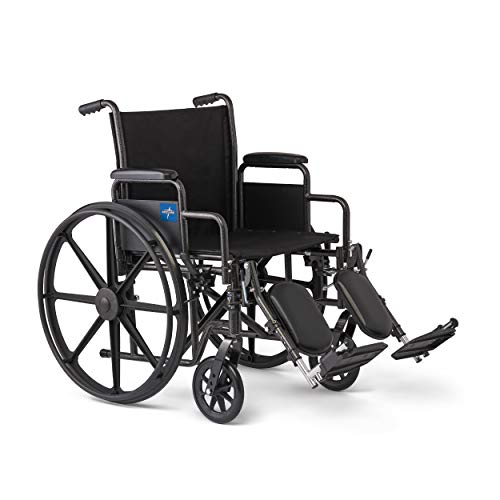
This folding chair stands apart from the other chair option with elevating leg rests, which may suit a buyer who wants that leg-support configuration along with desk-length, swing-back arms for lateral transfers or access to a desk. It has a 20-by-16-inch seat, a 28.5-inch overall width and a 300-pound capacity.
Bottom line: Pick this chair for elevating leg rests, after confirming compatible anti-tippers separately.
How to choose wheelchair anti-tippers
Choose anti-tippers by chair compatibility and attachment before comparing construction. Rear anti-tip wheels act as a support behind the chair; they are different from anti-rollback devices, which address backward rolling on a slope. Start with the wheelchair make and model, then compare the product’s compatible model list and rear-frame connection. If your chair is absent from the compatibility group, do not infer fit from the word “universal.” Wheel height and mounting position also affect how the support meets the floor. Match the adjustment options to the chair and user setup, and confirm compatibility before ordering when the model or attachment is unclear.
For the options here, choose an adjustable pair if your chair is named in its compatibility list; choose the rollback device only when the need is controlling backward movement on a ramp.
Anti-tippers versus anti-rollback devices
Anti-tippers and anti-rollback devices address different wheelchair movement risks. Anti-tip wheels sit at the rear as supports intended to help limit backward tipping; a rollback device is described for preventing backward rolling on inclines or ramps. Neither description makes the two accessories interchangeable. A wheelchair can also require careful ramp technique and controlled transfers even when it has an anti-tip accessory. The decision rule is direct: for a rear support against backward tipping, select a compatible anti-tipper pair; for a device aimed at rolling backward on an incline, consider the rollback device and verify its fit.
The table separates the options by function so a buyer can identify the right accessory type without treating similar-sounding safety terms as equivalent.
| Need | Accessory type | Fit check |
|---|---|---|
| Help limit backward tipping | Rear anti-tipper pair | Chair model and rear-frame mount |
| Limit backward rolling on a ramp | Anti-rollback device | Device compatibility with the chair |
| Choose a chair with leg-rest features | Folding wheelchair | Confirm compatible anti-tippers separately |
Wheelchair fit and rear-frame checks
Wheelchair anti-tippers are model- and mount-sensitive accessories, even when described as universal. The Cruiser-style pair names specific Cruiser, K-series, Series and Traveler models and uses multiple positions for wheel-height adjustment. The other pair describes fitting in place of a rear tipping sleeve and names K1/K2 and several other chair styles. These are distinct fit clues, not proof that either pair attaches to every chair in the category. Before choosing, identify the wheelchair’s exact model and inspect whether its rear tube has the matching sleeve or connection. If the fit is uncertain, verify the match before purchase rather than relying on a general chair category.
Safe use of wheelchair anti-tippers
Anti-tippers are aids to stability, not a guarantee against a tip or fall. Keep the chair’s wheels and brakes maintained, use controlled movement on slopes, and avoid abrupt shifts in body weight that can alter balance. For transfers, lock the wheelchair brakes and move footrests out of the way where the chair design allows; a swing-away footrest is a transfer feature, not a substitute for stabilizing the chair. After fitting a rear accessory, confirm that it is secured and adjusted for the chair before use. A mismatch or incorrect adjustment can compromise the intended support, so do not use a pair whose fit remains uncertain.
Frequently Asked Questions
Do wheelchair anti-tippers prevent every tip?
No. Anti-tippers are intended to help limit backward tipping, but they do not eliminate all tipping or fall risks. Controlled movement and proper chair setup still matter, especially on slopes and during transfers.
How can I tell whether anti-tippers fit my wheelchair?
Match the wheelchair’s exact model and rear-frame attachment to the accessory’s compatibility group. A universal label alone does not confirm fit, and a sleeve-based installation requires the matching rear connection.
Can I use anti-tippers on a wheelchair ramp?
Anti-tippers do not replace careful ramp control or a device designed for rollback. The Safe-T Mate is described as an anti-rollback device for inclines or ramps, so verify chair compatibility if that is the specific need.
Should wheelchair brakes be locked during transfers?
Yes, lock the wheelchair brakes before a transfer to keep the chair from rolling. Swing-away footrests can clear the entry path, but they do not secure the chair.