
Inverter RV Air Conditioner Options Compared by Fit

For a direct-battery 12V inverter RV air conditioner, the Gidrox 12V model stands out because it runs from an RV battery without a separate inverter. Choose a 115V rooftop or under-bench unit instead if your setup is built around AC power; the under-bench model also avoids a rooftop installation.
We earn a commission if you buy through links on this page. As an Amazon Associate I earn from qualifying purchases. Products are compared on manufacturer specifications, not hands-on testing.
- Best overall: Gidrox 12V 12,000 BTU Rooftop AC – Runs on 12V DC from an RV battery without a separate inverter.
- Best for rooftop cooling: TURBRO 13,500 BTU Rooftop Inverter AC – Offers 13,500 BTU cooling, a heat pump and rooftop installation.
- Best for hidden installation: TURBRO Under-Bench 115V Inverter AC – Mounts under a bench and includes a 32.8-foot air duct.
| Product | Best for | Cooling capacity | Power | Mounting | Shop |
|---|---|---|---|---|---|
| Gidrox 12V 12,000 BTU Rooftop AC | 12V battery setups | 12,000 BTU | 12V DC | Rooftop | Check Price on Amazon |
| TURBRO 13,500 BTU Rooftop Inverter AC | Rooftop heat pump | 13,500 BTU | — | Rooftop | Check Price on Amazon |
| TURBRO Under-Bench 115V Inverter AC | Hidden installation | — | 115V AC | Under-bench | Check Price on Amazon |
| Gidrox 115V 15,000 BTU Rooftop AC | Wide airflow coverage | 13,500 BTU | 115V AC | Rooftop | Check Price on Amazon |
Inverter RV air conditioners
Compare electrical setup and installation style first, then match the unit to your RV and roof or interior layout.
Gidrox 12V 12,000 BTU Rooftop AC

Unlike the 115V options, this rooftop unit is designed to run directly from a 12V RV battery, without a separate inverter. It provides 12,000 BTU cooling and a heat pump rated for 9,000 BTU heating. The maker reports average nighttime consumption of about 350W in 30°C ambient conditions and says a 400Ah battery can support all-night use; actual runtime depends on battery capacity and other loads. At 52 pounds, it suits buyers prioritizing a direct-DC setup, but anyone with an AC-only power system should consider a 115V model instead.
Bottom line: Choose this if your RV power system is built around 12V DC.
TURBRO 13,500 BTU Rooftop Inverter AC
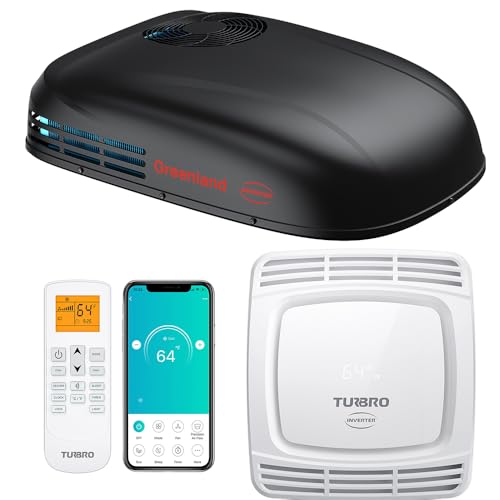
For rooftop installation, this TURBRO pairs inverter operation with cooling rated up to 13,500 BTU and a heat pump. The maker says its inverter compressor can be up to 30% more efficient than non-inverter systems and that it starts without an added soft starter. Fan and dry modes add options beyond heating and cooling, while WiFi and remote control provide different ways to adjust operation. Its rooftop unit is 10 inches thick, but power voltage and weight should be confirmed against your RV setup before choosing it.
Bottom line: Pick this for a rooftop heat-pump unit with fan and dry modes.
TURBRO Under-Bench 115V Inverter AC
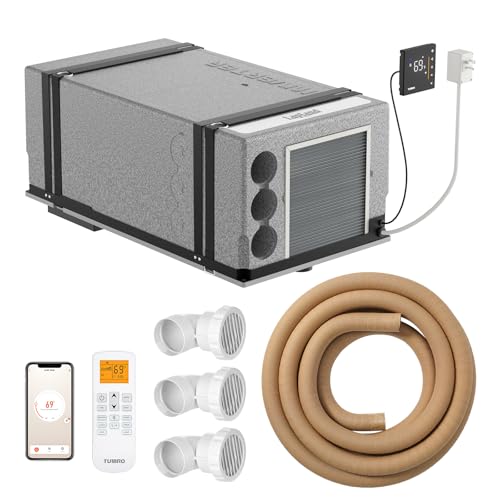
Rather than occupying roof space, this 115V TURBRO installs under a bench and routes air through an included 32.8-foot duct. Its heat pump supports heating as well as cooling, and the wall-pad thermostat, remote and app provide several control methods. The maker says its inverter compressor can reduce energy use by up to 30% compared with standard RV AC units while avoiding high-power startup surges. At 77 pounds, it calls for a suitable interior mounting location; buyers needing rooftop installation should choose a rooftop model instead.
Bottom line: Choose this when a hidden under-bench installation fits your interior.
Gidrox 115V 15,000 BTU Rooftop AC
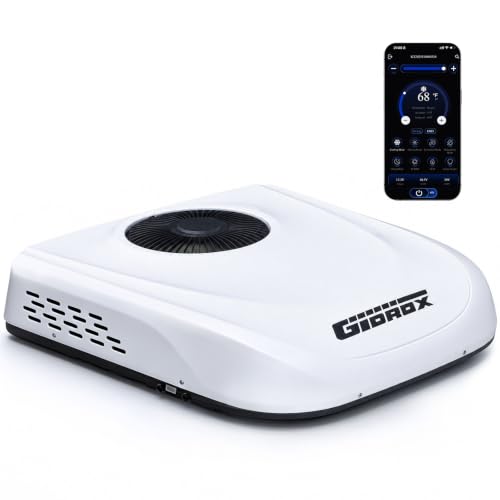
This Gidrox is a 115V rooftop heat-pump unit with an advertised 15,000 BTU class, while its maker gives 13,500 BTU cooling and 13,500 BTU heating. Its dual-sided outlets are designed to swing through a 100-degree range, a useful distinction for buyers focused on distributing air across a larger RV. The maker describes it as intended for 26–35-foot RVs and claims rapid cooling, but those results depend on conditions. Check that its rooftop dimensions and electrical setup suit your vehicle before selecting it.
Bottom line: Pick this for a 115V rooftop unit with wide-swing airflow.
How to choose an inverter RV air conditioner
Start with the electrical system: a 12V DC unit can draw from a battery directly, while a 115V AC unit needs an AC source such as shore power or a generator. An inverter converts battery DC to AC, but conversion losses mean the battery must supply more power than the AC load consumes. Inverter compressors vary output rather than cycling only on and off, which can reduce startup surge and help regulate demand. Capacity matters too: RV air conditioners commonly fall around 13,500 to 15,000 BTU, but insulation, sun exposure, humidity and floor plan affect the needed size. If the RV has only 12V appliances and no AC supply, favor a DC unit; otherwise confirm the unit’s voltage matches the system you plan to use.
Rooftop and under-bench installation fit
Rooftop RV air conditioners commonly use a roughly 14-by-14-inch roof opening, but the opening, roof thickness and mounting hardware must match the unit. Measure the existing cutout and check roof load limits before replacing or adding a rooftop unit. A rooftop installation keeps the main equipment outside the living area, while an under-bench system uses interior space and ducting to distribute air. Duct length and routing can affect airflow, so avoid sharp bends and crushed sections. The under-bench option includes 32.8 feet of duct; rooftop units do not share that installation style. Verify clearance and mounting requirements before ordering, especially where roof accessories or interior cabinetry constrain placement.
Cooling capacity and RV size
RV air conditioners are commonly sized in BTU per hour, with 13,500 BTU a frequent capacity class and 15,000 BTU another common option. A larger nominal rating is not a guarantee of comfort: direct sun, high outdoor temperatures, insulation and a large open floor plan can raise the cooling load. Shade, window coverings and closing unused spaces can reduce heat entering the cabin. Compare the maker’s capacity figure with the RV’s length and layout rather than choosing on BTUs alone. For the Gidrox 115V model here, the product name says 15,000 BTU while its maker gives 13,500 BTU cooling; use the latter figure when comparing stated cooling capacities.
| Need | Suitable direction | Check before choosing |
|---|---|---|
| Run directly from battery | 12V DC unit | Battery capacity and other loads |
| Use AC power on the roof | 115V rooftop unit | Roof opening and AC supply |
| Keep equipment off the roof | Under-bench unit | Interior space and duct route |
Battery, generator and electrical safety
Battery runtime depends on usable capacity, temperature, other appliances and the air conditioner’s changing load; a battery’s amp-hour rating alone does not establish overnight runtime. For a 12V unit, use appropriately sized wiring, fusing and connections, because high current on low-voltage circuits can cause heat and voltage drop. A 115V air conditioner needs an AC supply capable of handling its operating load, and a generator must be sized for the unit’s requirements and any simultaneous appliances. Shut off power before electrical work, and have an RV technician assess wiring or roof penetrations if you are unsure. Never assume a unit’s voltage or startup needs from its cooling capacity.
Frequently Asked Questions
Can a 12V RV air conditioner run from a battery?
Yes, a 12V DC unit can draw power directly from a compatible RV battery. Runtime depends on usable battery capacity, AC load and other appliances operating at the same time.
Do inverter RV air conditioners need a soft starter?
Not always: inverter compressors can ramp up rather than starting at full output. The TURBRO rooftop model says it operates without an added soft starter, but verify the requirements for the specific AC unit and power source.
What roof opening does an RV air conditioner use?
Many rooftop RV air conditioners use an opening around 14 by 14 inches. Measure the existing cutout and check roof thickness and mounting compatibility, since not every unit fits every opening.
How many BTUs does an RV air conditioner need?
Common RV air-conditioner capacities are roughly 13,500 to 15,000 BTU per hour. RV size, insulation, window area, sun exposure and outdoor heat all affect which capacity is appropriate.
Can an RV heat pump work in cold weather?
Heat-pump performance declines as outdoor temperatures fall, and the operating range varies by unit. The TURBRO rooftop option gives a range of 19.4°F to 109.4°F; compare the expected campsite temperature with the unit’s limits.