
Best Cane for Walking in Sand: 5 Options Compared

Beachcomber Stick is the best fit for walking in sand because it combines walking-stick support with a sand scoop and is described for multi-terrain use. Choose a conventional mobility cane instead if you need a specific adjustable height, a stand-up handle or a seat.
Loose sand shifts under narrow cane tips, so a broad contact area matters; the features do not identify a sand-specific foot for most of these options.
We earn a commission if you buy through links on this page. As an Amazon Associate I earn from qualifying purchases. Products are compared on manufacturer specifications, not hands-on testing.
- Best overall: Beachcomber Stick – Combines a trekking pole, walking stick and sand scoop, with a carbide tip for dirt and rock.
- Best for adjustable height: REHAND Folding Cane – Offers eight height settings in one-inch increments and an all-terrain tip.
- Best for seated breaks: Folding Cane with Seat – Converts from a walking stick to a seat with a 21.65-inch seat height.
| Product | Best for | Height or adjustment range | Weight capacity | Sand or terrain feature | Shop |
|---|---|---|---|---|---|
| Beachcomber Stick | Sand-scoop versatility | 25–55 in. handle height | — | Sand scoop; carbide tip for dirt and rock | Check Price on Amazon |
| REHAND Folding Cane | Adjustable daily support | 34–38 in. | — | All-terrain tip | Check Price on Amazon |
| Folding Cane with Alarm and Light | Nighttime assistance | 33.4–38.2 in. | 220 lb | No sand feature specified | Check Price on Amazon |
| REHAND Self-Standing Cane | Higher stated capacity | 36 in. | 350 lb | Enhanced anti-slip base | Check Price on Amazon |
| Folding Cane with Seat | Rest stops outdoors | 34.25 in. walking height | — | Tripod base | Check Price on Amazon |
Canes and Walking Sticks for Sand
Compare the terrain features and practical trade-offs before choosing support for a sandy walk.
Beachcomber Stick

Unlike the conventional mobility canes here, this stick combines a trekking pole, walking stick and sand scoop. The aluminum shaft collapses to 25 inches and extends to a 55-inch handle height for trekking; with the scoop attached, overall length reaches 64 inches. A clamp-lock system is designed to secure the sections without tools, and the maker says the construction is intended for saltwater exposure. The carbide tip is for dirt and rock, not specifically a wide sand foot, so buyers who need a cane tip that resists sinking should check that fit before choosing it.
Bottom line: Choose this if you want a walking stick that also serves as a shoreline sand scoop.
REHAND Folding Cane
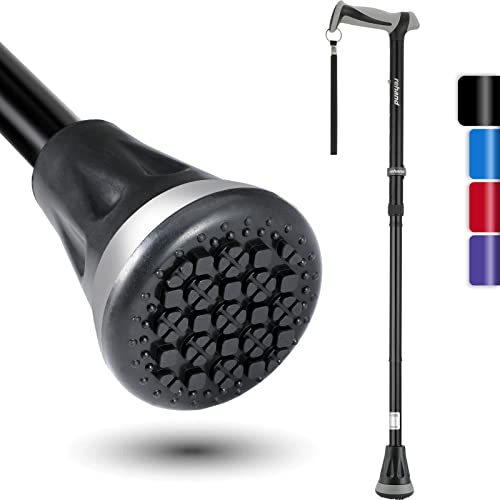
Eight height settings in one-inch steps distinguish this folding cane from the other conventional canes here. Its adjustment range is 34 to 38 inches, and the maker says it fits users from 5 feet to 6 feet 5 inches. The handle combines hard PP and soft TPR materials, while the cane folds and includes a travel bag.
Bottom line: Pick this for adjustable everyday support when its tip suits the sand you encounter.
Folding Cane with Alarm and Light

An alarm, a tilting light and a second handle set this folding cane apart from basic walking sticks. Its adjustable range is 33.4 to 38.2 inches, it weighs 1.4 pounds, and the maker gives a 220-pound capacity. The light is intended to illuminate curbs and steps, while the second handle provides leverage when standing up from a low seat. Those features address visibility and transfers rather than soft ground: no broad sand foot is identified, so this is a better match for firm paths and indoor use than loose shoreline walking.
Bottom line: Choose this for light and alarm features on firmer routes, not for a sand-specific tip.
REHAND Self-Standing Cane

A 350-pound stated capacity and a self-standing design separate this cane from the other conventional models. Its size is 36 inches, and the features describe an enhanced anti-slip base, an ergonomic grip and a foldable frame. A cane that stands on a hard floor can still sink or shift on a beach, so consider the surface before choosing it for sand.
Bottom line: Pick this for its capacity and self-standing design on firmer ground.
Folding Cane with Seat

A fold-out seat makes this cane-chair the option for walkers who need a place to rest during outings. In walking mode it is 34.25 inches high; the seat is 21.65 inches high, and the frame weighs 1.76 pounds. The maker gives a suggested user-height range of 5 feet 4 inches to 5 feet 9 inches for seat mode. Its tripod base is designed for stability, but a seated load on shifting sand is a different demand than standing on firm ground; use it only where the legs can rest securely.
Bottom line: Choose this for planned breaks on stable ground rather than a soft-sand seat.
How to Choose a Walking Aid for Sand
For loose sand, prioritize a tip or foot that spreads the load over a wider area; a narrow tip concentrates force and can sink. Sand firmness changes with moisture and location, so packed wet sand near the waterline may feel firmer than dry dune sand. Compare intended terrain, tip shape and whether the aid is meant for mobility support or trekking. A sand scoop is not automatically a sand foot: the two serve different purposes. If you need a cane for balance or weight-bearing, choose a support designed for that role and test it on the actual surface before relying on it. When the tip’s sand contact area is unclear, confirm it before ordering.
Why Cane Tips Behave Differently on Sand
A wider contact patch spreads the same downward force across more ground, reducing how readily a tip presses into loose sand. Sand can shift sideways as well as compress, so a tip that grips on rock may still slide or sink on a beach. Damp, compacted sand generally offers firmer footing than dry, loose sand, but tide and slope also affect stability. Walk slowly, plant the aid before transferring weight, and avoid using a walking stick as a substitute for a mobility cane if you need substantial support. On soft sand, stop if the tip sinks or slips rather than compensating with a longer stride.
Walking Cane Height and Fit
A properly fitted cane lets the user stand upright with the handle near wrist-crease height when the arm hangs relaxed; the elbow should remain slightly bent while holding it. Wear the shoes you expect to use, then check that the cane still reaches that position on the route. Uneven sand changes the effective height from step to step, so adjustment alone does not ensure safe footing. Compare a product’s height range with the user’s fit rather than assuming a nominal size works for everyone. For a cane that will bear substantial weight, ask a clinician or rehabilitation professional to help match the cane type and fit to the user’s needs.
Sand Walking Safety and Common Mistakes
Loose sand increases the chance of a tip sinking unexpectedly, so shorten steps and keep the cane close instead of reaching far ahead. Avoid steep, soft slopes and areas where waves can wash around the tip; wet sand can change firmness quickly. Inspect the tip before each outing for wear, cracks or looseness, and keep sand from interfering with adjustable locks and joints. A trekking pole, folding cane and cane-chair are not interchangeable just because each can provide some support. If a cane shifts under a deliberate light test on the ground, do not trust it for a full weight transfer on that surface.
Frequently Asked Questions
Will a regular cane work on dry beach sand?
A regular cane may sink in dry, loose sand if its tip has a small contact area. Use firmer packed sand when possible, and stop if the tip sinks or slips during a light test.
What cane tip is better for soft sand?
A broad foot spreads force over more sand than a narrow tip. Check that the foot is designed for the cane and remains secure, because a loose attachment can shift under load.
How should a walking cane fit for beach use?
With shoes on and the arm relaxed, the handle should sit near wrist-crease height, leaving a slight bend in the elbow when held. Uneven sand affects footing, so correct height does not by itself make a narrow tip suitable.
Can I use a trekking pole as a cane on sand?
A trekking pole can provide walking support, but it is not automatically equivalent to a mobility cane for weight-bearing needs. Check its intended use, tip design and fit, and avoid relying on it if it slips or sinks.
Is wet sand safer to walk on with a cane?
Firm, damp sand often supports a tip better than dry, loose sand, but water and slopes can make footing change quickly. Plant the tip before shifting weight and stay clear of areas where waves can reach it.