
Best Headphones for NASCAR Races: 3 Options Compared

For most race fans, Race Day Electronics RDE-058 Pink is the clearest fit because it has a 3.5 mm plug, dual volume controls and noise reduction rated up to 24 dB. Choose Rugged Radios H80 Linkable Headset 2-Pack instead if group communication matters; choose passive earmuffs if scanner audio is not a priority.
We earn a commission if you buy through links on this page. As an Amazon Associate I earn from qualifying purchases. Products are compared on manufacturer specifications, not hands-on testing.
- Best overall: Race Day Electronics RDE-058 Pink – Combines scanner-compatible 3.5 mm input, separate volume controls and up to 24 dB noise reduction.
- Best for group communication: Rugged Radios H80 Linkable Headset 2-Pack – Includes two headsets with push-to-talk and a 3.5 mm audio input.
- Best for folding storage: Race Day Electronics RDE-990 – The adjustable low-profile earmuffs fold for storage and include a 3.5 mm connector.
| Product | Best for | Noise reduction | Audio connection | Communication | Shop |
|---|---|---|---|---|---|
| Race Day Electronics RDE-058 Pink | Scanner listening | Up to 24 dB | 3.5 mm jack | — | Check Price on Amazon |
| Rugged Radios H80 Linkable Headset 2-Pack | Group communication | 24 dB NRR | 3.5 mm audio input | Push-to-talk | Check Price on Amazon |
| Race Day Electronics RDE-990 | Folding storage | — | 3.5 mm angle plug | Volume control | Check Price on Amazon |
Headphones for NASCAR races
Match the connection and communication features to how you plan to listen at the track.
Race Day Electronics RDE-058 Pink

Race Day Electronics RDE-058 Pink stands out for race-scanner listening with dual volume controls and a 3.5 mm jack that fits racing scanners and other audio devices. Its padded, cloth-covered ear cups are designed for extended wear, and the maker rates its noise reduction up to 24 dB. This is a straightforward choice for fans who want to hear scanner audio while reducing background sound. The limitation is that no group-talk feature is described, so choose another style if speaking to companions through the headset is essential.
Bottom line: Pick this for scanner audio with independent volume adjustment.
Rugged Radios H80 Linkable Headset 2-Pack

Rugged Radios H80 Linkable Headset 2-Pack is the option built around conversation: the two included headsets have a push-to-talk button, while a 3.5 mm input supports scanner or race-receiver audio. The maker says additional headsets can be linked without an intercom, which suits groups that want to talk over track noise. Its 24 dB NRR is a hearing-protection rating, not a promise that loud engine sound will disappear. A limitation is the need for compatible scanner or receiver audio equipment to listen to race coverage.
Bottom line: Choose this for a group that wants push-to-talk communication.
Race Day Electronics RDE-990
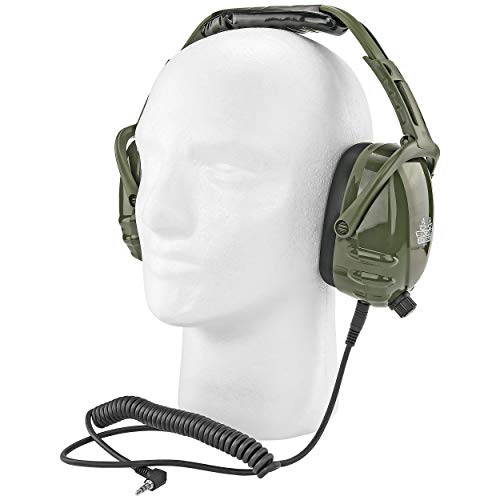
Race Day Electronics RDE-990 combines a padded hard-shell earmuff design with an included angled 3.5 mm connector, making it a practical fit for buyers who want scanner-compatible audio and a foldable form. Its features include volume control and an adjustable, low-profile construction intended to fold for storage. The maker describes it for use with iPhones and scanners, as well as at race venues.
Bottom line: Pick this if a folding design and angled plug suit your setup.
How to choose NASCAR race headphones
Choose by connection first: race-scanner audio generally needs a compatible 3.5 mm input or adapter, while passive earmuffs reduce sound without letting you hear scanner commentary. For longer events, padded ear cups and an adjustable fit can matter as much as sound control. Noise reduction ratings also serve different purposes: NRR is reported in decibels for hearing protection, while a product’s advertised noise reduction may not use the same rating method. Do not treat a 24 dB figure and a 28 dB NRR as directly interchangeable. If group conversation is part of the plan, look for a push-to-talk function rather than assuming an audio jack supports a microphone.
Understand NRR and track noise
NRR is a laboratory rating in decibels, not the amount of sound a wearer will always experience at the track. Real-world protection depends on a proper seal; glasses temples, hair and a loose fit can create gaps that reduce earmuff performance. NASCAR venues can expose spectators to intense engine noise, so hearing protection is important, especially near the track or during long sessions. Passive earmuffs protect by covering the ears but can make speech and announcements harder to hear. Keep protection seated over the ears and take quiet breaks away from loud areas rather than removing it near the noise.
Match scanner audio to the headset
Check the scanner’s output connector before choosing headphones: a 3.5 mm plug is common on consumer audio gear, but connector size alone does not guarantee compatibility with every scanner or adapter. Race scanners often use a mono output, while some headphones are wired for stereo; the plug may fit even when the sound comes through one ear or at an unexpected level. Start with the scanner volume low, then raise it only enough to hear clearly. Keep a spare compatible adapter if your receiver uses another connector, and avoid assuming that a 3.5 mm audio input also enables microphone communication.
| Need | Look for | Tradeoff |
|---|---|---|
| Hear race commentary | Scanner-compatible audio input | Requires a compatible scanner or receiver |
| Talk with companions | Push-to-talk headset feature | Requires compatible group setup |
| Reduce sound without audio | Passive earmuffs with an NRR | Less access to commentary and conversation |
Wear hearing protection comfortably
Comfort depends on more than cushion softness: glasses arms, hats and hair can interfere with the seal around an earmuff. Test the fit in a quiet setting and make sure each cup fully covers the ear without pressure points. A folding headset is easier to pack, but folding does not indicate its protection level. For children, choose earmuffs sized to fit their heads securely; adult-sized cups that leave gaps can undermine protection. Never remove hearing protection to adjust scanner volume while close to loud engines; move to a quieter area first.
Frequently Asked Questions
Can I use regular headphones with a race scanner?
Many scanners can feed headphones through a compatible audio connector, often 3.5 mm, but plug fit does not guarantee compatibility. Check the scanner output and use an adapter when needed.
Does a 28 dB NRR mean sound is reduced by 28 dB?
NRR is a standardized rating, not a guaranteed real-world reduction for each wearer. A poor seal from glasses, hair or a loose fit can lower protection.
Do race headphones let me talk to my group?
Only models with a communication feature are intended for group conversation. A scanner audio jack by itself sends sound to the headset and does not establish a talk channel.
Should children wear adult earmuffs at a race?
Children need earmuffs that fit snugly and cover the ears completely; gaps around the cups reduce protection. Keep them away from loud areas and maintain hearing protection during exposure.