
Siberian Pine Nut Oil: Capsules and Bottles Compared

For a named Siberian pine nut oil product, Siberian Pine Nut Oil Softgels, 90 Count is the 90-count softgel option; choose it if you prefer capsules, or choose a bottle if you want liquid oil that can be measured and poured.
The four options differ mainly by format and package size. Choose between capsules and liquid first, then compare the capsule count or bottle volume; the capsule products provide no serving amount in the product facts.
We earn a commission if you buy through links on this page. As an Amazon Associate I earn from qualifying purchases. Products are compared on manufacturer specifications, not hands-on testing.
- Best overall: Siberian Pine Nut Oil Softgels, 90 Count – A 90-count capsule option for shoppers who prefer softgels.
- Best for larger bottle size: Siberian Pine Nut Oil, 8.5 fl oz – The liquid bottle contains 8.5 fluid ounces.
- Best for smaller bottle size: Siberian Pine Nut Oil, 3.4 fl oz – A liquid format in a 3.4-fluid-ounce bottle.
| Product | Best for | Format | Package amount | Pressing | Shop |
|---|---|---|---|---|---|
| Siberian Pine Nut Oil Softgels, 90 Count | Capsule format | Softgels | 90 count | Cold pressed | Check Price on Amazon |
| Siberian Pine Nut Oil Softgels, 180 Count | More capsules | Softgels | 180 count | Cold pressed | Check Price on Amazon |
| Siberian Pine Nut Oil, 8.5 fl oz | Larger liquid bottle | Liquid oil | 8.5 fl oz | Cold pressed | Check Price on Amazon |
| Siberian Pine Nut Oil, 3.4 fl oz | Smaller liquid bottle | Liquid oil | 3.4 fl oz | First cold press | Check Price on Amazon |
Siberian Pine Nut Oil Products Compared
Start with the format you want, then compare the package amount and pressing terms.
Siberian Pine Nut Oil Softgels, 90 Count
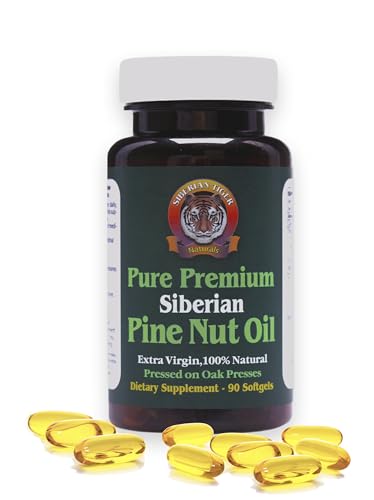
For a smaller capsule count, this option contains 90 softgels rather than the 180-count pack. The product is described as wild-harvested, unrefined, extra-virgin Siberian pine nut oil, first-press only, with no additives or preservatives. Its cold-pressing process uses wooden presses. Softgels suit buyers who want capsules instead of pouring liquid oil. Claims about digestive or other health effects are not established by these product facts.
Bottom line: Choose this if you prefer softgels and want a 90-count pack.
Siberian Pine Nut Oil Softgels, 180 Count
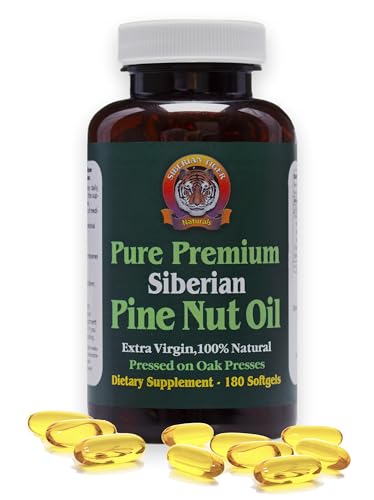
The 180-count pack is the higher-count capsule option, suited to shoppers who want more softgels in one container than the 90-count alternative. The product is described as wild-harvested, unrefined, extra-virgin oil and first-press only, cold pressed using wooden presses, with no additives or preservatives. It is still a capsule product, not pourable oil. Count alone does not establish how much oil each softgel contains or how long the pack lasts; check the serving directions and capsule size before choosing if those affect your routine. Digestive and wellness claims should not be treated as medical advice.
Bottom line: Pick this if you want softgels and a 180-count pack.
Siberian Pine Nut Oil, 8.5 fl oz

The 8.5-fluid-ounce bottle holds more liquid oil than the 3.4-fluid-ounce bottle, making it the larger-bottle choice. It is described as natural, unrefined, extra virgin, and first-press only; the product says it is cold pressed and produced and stored under controlled temperatures. Liquid format suits buyers who prefer pouring oil over taking softgels. The digestive and wellness benefits are product claims, not demonstrated outcomes.
Bottom line: Choose this if you prefer liquid oil and want the larger bottle.
Siberian Pine Nut Oil, 3.4 fl oz
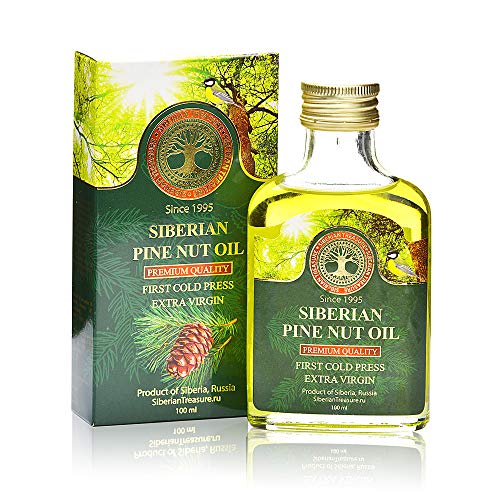
The 3.4-fluid-ounce bottle is the smaller liquid format in this group, holding less than the 8.5-fluid-ounce option. The product is described as extra virgin Siberian pine nut oil, first cold pressed, with no preservatives, colorants, or aromas. It is produced in Siberia, Russia. Choose liquid if you want oil that can be poured rather than capsules; this bottle size may suit someone seeking a smaller quantity. Its purity and pressing terms do not establish a particular health effect.
Bottom line: Pick this if you want liquid oil in the smaller bottle size.
How to choose Siberian pine nut oil format
Choose capsules if you want a pre-portioned format, and liquid if you want oil that can be poured. The products here include 90- and 180-count softgel packs and bottles of 3.4 and 8.5 fluid ounces; those units are not directly comparable because count does not reveal capsule fill. For a measurable choice, if you want a bottle under 4 fluid ounces, select the 3.4-fluid-ounce option; if you want more than 8 fluid ounces, the 8.5-fluid-ounce bottle is the only match. Pressing phrases such as “first press” and “cold pressed” describe processing, not a dosage or a proven health outcome. If managing a health condition or taking medication, ask a clinician before using an oil supplement.
Format also affects handling: liquid oil must be poured and recapped, while softgels are swallowed whole. Neither format eliminates the need to follow the container’s serving directions.
Understanding package sizes and serving amounts
Capsule count and liquid volume measure different things, so do not compare a 180-count pack with an 8.5-fluid-ounce bottle as if they were equivalent doses. A fluid ounce is a volume unit; capsule count only says how many softgels are in the pack. Use the amount per capsule or a measured liquid serving to calculate servings, but the product facts here do not provide either serving amount. The larger bottle contains 5.1 fluid ounces more than the smaller bottle, while the larger capsule pack has 90 more softgels than the smaller pack.
This guide separates the formats and package sizes so you can choose the unit that matches your routine.
| Need | Choose | Measure to compare |
|---|---|---|
| Capsules | Softgel format | Count and oil per softgel |
| Pourable oil | Liquid bottle | Fluid ounces and measured serving |
| Smaller bottle | 3.4 fl oz | Volume |
| Larger bottle | 8.5 fl oz | Volume |
What cold-pressed and extra-virgin mean here
Cold-pressed and extra-virgin are processing and product descriptors, not proof that an oil treats a disease. The products use terms including first press, first cold press, unrefined, and extra virgin, but those phrases alone do not establish a standardized serving or a clinical benefit. One capsule option also identifies wooden presses, while the 8.5-fluid-ounce bottle mentions production and storage under controlled temperatures.
Choose based on format, package size, and any processing attribute that matters to you. For any supplement, keep the intended serving and any medication or condition in mind; consult a qualified healthcare professional rather than using a product claim to replace medical care.
Handling oil supplements safely
Keep oils and supplements away from children, and use the container’s serving directions rather than estimating a dose. Liquid oils can spill and require careful recapping; softgels reduce pouring but still need to be swallowed only as directed. The product facts do not establish an opened-bottle storage interval, so consult the package for storage instructions and discard dates after opening.
Do not assume that “natural” or “pure” means suitable for every person. Anyone who is pregnant, nursing, managing a medical condition, or taking medication should check with a healthcare professional before starting an oil supplement; seek medical care for persistent digestive symptoms rather than relying on a supplement claim.
Frequently Asked Questions
How do I compare capsule count with bottle volume?
Capsule count and fluid ounces measure different things, so compare each format within its own unit. To estimate servings, you need the oil amount per softgel or the measured liquid serving, which should be checked on the container.
Is cold-pressed oil different from first-press oil?
Cold pressing describes an extraction method, while first press refers to the press stage.
Should I take pine nut oil for digestive symptoms?
A supplement should not replace care for persistent digestive symptoms. Anyone with ongoing symptoms, a diagnosed condition, or medication use should consult a healthcare professional before using an oil supplement.
How should I store a bottle after opening?
Use the storage directions printed on the bottle because storage conditions and discard guidance can differ. Recap liquid oil promptly and keep it out of children’s reach.
Can I compare 90 softgels with 3.4 fluid ounces?
Not directly: 90 is a capsule count and 3.4 fluid ounces is a liquid volume. Compare the oil quantity per softgel with a measured liquid serving to assess servings.