
Thermalright Peerless Assassin 120 SE: Variants Compared

The standard Peerless Assassin 120 SE is the closest match for most buyers seeking this CPU air cooler, with a dual-fan, six-heat-pipe design in a 6.1-inch-tall package. Choose a different version for the V2’s thicker, faster fans, ARGB lighting, or an asymmetric heatsink layout.
Before choosing, compare the cooler height with your case limit; raising the V2’s front fan to clear tall RAM adds to its height.
We earn a commission if you buy through links on this page. As an Amazon Associate I earn from qualifying purchases. Products are compared on manufacturer specifications, not hands-on testing.
- Best overall: Peerless Assassin 120 SE – The standard PA120 SE has six heat pipes, dual 120 mm PWM fans and a 6.1-inch height.
- Best for taller RAM: Peerless Assassin 120 SE V2 – Its front fan can be raised to clear taller RAM, though total height increases.
- Best for lighting: Peerless Assassin 120 SE (Aluminum/Copper) – The ARGB version adds lighting while keeping the 6.1-inch listed height.
| Product | Best for | Height | Fan speed | Lighting | Shop |
|---|---|---|---|---|---|
| Peerless Assassin 120 SE | Standard dual-fan setup | 6.1 in | 1,550 RPM | No ARGB stated | Check Price on Amazon |
| Peerless Assassin 120 SE V2 | Adjustable RAM clearance | 6.1 in base | Up to 1,850 RPM | No ARGB stated | Check Price on Amazon |
| Peerless Assassin 120 SE (Aluminum/Copper) | Offset heatsink layout | 6.1 in | — | No ARGB stated | Check Price on Amazon |
| Peerless Assassin 120 SE ARGB | ARGB lighting | 6.1 in | — | ARGB | Check Price on Amazon |
Thermalright Peerless Assassin 120 SE CPU air coolers
Compare the standard cooler with the V2 and ARGB variants by dimensions and fan setup.
Peerless Assassin 120 SE
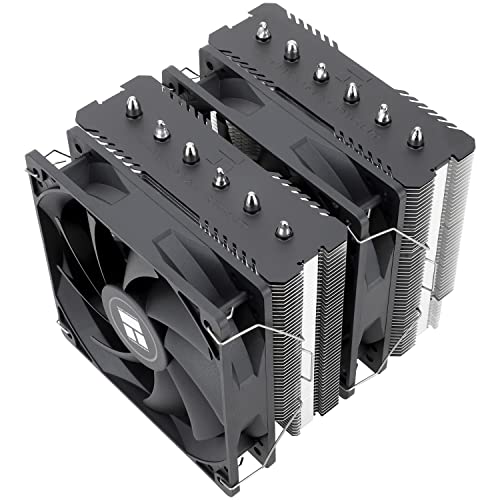
The standard Peerless Assassin 120 SE combines six heat pipes with two 120 mm PWM fans, making it the straightforward choice among these variants. Its aluminum heatsink measures 4.92 × 5.31 × 6.1 inches, and the included metal fasteners support AMD and Intel mounting. The name gives a maximum fan speed of 1,550 RPM. Choose it if that fan setup and the height suit your build. The specifications do not identify a lighting feature, so buyers seeking illuminated fans should consider the ARGB variant instead.
Bottom line: Choose this version for a standard six-heat-pipe, dual-120 mm PWM setup.
Peerless Assassin 120 SE V2

The V2 is distinguished by two thicker 28 mm fans and a front fan that can be raised to clear taller RAM. Thermalright says its TL-C12C-X28 V2 fans reach up to 1,850 RPM ±10% and 88.89 CFM airflow; the cooler also has a dual-tower heatsink and six heat pipes. Its base height is 6.1 inches, but raising the fan increases total height. That adjustability can help with memory clearance, yet it makes case-height checking especially important. Confirm both the RAM height and case cooler limit before choosing this version.
Bottom line: Pick this version if you need front-fan adjustment for taller RAM.
Peerless Assassin 120 SE (Aluminum/Copper)
This PA120 SE variant is distinguished by its aluminum-and-copper heatsink materials and an asymmetric offset layout. Its six heat pipes and dual-tower design are paired with a soldered heatsink base, nickel-plated heat pipes and a brushed black top cover. The 4.92 × 5.31 × 6.1-inch dimensions provide a concrete starting point for case-fit checks, and the maker says the offset layout allows better graphics-card and motherboard compatibility. Fan speed is not included in the fields, so buyers prioritizing a particular RPM should compare the other variants’ fan figures instead.
Bottom line: Choose it for the offset layout and specified aluminum-and-copper construction.
Peerless Assassin 120 SE ARGB

The ARGB version is the option here that names lighting as a defining feature, while retaining a dual-fan, six-heat-pipe cooler format. Its dimensions are 4.92 × 5.31 × 6.1 inches, and the product name identifies TL-C12C-S PWM fans. The fields identify aluminum as the heatsink material. Check that the 6.1-inch cooler height fits your case before selecting it.
Bottom line: Pick this version when ARGB lighting is a priority.
How to choose a Peerless Assassin 120 SE variant
Start with case height, then choose the feature that separates each version. These coolers share a 6.1-inch base height, so a case with less than 6.1 inches of CPU-cooler clearance will not fit them at their height. The V2 front fan can be raised for RAM clearance, but that adds height; check both the memory and case limits before deciding. The standard version gives a 1,550 RPM maximum, while V2 gives a maximum of 1,850 RPM ±10% and up to 88.89 CFM. For lighting, select the ARGB-named model. Fan speed and lighting are different criteria, so do not assume one guarantees the other.
A tower air cooler moves heat from a metal base through heat pipes into fin stacks, where fans push air through the fins. Case airflow and the CPU’s heat output affect temperatures, so the fan figures alone do not predict a particular system result.
Peerless Assassin 120 SE dimensions and clearance
Allow at least 6.1 inches of vertical CPU-cooler clearance for the cooler height, and more if the V2 fan must be raised. Each dimension set is 4.92 × 5.31 × 6.1 inches, but case makers may measure cooler clearance from the motherboard surface, so compare the case specification against the cooler’s height rather than its width or length. RAM clearance is separate from case clearance: a front fan can overlap tall memory even when the tower fits beneath the side panel. Raising a fan trades a memory-clearance issue for a taller overall cooler, and can also shift fan position relative to the fin stack.
For installation, verify the mounting hardware matches the motherboard socket. The names cite AM4/AM5 and several Intel LGA sockets, but socket support can vary by variant; confirm the target socket before ordering.
Dual-tower air cooler fit and airflow
A dual-tower design places two fin stacks around heat pipes and typically uses a fan between towers plus another at the front. The product names here specify dual 120 mm fans, and the V2 identifies 28 mm-thick fans; thicker fans can affect nearby memory or other component clearance. The V2’s airflow ceiling is 88.89 CFM, but airflow depends on fan speed and system resistance, so a free-air figure is not a guaranteed case result. Plan a front-to-rear airflow path with case intake and exhaust fans, and leave an unobstructed path around the cooler. A large tower cooler can also make access to memory slots or motherboard connectors harder after installation.
CPU cooler installation checks before powering on
Confirm socket compatibility and case clearance before mounting, then use the correct bracket and fasteners for the motherboard. Thermal paste fills microscopic gaps between the CPU heat spreader and cooler base; use a small, consistent application rather than leaving excess paste around the socket. Tighten the cooler evenly so the base makes level contact, and connect the PWM fans to the appropriate motherboard headers. After assembly, verify that fan blades spin freely and cables cannot reach them. Never run a CPU cooler without its fan connected: a heatsink alone cannot provide the intended forced airflow, especially during sustained CPU workloads.
Frequently Asked Questions
How much case clearance does a Peerless Assassin 120 SE need?
Allow at least 6.1 inches of CPU-cooler clearance for the height. The V2 can be taller if its front fan is raised to clear RAM, so check the combined fit.
Will a Peerless Assassin 120 SE fit tall RAM?
RAM fit depends on memory height and the front fan’s position. The V2 front fan can be raised to clear taller RAM, but the adjustment increases total cooler height.
What sockets do these coolers support?
The product names cite AMD AM4 and AM5 plus Intel LGA sockets including 1700 and 1851, with some variation by model. Check the exact variant’s socket support against your motherboard before buying.
What does a dual-tower CPU cooler do?
A dual-tower cooler uses heat pipes to carry heat into two fin stacks, and fans move air through those fins. Case airflow and CPU heat output affect cooling, so fan RPM or CFM alone cannot promise a specific temperature.
How should I apply thermal paste to a CPU cooler?
Use a small, even amount of thermal paste on the CPU heat spreader so the mounted base can spread it across the contact area. Keep paste away from the socket and tighten the cooler evenly.