
Best Fly Fishing Magnifying Glasses for Hands-Free Tying

8295 Clip-On Magnifying Glasses suits most anglers because its clip-on nose design is made for one-handed use while tying or changing flies. Choose a different style if you specifically want a lanyard or magnetic release; magnifying glasses help with close work but do not replace protective eyewear on the water.
Magnification can make small hooks and leader knots easier to see, but choose a lens power that lets you focus comfortably at your normal tying distance.
We earn a commission if you buy through links on this page. As an Amazon Associate I earn from qualifying purchases. Products are compared on manufacturer specifications, not hands-on testing.
- Best overall: 8295 Clip-On Magnifying Glasses – The clip-on nose design pairs with one-handed use for quick access while tying.
- Best with lanyard: HIPPO OUTDOOR Sport Glasses with Lanyard – The orange, one-size model explicitly includes a lanyard.
- Best magnetic release: HIPPO OUTDOOR Sport Glasses with Magnetic Release – Its magnetic nose attachment is designed for quick single-handed use.
| Product | Best for | Attachment | Width | Weight | Shop |
|---|---|---|---|---|---|
| 8295 Clip-On Magnifying Glasses | One-handed tying | Clip-on nose | 2 in | 0.53 oz | Check Price on Amazon |
| HIPPO OUTDOOR Sport Glasses with Lanyard | Lanyard carry | Clip-on nose; lanyard | 1.5 in | — | Check Price on Amazon |
| HIPPO OUTDOOR Sport Glasses with Magnetic Release | Magnetic attachment | Magnetic nose | 1.5 in | 0.63 oz | Check Price on Amazon |
Fly Fishing Magnifying Glasses
Compare how each design attaches and what its dimensions can tell you about carrying and positioning it.
8295 Clip-On Magnifying Glasses

The clip-on nose design makes this option distinct for anglers who want to bring magnification into position with one hand. The maker describes it as magnetic-release and suitable for different kinds of fishing, and the clear-colored unit measures 4 inches long by 2 inches wide. That compact footprint may suit a fly vest or tackle kit.
Bottom line: Choose this if a clip-on nose and one-handed access matter more than a specified lens power.
HIPPO OUTDOOR Sport Glasses with Lanyard
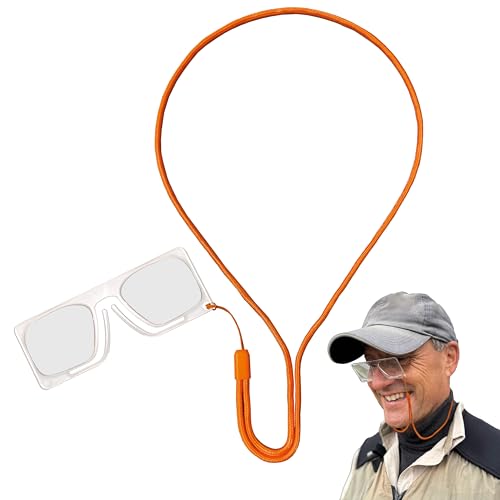
The included lanyard sets this orange, one-size design apart for anglers who want the glasses kept close between tying tasks. Its clip-on nose attachment is intended to sit on the nose while magnifying small flies and leader lines; the maker also describes the optics as thin and lightweight. The glasses measure 4 inches long by 1.5 inches wide.
Bottom line: Pick this when a lanyard is the carrying feature you want.
HIPPO OUTDOOR Sport Glasses with Magnetic Release

The magnetic nose attachment distinguishes this orange, one-size model from the lanyard and clip-on-only options. The maker says its magnetic system is intended for quick, single-handed use, including changing flies, and describes the optics as slim for extended sessions. It measures 4 inches long by 1.5 inches wide and weighs about 0.63 ounces.
Bottom line: Choose this if a magnetic nose attachment is your preferred way to position the magnifier.
How to choose fly fishing magnifying glasses
Choose by attachment first, then match magnification to the distance at which you tie. A nose clip is convenient when you move the lens in and out of position; a magnetic release emphasizes quick attachment, while a lanyard keeps glasses close when removed. Higher magnification narrows the useful viewing area and working distance, so stronger is not automatically easier for tying. Test your normal knot or fly at your usual hand position before committing to a lens power. These glasses are close-work aids, not a substitute for protective eyewear in bright conditions. Before ordering, confirm the lens power and any UV protection you require.
Fit and positioning for fly tying
Set the magnifier so the lens sits in your line of sight while your hands remain at a comfortable tying distance. A lens that is too close or too far can make the fly appear blurred, so adjust your hands and head position before deciding the power is wrong. Lens width also affects how much of the work area you can see at once; narrower optics can require more precise alignment. Keep the hook point and scissors below eye level when repositioning magnifiers, and do not tie while walking on uneven banks or wading. For river use, secure loose eyewear or its lanyard so it cannot snag vegetation or interfere with movement.
Magnifiers versus fishing sunglasses
Magnifiers enlarge close objects; sunglasses reduce glare and can provide UV protection when they carry an appropriate UV rating. Water reflects sunlight, so a magnifier alone should not be assumed to protect eyes from glare or ultraviolet exposure. Use separate sunglasses that fit over or work with the magnifier if needed, and check that the combined arrangement does not obstruct peripheral vision. Polarized lenses can reduce reflected glare, but polarization is different from magnification and does not by itself establish UV protection. When tying, turn away from the water or use shade if reflected light makes the hook and leader hard to see.
Attachment types at a glance
Attachment style determines how the lens is kept ready between tying tasks, not how strong the magnification is. This quick guide connects each mechanism with a practical use; choose the style that suits how often you take the lens on and off.
| Attachment | Useful when | Trade-off |
|---|---|---|
| Nose clip | Moving the magnifier into position | Must align on the nose for a clear view |
| Magnetic release | Quick attachment and removal | Magnet strength and retention need to suit your activity |
| Lanyard | Keeping glasses close when removed | A dangling cord can snag if left loose |
Frequently Asked Questions
What magnification is best for tying small flies?
The right power depends on your working distance and eyesight, so begin with the lowest strength that makes the fly and knot clear at your usual hand position. Stronger magnification generally reduces the comfortable viewing area and distance.
Can fly fishing magnifiers replace polarized sunglasses?
No, magnification enlarges close objects while polarization reduces reflected glare. For fishing in bright conditions, use eyewear with suitable UV protection; polarization alone does not establish UV protection.
How do I keep a fishing magnifier from falling off?
Use the attachment that matches your motion and secure a lanyard so it is not loose around vegetation or gear. Before wading, check that the magnifier stays in place when you turn your head and bend to handle tackle.
Should I wear magnifying glasses while wading?
Use them only when standing securely and doing close work, not while walking over uneven riverbeds. Keep visibility clear and avoid loose cords or eyewear that could snag or distract you.