
Womens Sweatshirts No Hood: 5 Crewneck Styles Compared

For a classic no-hood sweatshirt, Amazon Essentials Fleece Crewneck pairs a regular fit with brushed cotton-blend fleece and a crew neckline. Choose another style if you prefer a loose cut, longer coverage or a mock neckline rather than a standard crewneck.
We earn a commission if you buy through links on this page. As an Amazon Associate I earn from qualifying purchases. Products are compared on manufacturer specifications, not hands-on testing.
- Best overall: Amazon Essentials Fleece Crewneck – A regular-fit crewneck with brushed-back cotton-blend fleece and ribbed trim.
- Best for oversized fit: Teal Oversized Fleece Crewneck – Its roomy silhouette leaves space through the torso and arms for layering.
- Best for extra coverage: Hanes EcoSmart Crewneck – The longer cut sits below the natural waistline.
| Product | Best for | Neckline | Fit | Fabric | Shop |
|---|---|---|---|---|---|
| Amazon Essentials Fleece Crewneck | Classic layering | Open crewneck | Regular | Midweight cotton-blend fleece | Check Price on Amazon |
| Teal Oversized Fleece Crewneck | Roomy layering | Crewneck | Oversized | 95% polyester, 5% spandex | Check Price on Amazon |
| Hanes EcoSmart Crewneck | Longer coverage | Crewneck | Classic; longer length | Mid-weight fleece; cotton from US farms | Check Price on Amazon |
| Gildan G18000 Fleece Crewneck | Customization projects | Crewneck | Classic; loose comfort | Brushed fleece | Check Price on Amazon |
| Trendy Queen Asymmetric Mock Neck | Distinctive neckline | Mock neck with side slit | Oversized; drop shoulder | 50% polyester, 50% cotton | Check Price on Amazon |
Womens Sweatshirts No Hood Compared
Compare each hoodless pullover by its neckline, silhouette and fabric before choosing a size.
Amazon Essentials Fleece Crewneck

Amazon Essentials Fleece Crewneck is the conventional crewneck choice here, with a regular fit and brushed-back fleece. The long-sleeve pullover has ribbed detail at the neck, cuffs and hem, and the brand says its textile is STANDARD 100 by OEKO-TEX certified. Its close-but-comfortable cut suits wearing over a T-shirt or with matching sweatpants. The limitation is the regular silhouette: shoppers wanting extra room through the torso and arms may prefer an oversized cut instead. The size is X-Large in blue, so compare garment measurements with a sweatshirt that fits before choosing.
Bottom line: Choose this for a regular-fit crewneck with brushed-back fleece.
Teal Oversized Fleece Crewneck

Teal Oversized Fleece Crewneck stands apart with an oversized cut and a polyester-spandex shell rather than a cotton blend. The sweatshirt has a fleece lining, a crew neckline and room around the torso and arms for layering. Its turquoise color and relaxed shape suit casual wear when a close fit is not the goal. The limitation is that the roomy silhouette may feel too broad for shoppers seeking a regular fit, and the size is X-Large. Check the brand’s size chart against your measurements before choosing, especially if you want a less oversized drape.
Bottom line: Choose this when extra room for layering matters most.
Hanes EcoSmart Crewneck

Hanes EcoSmart Crewneck differs from the other classic crewnecks with a longer length designed to sit below the natural waistline. The brand describes it as a mid-weight, year-round sweatshirt with plush fleece and cotton sourced from American farms. Ribbed collar, cuffs and waistband provide stretch, while the tagless neck removes a common source of irritation. This option suits shoppers who want more torso coverage than a standard-length cut. The specifications give a 2X Large size, so check the brand’s size chart if you are comparing it with a different size or fit preference.
Bottom line: Choose this if below-waist coverage is your priority.
Gildan G18000 Fleece Crewneck
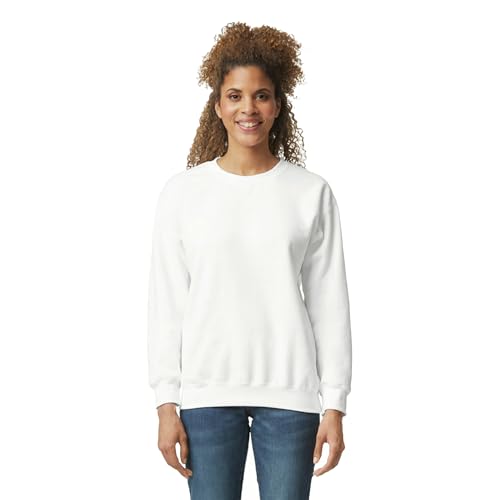
Gildan G18000 Fleece Crewneck is the loose-comfort crewneck in this group, with a brushed interior and rib cuffs and bottom band containing spandex. Double-needle stitching reinforces the shoulders, armholes, neck, waistband and cuffs; the tear-away label allows customization. The brand lists screen printing, embroidery, heat transfer, patches and direct-to-garment decoration as compatible uses. That makes it a practical option for a decorated team or group sweatshirt. The limitation is its classic cut rather than an explicitly oversized shape, and the option is a one-pack in white, size Large.
Bottom line: Choose this for a loose crewneck suited to decoration.
Trendy Queen Asymmetric Mock Neck
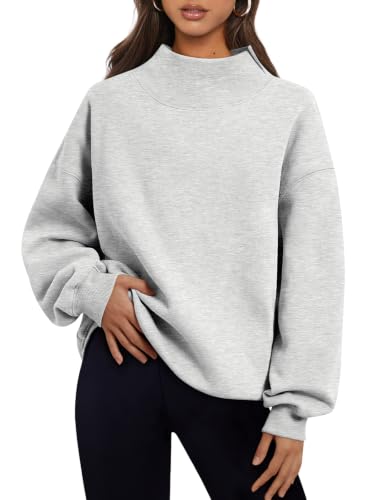
Trendy Queen Asymmetric Mock Neck is the only mock-neck option, with an asymmetric slit on one side of the collar instead of a standard crew neckline. Its 50% polyester and 50% cotton fabric has a fleece lining, and the dropped shoulders contribute to an oversized silhouette. The style suits someone who wants a more noticeable neckline detail in a casual pullover. The trade-off is that it is not a traditional crewneck, so it may not match preferences for a simple, even collar. The size is Small in grey.
Bottom line: Choose this for an oversized sweatshirt with a mock neckline.
How to Choose a No-Hood Sweatshirt
Start with the neckline and fit you want, then compare fabric and coverage. A crewneck has a rounded opening without a raised collar; a mock neck rises higher around the base of the neck. Regular cuts generally sit closer to the body, while oversized and drop-shoulder shapes leave more room through the chest and sleeves. For a quick fit rule, measure your chest at its fullest point and compare it with the brand’s size chart; if you want room for a thick layer, choose a size whose chart leaves that extra ease rather than assuming all X-Large or Small sizes match. Fabric names also matter: cotton blends and polyester blends can feel and drape differently. The fiber percentages here identify the blend only where supplied.
A longer hem can add coverage below the waist, while a standard-length cut may suit layering under a jacket. Pick the feature that solves your main fit need before weighing color or trim.
Crewneck and Mock-Neck Sweatshirt Differences
A crewneck gives the simplest rounded neckline, while a mock neck covers more of the neck and changes the sweatshirt’s look. Neither neckline has a hood. Choose a crewneck if you want a familiar shape for layering over a T-shirt; consider a mock neck if you want a higher collar detail. Fit is a separate decision: an oversized or drop-shoulder body can be roomy regardless of neckline, and a regular cut can be closer through the body. Use this comparison to match the silhouette to your intended wear.
| Style | What to expect | Choose when |
|---|---|---|
| Crewneck | Rounded, open neckline | You want a straightforward layer |
| Mock neck | Higher collar around the neck | You want neckline coverage and detail |
| Oversized crewneck | Extra room through body and arms | You plan to layer or prefer a loose drape |
Neckline alone does not establish warmth: fleece lining, fabric weight and layering all affect how warm a sweatshirt feels.
How to Get the Fit and Coverage Right
Use chest and length measurements rather than relying on a size label alone. Measure around the fullest part of your chest with the tape level, then compare that number with the brand’s chart; check the garment length too if you want the hem to cover the waist or sit below it. A regular fit is a better starting point for a closer silhouette, while an oversized cut is the clearer choice when you want extra room through the torso and arms. Shoulder seams also affect appearance: dropped shoulders sit lower on the arm than conventional shoulder seams. If the fit you want is between chart sizes, use your preferred layer thickness as the deciding condition and confirm the size chart before ordering.
Color and fabric can also affect coordination, but they do not replace a measurement check. A sweatshirt intended for a fitted look may feel different over a thick base layer than over a T-shirt.
How to Care for Fleece Sweatshirts
Cold-water washing and low-heat drying are common ways to reduce shrinkage and stress on fleece, particularly for cotton-containing garments. Turn a sweatshirt inside out before washing to reduce surface friction, and avoid high dryer heat when maintaining the original fit matters. Cotton can shrink more with high heat than polyester, while blends can behave differently depending on their fiber mix and construction. Check the garment’s sewn-in care label for its specific wash and dry limits, since the fabric percentage alone does not establish the permitted care method. Remove the sweatshirt promptly after drying to limit wrinkles, and avoid ironing directly over decorative prints if the garment has any.
For a longer-lasting fit, avoid treating every fleece pullover as identical: fiber blend, brushed lining and construction influence how it responds to heat and repeated washing.
Frequently Asked Questions
How should a no-hood sweatshirt fit?
A regular-fit sweatshirt should sit comfortably through the chest and waist without pulling, while an oversized fit leaves more room through the body and arms. Measure your chest and compare it with the brand’s chart; choose the chart option that allows the layering space you want.
What is the difference between a crewneck and mock neck?
A crewneck has a rounded opening at the base of the neck, while a mock neck rises higher around the neck. Choose a crewneck for a simple layer or a mock neck for a higher collar detail.
Do cotton-blend sweatshirts shrink in the wash?
Cotton can shrink more when exposed to high wash or dryer heat, while polyester generally resists shrinkage better. Cold washing and low-heat drying help reduce the risk, but follow the garment’s care label.
How do I choose a sweatshirt size for layering?
Measure around the fullest part of your chest and compare that measurement with the brand’s size chart. If you plan to wear a thick layer underneath, select a chart size that leaves room for it rather than sizing by the label alone.
Are oversized sweatshirts warmer than regular-fit styles?
A looser cut can leave room for extra layers, but fit alone does not determine warmth. Fleece lining, fabric weight and what you wear underneath also affect how warm a sweatshirt feels.