
Knee Brace for Meniscus Tear: 5 Support Styles Compared

For meniscus-related knee support, Fit Geno Hinged Knee Brace is the closest match if you want a hinged brace with side stabilizers; the hinges are the deciding feature. Choose a sleeve instead if you prefer compression without a hinged frame, or a wraparound style if adjustable straps are your priority.
A knee brace supports or compresses the joint; it does not repair a meniscus tear. Ask a clinician which brace type is appropriate, especially if you have trouble bearing weight or the knee locks.
We earn a commission if you buy through links on this page. As an Amazon Associate I earn from qualifying purchases. Products are compared on manufacturer specifications, not hands-on testing.
- Best overall: Fit Geno Hinged Knee Brace – Hinges and dual side stabilizers provide a defined support frame.
- Best for adjustable straps: Four-Strap Adjustable Knee Brace – Its four-strap wraparound system is designed to adjust support during activity.
- Best for sleeve compression: Modvel Compression Knee Brace, 2-Pack – The two-pack offers a pull-on compression sleeve style without a hinged frame.
| Product | Best for | Support style | Material | Fit or size | Shop |
|---|---|---|---|---|---|
| Fit Geno Hinged Knee Brace | Hinged support | Hinges and side stabilizers | — | M, L, XL | Check Price on Amazon |
| JOMVD Knee Brace, Medium | Spring stabilizers | Spring stabilizers and compression straps | 60% neoprene, 27% nylon, 8% polyester | Medium | Check Price on Amazon |
| Four-Strap Adjustable Knee Brace | Wraparound adjustment | Four straps and flexible stabilizers | — | Thigh up to 20 in | Check Price on Amazon |
| Neoprene Knee Support, Medium | Strapped compression | Locking straps and side stabilizers | Neoprene | Medium | Check Price on Amazon |
| Modvel Compression Knee Brace, 2-Pack | Two sleeve braces | Compression sleeve | Nylon and latex | Medium | Check Price on Amazon |
Knee Braces for Meniscus Tear
Compare support construction and fit before choosing a brace for meniscus-related knee support.
Fit Geno Hinged Knee Brace
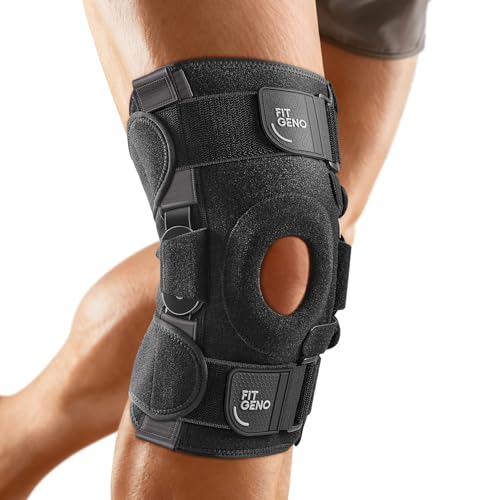
The defining difference is the hinged frame: dual side stabilizers and hinges are intended to limit unwanted side-to-side knee movement. Fit Geno identifies the brace for men and women and gives M, L and XL size options. That makes it a fit to consider when a clinician recommends a hinged style rather than a simple sleeve. The size labels alone do not give a measurement range, so check the sizing chart before selecting a size.
Bottom line: Choose this if you want a hinged brace and can confirm its sizing.
JOMVD Knee Brace, Medium

Unlike a hinged brace, this JOMVD support pairs dual memory spring stabilizers with adjustable dual-V compression straps. It also has an open-patella design and C-shaped gel pads on both sides of the kneecap. The fabric blend is 60% neoprene, 27% nylon, 8% polyester and 5% spandex. Consider it if you want adjustable compression with spring supports rather than a rigid hinge. The size is Medium, so buyers needing another size should confirm a matching option before choosing; the claims do not show that it can heal a meniscus injury.
Bottom line: Pick this for a medium spring-stabilizer brace with adjustable straps.
Four-Strap Adjustable Knee Brace

The four-strap wraparound construction is the main distinction here, with flexible stabilizers at the MCL and LCL and thinner straps behind the knee. It is sold as one unit and can be worn on either knee. The fit limit is an upper thigh measurement of up to 20 inches, taken 3 inches above the knee; measure at that location before selecting it. The product calls for hand-washing and air-drying only.
Bottom line: Choose this if your upper thigh measures 20 inches or less at the point.
Neoprene Knee Support, Medium

This medium support combines a three-stage locking system with a wide hook-and-loop base, crisscross straps and a calf strap. Four side stabilizers on each side are described as a frame against sideways and twisting forces. Its neoprene sleeve construction distinguishes it from the hinged brace and the pull-on sleeve. Consider it if you want a compression-style brace with several adjustment points. The size is Medium, and no leg measurement range accompanies it here, so sizing may be a constraint; confirm that the maker’s size chart matches your measurements before choosing.
Bottom line: Pick this if you want neoprene compression with several strap adjustments.
Modvel Compression Knee Brace, 2-Pack

This option is a two-pack of pull-on compression sleeves, not a brace with hinges or side stabilizers. The material is a nylon-and-latex blend, and the maker calls the fabric breathable and moisture-wicking. Medium is the selected size. A sleeve may suit someone seeking a low-profile compression layer rather than adjustable structural support, but it does not offer the hinged or spring supports found in other options here.
Bottom line: Choose this if you prefer two pull-on compression sleeves over stabilizers.
How to choose a knee brace for a meniscus tear
Choose a knee brace by the support your clinician recommends: a hinged frame limits side-to-side motion, flexible stabilizers add side support, straps adjust compression, and sleeves provide pull-on compression. Meniscus tears differ in location and severity, so bracing is only one part of care; physical therapy and changes to activity may also be considered. Measure at the exact location named by the size chart rather than relying on clothing size. If you have less than 20 inches of upper-thigh circumference measured 3 inches above the knee, the four-strap brace with that stated fit limit may be an option; above 20 inches, choose a size range that accommodates your measurement.
| Support need | Construction to consider |
|---|---|
| Side-to-side control | Hinges and side stabilizers |
| Adjustable compression | Wraparound straps |
| Pull-on compression | Sleeve |
How to measure knee brace fit
Measure the knee and nearby leg where the maker’s chart instructs, because a sleeve, hinged brace, and wraparound brace can use different sizing points. A knee circumference measurement is commonly taken around the center of the kneecap with the leg slightly bent; thigh or calf measurements may also be required for braces that anchor above or below the joint. The four-strap option here specifies upper-thigh circumference 3 inches above the knee and a maximum of 20 inches. Choose a brace whose range includes your measurement, and avoid sizing down to create extra compression. A brace that slides, bunches behind the knee, or causes numbness or tingling needs adjustment or removal.
Hinged braces, stabilizers and compression sleeves
Hinged braces, flexible stabilizers, and compression sleeves provide different levels and kinds of support, so compare construction rather than assuming every knee brace works the same way. A hinge forms a side frame; spring or flexible stabilizers add support without the same rigid hinge structure. Wraparound straps let the wearer adjust tension, while pull-on sleeves mainly provide compression. Compression does not equal joint stabilization, and a sleeve should not be treated as a substitute for a brace prescribed for instability. Heat, swelling, and activity can affect comfort during wear, so check the skin and fit after removing a brace. Select the least restrictive construction that meets the treatment plan and activity needs.
Safe wear and care for knee braces
A knee brace should feel secure without cutting off circulation: remove or loosen it for numbness, tingling, worsening pain, or a cool or discolored foot. Inspect skin after wear, especially around strap edges and stabilizer pockets, and stop using the brace if pressure causes persistent irritation. Keep straps flat and avoid folds behind the knee, where bending can concentrate pressure. Follow the care method for the specific brace: the four-strap option requires hand-washing and air-drying, while other fabric blends may have different care needs. A locked knee or inability to bear weight warrants medical assessment rather than simply tightening a brace.
Frequently Asked Questions
Can a knee brace heal a meniscus tear?
No brace can be assumed to heal a meniscus tear; a brace may provide support or compression while a clinician determines treatment. Seek prompt medical advice if the knee locks or you cannot bear weight.
How tight should a knee brace feel?
A brace should feel secure without causing numbness, tingling, increased pain or color change in the foot. Loosen or remove it if those symptoms occur, and check that straps do not bunch behind the knee.
Should I wear a knee brace while sleeping?
Do not assume a daytime brace should be worn overnight; wear it during sleep only if your clinician directs you to. Skin pressure and swelling can change when the knee is still for hours.
Can I exercise with a meniscus tear and brace?
A brace does not make every activity safe; the allowed activity depends on symptoms and the treatment plan. Stop an activity that causes sharp pain, catching, or increased swelling and check with a clinician.