
Best Naturally Decaffeinated Green Tea: 4 Picks Compared

Bromley Naturally Decaffeinated Green Tea, 48 ct is the clearest match for naturally decaffeinated green tea because its name explicitly identifies it as naturally decaffeinated. Choose GLDNT Organic Decaf Green Tea, 100 ct if an organic tea with a CO₂ process matters more, or Bigelow Classic Decaffeinated Green Tea, 120 bags if individually wrapped tea bags are the priority.
Green tea is made from tea leaves that are heated to limit oxidation; decaffeination removes most, but not necessarily all, of its caffeine.
We earn a commission if you buy through links on this page. As an Amazon Associate I earn from qualifying purchases. Products are compared on manufacturer specifications, not hands-on testing.
- Best overall: Bromley Naturally Decaffeinated Green Tea, 48 ct – It explicitly identifies the tea as naturally decaffeinated and comes in a 48-count box.
- Best for CO₂ decaffeination: GLDNT Organic Decaf Green Tea, 100 ct – Its product name and features specify a CO₂ process and 100 tea bags.
- Best for individually wrapped bags: Bigelow Classic Decaffeinated Green Tea, 120 bags – The features specify foil-wrapped bags and 120 total servings.
| Product | Best for | Bag count | Decaffeination method | Packaging | Shop |
|---|---|---|---|---|---|
| Bromley Naturally Decaffeinated Green Tea, 48 ct | Straightforward match | 48 bags | Naturally decaffeinated | — | Check Price on Amazon |
| Bromley Naturally Decaffeinated Green Tea, 3 Set | Three-set quantity | 3 × 48 bags | Naturally decaffeinated | Set of three | Check Price on Amazon |
| GLDNT Organic Decaf Green Tea, 100 ct | Named CO₂ process | 100 bags | CO₂ process | Resealable bag | Check Price on Amazon |
| Bigelow Classic Decaffeinated Green Tea, 120 bags | Wrapped tea bags | 120 bags | — | Individually foil-wrapped | Check Price on Amazon |
Naturally Decaffeinated Green Tea Picks
Compare the decaffeination method, quantity and packaging to find the option that fits your tea routine.
Bromley Naturally Decaffeinated Green Tea, 48 ct
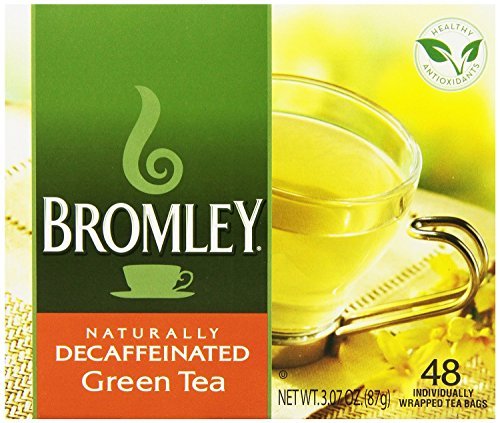
Bromley Naturally Decaffeinated Green Tea, 48 ct is the most direct match for naturally decaffeinated green tea, with a 48-count size. The compact count suits someone who wants a single box rather than a multi-set quantity. Green tea can turn bitter when brewed too hot or too long; use water around 160–180°F and steep for 2–3 minutes for a gentler cup.
Bottom line: Choose this if a clearly labeled naturally decaffeinated tea is your main criterion.
Bromley Naturally Decaffeinated Green Tea, 3 Set
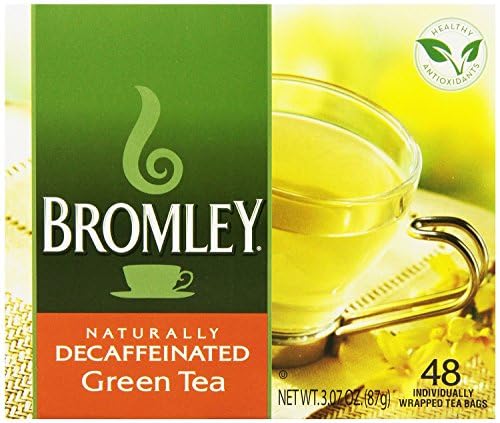
Bromley Naturally Decaffeinated Green Tea, 3 Set offers the Bromley naturally decaffeinated tea in a three-set format, rather than the single 48-count box of Bromley Naturally Decaffeinated Green Tea, 48 ct. Its name gives the tea type and set size, making it the quantity-focused alternative. For iced tea, brew the tea at the same gentle temperature, then chill it; adding ice directly to a hot brew can dilute the flavor.
Bottom line: Pick this when you want the three-set format of Bromley tea.
GLDNT Organic Decaf Green Tea, 100 ct

GLDNT Organic Decaf Green Tea, 100 ct is the process-specific alternative: its features identify a CO₂ decaffeination method and an organic steamed green tea. The resealable bag holds 100 tea bags, and the product is presented for hot or iced brewing. Its maker gives a method but does not call the tea “naturally decaffeinated” by name, so it is a partial match for shoppers searching for that exact label. The flavor profile is smooth and delicate; brew green tea below boiling and avoid an extended steep to reduce harshness.
Bottom line: Choose this if a CO₂ method and organic tea matter more than the exact label.
Bigelow Classic Decaffeinated Green Tea, 120 bags

Bigelow Classic Decaffeinated Green Tea, 120 bags stands out for individually foil-wrapped tea bags and a total of 120 bags across six 20-count packs. The product features also describe a smooth, delicate flavor and suitability for hot or iced tea. Individually wrapped bags are useful when portions need to travel or stay separated; the tradeoff is that the exact process cannot be compared from the attributes.
Bottom line: Pick this if individually wrapped bags and a 120-bag total are your priorities.
How to choose naturally decaffeinated green tea
Choose by the decaffeination process when the method matters, and by bag count when you mainly need a dependable supply. “Decaf” means much of the caffeine has been removed, not that the tea is guaranteed caffeine-free; residual caffeine can remain. The term “naturally decaffeinated” is not enough by itself to identify whether a brand used CO₂ or another process. GLDNT Organic Decaf Green Tea, 100 ct specifically identifies CO₂, while Bromley Naturally Decaffeinated Green Tea, 48 ct and Bromley Naturally Decaffeinated Green Tea, 3 Set use the naturally decaffeinated wording without naming the method. Use this comparison as a quick decision guide:
| Priority | Choose | Reason |
|---|---|---|
| Exact naturally decaffeinated label | Bromley Naturally Decaffeinated Green Tea, 48 ct or Bromley Naturally Decaffeinated Green Tea, 3 Set | The name uses that wording |
| Named CO₂ method | GLDNT Organic Decaf Green Tea, 100 ct | Its features specify CO₂ |
| Individually wrapped bags | Bigelow Classic Decaffeinated Green Tea, 120 bags | Foil-wrapped portions |
Buyers who must avoid caffeine entirely should verify the residual caffeine amount with the manufacturer before relying on any decaf tea.
Green tea brewing temperature and steep time
Green tea generally brews best around 160–180°F for 2–3 minutes; boiling water and longer steeps can draw out bitter-tasting compounds. A kitchen thermometer helps, but letting freshly boiled water cool for several minutes is a practical alternative. Start at the cooler end of the range for a delicate cup and adjust within the range to taste. Tea-bag brewing directions can differ by leaf style and bag size, so use these figures as a starting point, not a rigid rule. For iced tea, brew a concentrated cup using a little less water, then pour over ice; direct ice dilution is less likely to mute the tea when the initial brew is stronger.
What decaffeinated means for caffeine
Decaffeination reduces caffeine rather than guaranteeing its complete removal, so green tea labeled decaf may still contain some caffeine. The amount can vary with the leaf, processing, serving size and brewing time; the specifications here do not provide residual-caffeine figures. People who need to avoid caffeine completely should confirm the amount per serving with the maker or choose a beverage verified as caffeine-free. Decaffeination method is another meaningful distinction: CO₂ is a named method for GLDNT Organic Decaf Green Tea, 100 ct, while the Bromley names use naturally decaffeinated wording without identifying a process. A method label alone does not establish the exact caffeine remaining in a brewed cup.
Hot and iced tea preparation
Hot and iced green tea use the same leaves, but water temperature and dilution affect the result. For hot tea, begin around 160–180°F and steep for 2–3 minutes. For iced tea, brew a stronger concentrate or chill the brewed tea before serving so melted ice does not flatten the flavor. Refrigerate brewed tea promptly and use it within a few days for best flavor; discard tea left at room temperature for more than 2 hours. Tea bags are portioned for convenience, but cup size changes strength, so use one bag for a typical mug and adjust if serving in a large pitcher. Do not assume a decaf tea is caffeine-free when preparing servings for someone avoiding caffeine.
Frequently Asked Questions
Does naturally decaffeinated green tea contain caffeine?
It may contain residual caffeine because decaffeination removes most caffeine rather than guaranteeing complete removal. Check the per-serving amount with the manufacturer if even a small amount matters.
What temperature should green tea steep at?
A typical range is 160–180°F, with a 2–3 minute steep. Use the cooler end or a shorter steep if the cup tastes bitter.
Can decaffeinated green tea be served iced?
Yes, green tea can be brewed hot and chilled or brewed stronger and poured over ice. A stronger concentrate helps compensate for ice dilution.
What does CO₂ decaffeination mean for green tea?
CO₂ decaffeination uses carbon dioxide as part of the process for removing caffeine from tea leaves. A named method does not tell you the precise residual caffeine per brewed serving, so verify that amount if needed.
How long can brewed green tea be refrigerated?
For best flavor, use refrigerated brewed tea within a few days. Refrigerate it promptly and discard it if it has sat at room temperature for more than 2 hours.