
LPS 3 Rust Inhibitor: Sizes and Formats Compared

LPS 3 Premier Rust Inhibitor is available in several container formats, and the 11-ounce aerosol is the most versatile choice when you need a ready-to-spray can. Choose a larger container for repeated or bulk application, but confirm the application method and capacity before ordering the pail.
The inhibitor leaves a soft, waxy film that the maker says protects indoors for up to two years; select the container size based on the surface area and how you plan to apply it.
We earn a commission if you buy through links on this page. As an Amazon Associate I earn from qualifying purchases. Products are compared on manufacturer specifications, not hands-on testing.
- Best overall: LPS 3 Premier, 11 oz Aerosol – The 11-ounce aerosol offers a ready-to-spray format for smaller or occasional applications.
- Best for larger aerosol applications: LPS 3 Premier, 20 oz – The 20-ounce container provides more product per container than the 11-ounce aerosols.
- Best for gallon quantities: LPS 3 Premier, 1 Gallon – The one-gallon container suits buyers who need more than an aerosol can.
- Best for case quantities: LPS 3 Premier, 12-Pack of 11 oz Aerosols – This option is a pack of twelve 11-ounce aerosol cans.
| Product | Best for | Format | Container size | Indoor protection claim | Shop |
|---|---|---|---|---|---|
| LPS 3 Premier, 11 oz Aerosol | Small applications | Aerosol | 11 oz | Up to 2 years | Check Price on Amazon |
| LPS 3 Premier, 12-Pack of 11 oz Aerosols | Repeat applications | Aerosol case | 12 × 11 oz | Up to 2 years | Check Price on Amazon |
| LPS 3 Premier, 20 oz | Larger aerosol jobs | Container | 20 oz | Up to 2 years | Check Price on Amazon |
| LPS 3 Heavy-Duty Pail | Bulk applications | Pail | — | — | Check Price on Amazon |
| LPS 3 Premier, 1 Gallon | Gallon quantities | Gallon container | 1 gal | Up to 2 years | Check Price on Amazon |
LPS 3 Rust Inhibitor Sizes and Formats
Compare container formats and sizes to match the amount of inhibitor you need with your application plan.
LPS 3 Premier, 11 oz Aerosol

The single 11-ounce aerosol is the most straightforward format for smaller jobs and occasional use. Its hazy-brown inhibitor forms a soft, self-healing waxy film, and the maker says it displaces moisture while preventing rust and corrosion. The product also provides non-sling lubrication, which can matter on parts where lubricant should stay in place.
Aerosol application is convenient for targeted coverage, but one can may not be practical for large surfaces or repeated shop use. Apply only to clean, dry surfaces, and use the product in a ventilated area away from ignition sources.
Bottom line: Choose this size for targeted applications when you want a ready-to-spray can.
LPS 3 Premier, 12-Pack of 11 oz Aerosols
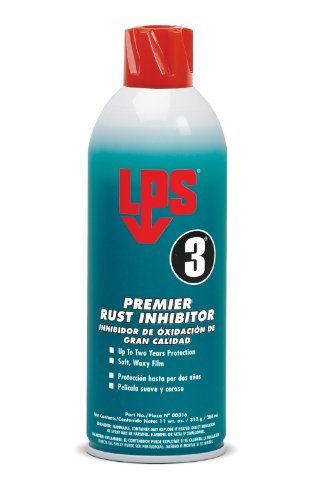
The 12-can pack is the case-quantity option for shops or maintenance work that uses the same 11-ounce aerosol format repeatedly. Each can carries the same hazy-brown, soft waxy film as the single aerosol; the maker says the film displaces moisture, prevents corrosion, and protects indoors for up to two years.
A case reduces the need to replenish individual cans during ongoing work, but it is less suitable when you need only one small application. Store aerosol cans according to their label, away from heat and ignition sources, and use ventilation when spraying.
Bottom line: Pick the case when multiple 11-ounce cans fit recurring work.
LPS 3 Premier, 20 oz

The 20-ounce container offers a larger stated quantity than the 11-ounce aerosol, making it a fit for applications that need more product in one container. The maker attributes rust and corrosion prevention, moisture displacement, non-sling lubrication, and indoor protection for up to two years to its self-healing soft waxy film.
The size alone does not establish how the product is dispensed, so confirm the application method before choosing it over an aerosol. A larger container is also less convenient than a small can for precise, occasional spot work.
Bottom line: Choose this container when you need more than 11 ounces and its dispensing format suits the job.
LPS 3 Heavy-Duty Pail

The heavy-duty pail is the bulk-format option among these LPS 3 products, suited to buyers who need a container rather than an individual aerosol. Its product name identifies it as a rust inhibitor pail, but the specifications do not give a capacity or application method.
Those missing points matter when planning coverage: confirm the pail capacity and how the inhibitor is meant to be applied before ordering. For small or isolated areas, an aerosol can is easier to size to the job; a pail makes more sense when the work calls for a bulk container.
Bottom line: Choose the pail only after confirming its capacity and application method.
LPS 3 Premier, 1 Gallon

The one-gallon container is the largest volume among these formats, suited to projects that call for more inhibitor than an aerosol can provides. The maker says its hazy-brown film displaces moisture, prevents rust and corrosion, provides non-sling lubrication, and protects indoors for up to two years.
For a small, precise job, a gallon container may be less convenient than an aerosol.
Bottom line: Pick the gallon when the project calls for a larger quantity and its application method fits.
How to choose an LPS 3 container
Choose an LPS 3 container by estimating surface area and how often you will apply the inhibitor. An 11-ounce aerosol is the simplest fit for spot work; the 20-ounce container and one-gallon size offer larger stated quantities, while the 12-pack supplies a dozen 11-ounce cans. The pail is a bulk format, but its capacity and application method need confirmation before purchase.
Rust-inhibitor films work best as a continuous layer over a clean, dry surface; dirt, loose rust, and trapped moisture can interrupt coverage. For storage protection, coat edges, seams, and other exposed metal as well as broad faces. Aerosols should be sprayed with ventilation and kept away from ignition sources; consult the container label for handling precautions. As a rule, choose an aerosol for work that can be covered with one or a few cans, and move to bulk formats for repeated, larger-area application.
What the LPS 3 film is for
LPS 3 leaves a soft, waxy corrosion-inhibiting film rather than a hard paint-like coating. That flexible surface can suit metal parts placed in indoor storage, and the maker claims protection for up to two years indoors. The specifications also identify moisture displacement and non-sling lubrication as functions of the film.
Preservation coatings are not interchangeable with permanent finishes: a waxy film can collect dust and may need removal before painting, bonding, or precision assembly. Keep treated parts separated from surfaces where residue is undesirable, and test a small area if appearance or later coating adhesion matters. Outdoor exposure, frequent handling, condensation, and contaminants can change how long protection remains effective; the indoor duration should not be treated as a universal service interval.
How to prepare metal before application
Clean and dry metal before applying a rust inhibitor so the film contacts the surface rather than covering dirt or water. Remove loose rust and old coating flakes, then pay extra attention to seams and crevices where moisture can remain. A thin, even coat is generally easier to manage than a heavy layer that drips or gathers.
For aerosol work, keep the can moving and follow its label for distance, ventilation, and safe handling. Do not spray near flames, sparks, or hot surfaces. If a part will later be painted, glued, or assembled against a close-tolerance surface, confirm that the waxy residue is compatible with that next step and plan for removal if required. A small test area helps reveal unwanted staining or residue before treating a larger visible component.
Common mistakes with rust inhibitor
The most common mistake is treating the indoor protection period as a guarantee for every environment. The maker’s up-to-two-year claim is specifically for indoor protection; outdoor exposure, handling, and contaminated surfaces can undermine a coating sooner. Inspect stored parts periodically, especially at seams and contact points where a film may be disturbed.
Another error is choosing a container before checking its application format. The 11-ounce products are aerosols, while the gallon and pail formats should be matched to the intended method and work area. Avoid applying a waxy inhibitor where clean, residue-free contact is required. For bulk formats whose application method or capacity is unclear, confirm those particulars before purchase; for aerosol use, maintain ventilation and keep the spray away from ignition sources.
Frequently Asked Questions
How long does LPS 3 protect metal indoors?
The maker says LPS 3 protects indoors for up to two years. Treat that as an indoor claim, not a guaranteed interval for outdoor exposure or frequently handled parts.
Does LPS 3 leave a hard coating on metal?
No; the specifications describe a soft, waxy, self-healing film. That residue may need to be removed before painting, bonding, or close-tolerance assembly.
Can LPS 3 be used outdoors?
The protection claim is for indoor use, so do not assume the same duration outdoors. Exposure to weather, moisture, and handling can affect how long a protective film remains effective.
Should metal be cleaned before applying LPS 3?
Yes, apply inhibitor to clean, dry metal for better surface contact. Remove loose rust and debris, and make sure seams are not holding moisture.
How do I choose between LPS 3 aerosol and gallon?
Choose an 11-ounce aerosol for targeted work and a gallon when the project needs a larger quantity.
Is LPS 3 aerosol safe to spray near a flame?
No; keep aerosol spray away from flames, sparks, and hot surfaces. Use ventilation and follow the can label’s handling precautions.