
2013 Infiniti JX35 Alternator Replacement Options Compared

For a 2013 Infiniti JX35 with the 3.5L V6, BDELI 11538N Alternator is a direct match by fitment and its 12-volt, 150-amp, 7-groove specifications. The other choices also identify the 2013 JX35, but compare their pulley and regulator details before choosing; verify the replacement part number against the alternator being removed.
We earn a commission if you buy through links on this page. As an Amazon Associate I earn from qualifying purchases. Products are compared on manufacturer specifications, not hands-on testing.
- Best overall: BDELI 11538N Alternator – Names the 2013 JX35 and specifies a 12-volt, 150-amp, 7-groove alternator.
- Best for pulley detail: Farrme 11538 Alternator – Provides a 55 mm pulley diameter along with 150-amp output.
- Best for fitment range: 11538N New Alternator, 150A – Explicitly includes the 2013 JX35 and several related Nissan and Infiniti applications.
| Product | Best for | Output | Pulley | Regulator / fan | Shop |
|---|---|---|---|---|---|
| BDELI 11538N Alternator | Direct JX35 match | 12V, 150A | 7 grooves | IR regulator, IF fan | Check Price on Amazon |
| Farrme 11538 Alternator | Pulley measurement | 12V, 150A | 7 grooves, 55 mm diameter | Internal regulator, internal fan | Check Price on Amazon |
| 11538N New Alternator, 150A | Broad fitment range | 12V, 150A | 7 grooves | IR regulator, IF fan | Check Price on Amazon |
| 11538N Alternator, 150A | Shared fitment match | 12V, 150A | 7 grooves | — | Check Price on Amazon |
| 150A New Alternator, 11538N | Reference number match | — | — | — | Check Price on Amazon |
2013 Infiniti JX35 Alternator Replacement Options
These alternators share the 11538N and 23100-3JA1A replacement references; use the specific pulley, regulator, and fitment details to compare them.
BDELI 11538N Alternator
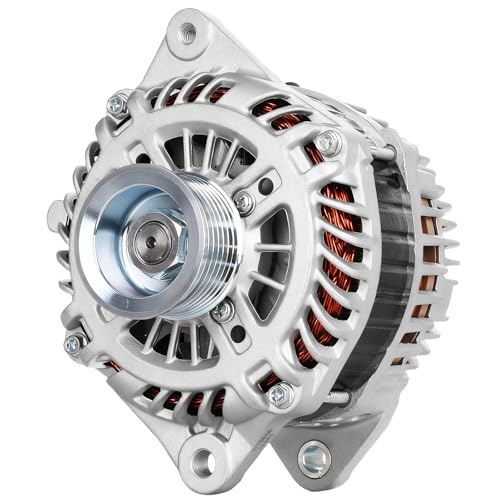
BDELI 11538N Alternator explicitly names the 2013 Infiniti JX35 with the 3.5L V6 and gives the 11538N and 23100-3JA1A replacement references. The unit is specified at 12 volts and 150 amps, with clockwise rotation and a 7-groove pulley. BDELI also identifies ISO 9001 and IATF 16949 certified manufacturing facilities. This is a straightforward fitment candidate when the vehicle and reference numbers match. The maker does not give pulley diameter, so buyers who need that dimension for a comparison should confirm it before ordering.
Bottom line: Choose this if your JX35 fitment and replacement reference match.
Farrme 11538 Alternator

Farrme 11538 Alternator stands out by giving a pulley diameter of 55 mm, in addition to the 7-groove design. Its maker calls for 12 volts, 150 amps, clockwise rotation, and internal regulator and fan; the replacement references include 11538N and 23100-3JA1A. The compatibility text includes the 2013 Infiniti JX35, making this an option for shoppers who want a dimension to compare with the removed part. Confirm the exact vehicle and number match, since the fitment text covers several Nissan and Infiniti applications beyond the JX35.
Bottom line: Choose this when confirming pulley diameter is a priority.
11538N New Alternator, 150A

11538N New Alternator, 150A names the 2013 Infiniti JX35 with a 3.5L V6 and also lists related Pathfinder, Murano, and QX60 applications. It shares the 12-volt, 150-amp output and 7-groove pulley specification, with clockwise rotation and IR/IF regulator and fan types. The replacement references include 23100-3JA1A, 23100-3JA1ARE, A003TJ3991, 11538N, and 11538. This broad cross-application fitment can help when comparing reference numbers, but the many model ranges make checking the year and engine especially important.
Bottom line: Choose this if its reference and JX35 application match.
11538N Alternator, 150A

11538N Alternator, 150A identifies the Infiniti JX35 among its compatible models and gives a 12-volt, 150-amp output with a 7-groove pulley. The replacements include 11538N, 11538, 23100-3JA1A, 23100-3JA1ARE, and A003TJ3991. Its fitment text also includes Nissan Quest, Pathfinder, and Murano applications, unlike the narrower JX35-focused use case. The maker does not include regulator or fan type, so buyers who need those specs for a direct comparison should confirm the part configuration against the original unit.
Bottom line: Choose this if the JX35 fitment and OE reference align.
150A New Alternator, 11538N

150A New Alternator, 11538N lists the JX35 among applications for its 150-amp alternator and gives replacement references including 23100-3JA1A, 11538N, and A003TJ3991. Those identifiers are the useful comparison points here: match the reference on the original alternator or vehicle parts catalog before settling on this option. That matters if you need to confirm mechanical or electrical details beyond application and amperage.
Bottom line: Choose this only after verifying its reference against your JX35.
How to Match a JX35 Alternator
Match the vehicle year, engine, and alternator reference number before comparing output. Alternators are application-specific: pulley offset, connector shape, mounting points, and belt routing can differ even when two units share an amperage rating. The 2013 JX35 is listed with a 3.5L V6 in these options, and the recurring 11538N and 23100-3JA1A references give a practical cross-check. A replacement should also match the vehicle’s electrical system voltage and required output. If the number on the removed alternator differs, verify compatibility with a vehicle-specific parts catalog before ordering rather than relying on model name alone.
What Alternator Amperage Means
Amperage is the alternator’s rated current output, while voltage describes the electrical system it serves. A 150-amp rating is the common figure across the choices that provide a complete output specification here; it does not mean the alternator constantly delivers 150 amps. Actual output changes with engine speed, electrical demand, alternator temperature, and battery state. The battery buffers electrical demand and is recharged by the alternator while the engine runs. A weak battery, corroded connections, or a slipping belt can mimic charging-system trouble, so diagnosis should include those parts rather than treating alternator replacement as automatic.
Pulley and Belt Compatibility
A pulley’s groove count and diameter both matter because the belt must track correctly and turn the alternator at the intended ratio. The JX35 options identify a 7-groove pulley, while only one provides a 55 mm diameter; groove count alone does not establish identical pulley geometry. Compare the replacement pulley with the removed part, including its offset and belt alignment. A misaligned or incorrect pulley can cause belt noise, accelerated wear, or charging problems. If the belt is cracked, glazed, frayed, or contaminated, replacement may be needed during the repair; inspect tension and routing as part of the same job.
Alternator Replacement Safety and Checks
Disconnect the negative battery cable before removing an alternator, because its main output terminal is connected to battery power and a tool can short against grounded metal. Keep the cable isolated until wiring and belt connections are secure. After installation, check that the belt follows the correct routing and sits fully in every pulley groove. A basic charging-system check should measure battery voltage with the engine off and running; a typical fully charged lead-acid battery is about 12.6 volts at rest, and a charging system commonly reads roughly 13.5 to 14.7 volts while running. Temperature and vehicle control strategy affect readings, so investigate persistent warning lights or abnormal readings.
Frequently Asked Questions
What alternator part number fits a 2013 Infiniti JX35?
The options here identify 11538N and 23100-3JA1A as replacement references for the 2013 JX35. Match the number on the removed unit or verify by the vehicle’s engine and parts catalog before purchase.
How many amps should a JX35 replacement alternator have?
The JX35 choices with an output specification are rated at 150 amps and 12 volts. Amperage is maximum rated output, not a constant current delivered at every engine speed.
Can a weak battery look like an alternator problem?
Yes, a weak battery or loose, corroded battery connections can cause starting or charging symptoms. A resting lead-acid battery near 12.6 volts is generally fully charged; a load test helps separate battery trouble from charging-system trouble.
What should I compare on an alternator pulley?
Compare groove count, pulley diameter, offset, and belt alignment with the removed alternator. These options specify 7 grooves, but only one gives a 55 mm diameter, so groove count alone cannot confirm identical fit.
Should the battery be disconnected before alternator replacement?
Yes, disconnect and isolate the negative battery cable before working around the alternator’s output terminal. That terminal is battery-powered and can create a short if a tool contacts grounded metal.