
Watersnake Trolling Motors: Models Compared

For quick directional changes in tight waterways, Watersnake Hawser Cable Steer stands out because its foot-pedal cable steering is designed for precise maneuvers. Choose a transom-mounted tiller motor instead if you want handle-controlled speed changes, or a replacement propeller if you only need a compatible part.
These options include a Watersnake cable steer motor, a 45-pound motor marketed as Watersnake, compatible propellers, and alternative trolling motors; confirm the motor’s mount and required thrust fit your boat before choosing.
We earn a commission if you buy through links on this page. As an Amazon Associate I earn from qualifying purchases. Products are compared on manufacturer specifications, not hands-on testing.
- Best overall: Watersnake Hawser Cable Steer – Foot-pedal cable steering is suited to quick directional adjustments in tight waterways.
- Best for tiller control: 45 lb Watersnake Tiller Motor – Offers five forward and three reverse speeds with adjustable depth and angle.
- Best for replacement: Watersnake-Compatible 18 lb Propeller – An 18-pound propeller option includes mounting hardware for a swap.
- Best for transom mounting: Newport NV-Series 55 lb – Combines a 30-inch shaft with an LED battery indicator and telescoping tiller.
| Product | Best for | Thrust | Control | Mount or fit | Shop |
|---|---|---|---|---|---|
| Watersnake Hawser Cable Steer | Tight-water steering | — | Foot-pedal cable steer | Alloy scissor bracket | Check Price on Amazon |
| 45 lb Watersnake Tiller Motor | Tiller speed control | 45 lb | Fixed tiller | Adjustable depth and angle | Check Price on Amazon |
| Watersnake-Compatible 18 lb Propeller | Propeller replacement | 18 lb fit | — | Plastic; 2- or 3-blade | Check Price on Amazon |
| Newport NV-Series 55 lb | Transom tiller use | 55 lb | Tiller; 5F/3R | Transom; 30 in shaft | Check Price on Amazon |
Watersnake Trolling Motors and Related Options
Compare steering, thrust, and whether you need a complete motor or a replacement part.
Watersnake Hawser Cable Steer

Watersnake Hawser Cable Steer is the cable steer choice in this group, with foot-pedal direction control intended for precise turns around snags, weeds, and shallow rocks. Its alloy scissor bracket and alloy-and-stainless-steel shaft suit freshwater and saltwater use, and an illuminated directional arrow helps show heading. The product is positioned for rivers, dams, estuaries, and inshore areas. Choose it when steering control matters more than tiller-based speed selection. The maker does not give a thrust rating, so match the motor to your boat’s loaded weight and verify that the mount suits your hull before buying.
Bottom line: Choose this when foot-pedal steering and tight-water maneuvering are priorities.
45 lb Watersnake Tiller Motor
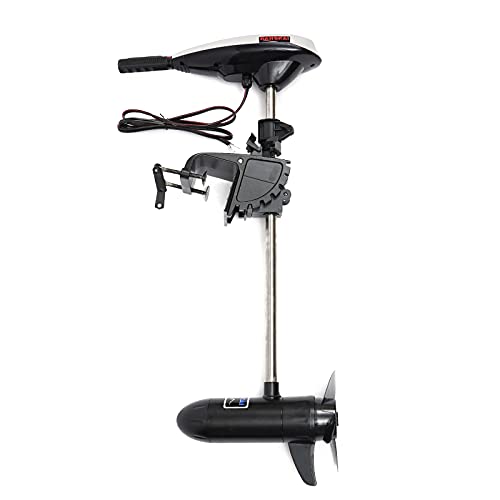
45 lb Watersnake Tiller Motor differs from the foot-pedal model by using a fixed tiller with five forward and three reverse speeds. The motor is labeled 45 lb and is described as having adjustable depth and angle, which lets the operator adapt its setup to the boat and conditions. Those omissions matter if your transom height or typical trip length is a close fit. Select this model for handle-based control, and confirm shaft reach and battery compatibility for your boat.
Bottom line: Pick this for tiller operation and multiple forward and reverse settings.
Watersnake-Compatible 18 lb Propeller

Watersnake-Compatible 18 lb Propeller is a replacement propeller, not a complete trolling motor, and is the only component option in this group. It is identified for Watersnake and other electric outboards, with fit coverage described across 18- to 48-pound thrust models; two- and three-blade versions are offered. A prop pin and nut are included for installation. The plastic construction is intended for marine use, but compatibility by thrust range alone does not guarantee the hub and shaft match your motor. Check your existing propeller’s fit and blade configuration before selecting this part.
Bottom line: Choose this only when replacing a compatible propeller rather than buying a motor.
Newport NV-Series 55 lb

Newport NV-Series 55 lb is a transom-mounted alternative rather than a Watersnake model, with a 30-inch shaft and a six-inch telescoping tiller. Its 55-pound thrust and eight speeds—five forward and three reverse—set it apart from the 45-pound tiller motor. A five-LED battery meter provides a charge-level indication. The maker says top speed is about 4 mph, with results depending on boat shape, weight, water, and wind. This option suits a boater seeking a higher listed thrust rating and a transom mount; confirm that a 30-inch shaft is appropriate for your transom.
Bottom line: Pick this as a transom-mounted alternative if its 30-inch shaft fits your boat.
How to choose a trolling motor for your boat
Start with how the motor steers: cable steering uses a foot pedal for directional changes, while a tiller puts steering and speed adjustments at the operator’s hand. A common sizing rule of thumb is at least 2 pounds of thrust per 100 pounds of fully loaded boat weight; wind, current, and hull shape can call for more. Measure the boat with people, fuel, and gear aboard rather than using its empty weight. For example, a 1,000-pound loaded boat points to a 20-pound minimum by that rule, before allowing extra margin for tough conditions. Then match the mount type to the bow or transom position you plan to use.
How shaft length and mounting affect fit
Choose shaft length based on the distance from the mounting point to the waterline, not the boat’s overall length. A shaft that is too short can let the propeller ventilate in chop; one that is too long can make deployment awkward and increase the chance of striking underwater obstacles. A 30-inch shaft is one specific transom option here, but the right length depends on transom height and water conditions. Measure to the waterline with the boat loaded, and allow additional submergence for waves. Also confirm the bracket fits the intended mounting surface and can be secured without obstructing steering, seating, or access to controls.
What cable steer and tiller control offer
Cable steer motors use a foot pedal to turn the motor, leaving hands available for fishing and allowing quick directional corrections. Tiller motors use a handle for steering and commonly place speed controls there as well. The options here include a five-forward, three-reverse tiller and a separate five-forward, three-reverse motor with a telescoping tiller; speed counts alone do not tell you how smoothly a motor changes speed. Pick cable steering when foot control is the deciding need, and tiller steering when you prefer to stand or sit near the motor and operate it by hand. For either style, secure the motor and battery before operating.
How to care for a saltwater trolling motor
Rinse saltwater-exposed motor surfaces and mounting hardware with fresh water after use, then let them dry before storage; salt deposits can accelerate corrosion on metal parts. Disconnect the battery before inspecting wiring, removing a propeller, or clearing fishing line, and keep fingers away from the propeller whenever the battery is connected. Inspect the propeller and pin for damage or entanglement before each outing, and check clamps and fasteners for movement. Store the battery according to its chemistry and charger instructions; lead-acid batteries should be kept charged rather than left discharged for extended periods. These steps help protect components but do not replace the motor’s safety instructions.
Frequently Asked Questions
How much thrust does my boat need?
A common starting rule is 2 pounds of thrust per 100 pounds of fully loaded boat weight. Add margin if you regularly face strong wind, current, or a heavily loaded hull.
How deep should a trolling motor propeller sit?
Keep the propeller submerged enough to avoid drawing air, including when the boat rocks in chop. As a practical starting point, many setups place the propeller about 12 inches below the waterline, then adjust for waves and the motor maker’s guidance.
Can I use a freshwater motor in saltwater?
Only use a motor whose maker allows saltwater operation. Salt residue can corrode exposed metal, so rinse the motor and bracket with fresh water after saltwater trips and inspect hardware regularly.
How should I match a replacement propeller?
Match the replacement to the motor’s model or the original propeller’s hub, pin, and blade configuration. A thrust range such as 18 to 48 pounds alone may not establish physical compatibility.
How often should I check trolling motor wiring?
Inspect wiring, connectors, and battery terminals before each outing for looseness, corrosion, or damaged insulation. Disconnect the battery before making adjustments, and do not operate a motor with damaged wiring.