
Grease for Electric Connections: 5 Options Compared

For automotive electrical connections, Permatex 22058 Dielectric Grease, 3 oz offers the largest package at 3 ounces, while BTAS Dielectric Grease, 1 oz is a 1-ounce option for spark plugs and connectors. Dielectric grease is nonconductive silicone grease used to seal connector areas against moisture; choose a different product type if you need a conductive compound for a contact surface.
We earn a commission if you buy through links on this page. As an Amazon Associate I earn from qualifying purchases. Products are compared on manufacturer specifications, not hands-on testing.
- Best overall: Permatex 22058 Dielectric Grease, 3 oz – Its 3-ounce package is larger than the other options and it is intended for terminals, plugs, wiring, and electrical connections.
- Best for multipacks: BTAS PTFE-Enhanced Grease, 2 x 1 oz – The two-piece pack supplies two 1-ounce portions and names automotive and marine electrical applications.
- Best for temperature range: Keze Dielectric Grease, 1 oz – Its maker gives a range of -40°F to 428°F.
| Product | Best for | Package amount (oz) | Pieces | Shop |
|---|---|---|---|---|
| Permatex 22058 Dielectric Grease, 3 oz | Larger package | 3 oz | 1 | Check Price on Amazon |
| BTAS Dielectric Grease, 1 oz | Spark plug boots | 1 oz | 1 | Check Price on Amazon |
| BTAS PTFE-Enhanced Grease, 2 x 1 oz | Two-piece pack | 1 oz each | 2 | Check Price on Amazon |
| PRAZISCHUTZ Dielectric Grease, 20 g | Switches and plugs | 0.71 oz | 1 | Check Price on Amazon |
| Keze Dielectric Grease, 1 oz | Wide temperature range | 1 oz | 1 | Check Price on Amazon |
Grease for Electric Connections
Compare these dielectric greases by package amount, intended applications, and the temperature range provided.
Permatex 22058 Dielectric Grease, 3 oz

For buyers who want a larger package, this Permatex dielectric tune-up grease comes in 3 ounces, compared with the 1-ounce and 20-gram options here. The maker says it protects terminals, spark plugs, wiring, and other electrical connections from salt, dirt, and corrosion, and helps prevent voltage leaks around connections. Its named uses also include bulb sockets and modern high-energy ignition systems. Choose it when those automotive applications and the larger quantity fit your needs; the package is a single unit, not a multipack.
Bottom line: Pick this if you want one 3-ounce package for automotive electrical connections.
BTAS Dielectric Grease, 1 oz

For a single 1-ounce portion, this BTAS grease is positioned around automotive connectors, spark plugs, battery terminals, and electronic sensors. The maker reports a 30 kV dielectric breakdown figure and says the silicone grease is compatible with rubber, plastic, and ceramic surfaces. That material compatibility can matter around connector boots and housings.
Bottom line: Choose this for a compact amount for automotive plugs and connector areas.
BTAS PTFE-Enhanced Grease, 2 x 1 oz

This BTAS option is the only two-piece pack among these products: it contains two 1-ounce portions. Its maker names automotive connectors, spark plug boots, bulb sockets, ignition-coil connectors, marine electronics, and battery terminals as applications, and describes PTFE enhancement. The maker also claims water resistance and protection from voltage leakage. The pack may suit buyers who want separate portions for different work areas. The product name mentions food-grade use and pipeline sealing as well, but those uses are distinct from selecting grease for an electrical connector.
Bottom line: Pick this if you prefer two portions and need automotive or marine applications.
PRAZISCHUTZ Dielectric Grease, 20 g
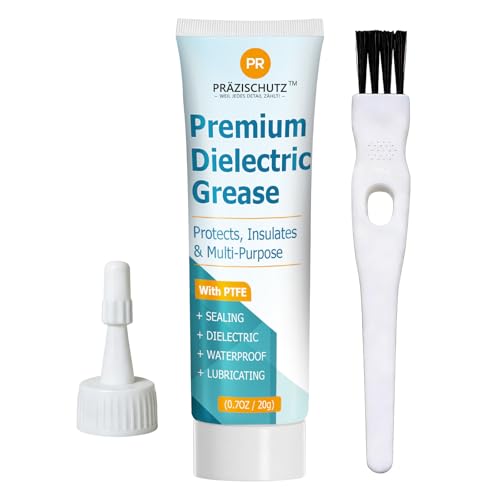
At 20 grams, this PRAZISCHUTZ product has the smallest package amount in the group. The maker describes it as silicone dielectric grease for switches, plugs, knobs, battery terminals, and automotive or marine use, with moisture and corrosion protection. The maker also claims it lubricates moving contact points, a distinction that may matter for switch mechanisms. Its package is a single small tube, so buyers planning to cover many connectors may prefer a larger amount such as the 3-ounce option. Use only where the connector or equipment maker allows grease.
Bottom line: Choose this for a small package aimed at switches, plugs, and marine connections.
Keze Dielectric Grease, 1 oz

Keze is the only option here whose maker gives a temperature range: -40°F to 428°F. The maker also says this 1-ounce silicone grease protects battery terminals and connectors from moisture, salt, and corrosion, and names spark plugs, bulb sockets, and ignition coils as uses. That range may help buyers comparing exposure to cold starts or hot engine areas, but it does not establish compatibility with every vehicle or connector. The maker’s range is a product claim, so verify that the equipment’s requirements fit before choosing it.
Bottom line: Pick this when the temperature range is important to your application.
How dielectric grease works on electrical connections
Dielectric grease is an electrical insulator, not a conductive contact enhancer. A thin film around a connector seal, boot, or housing helps block moisture and contaminants, while metal-to-metal contact should remain established by the connector itself. Grease on the actual mating surfaces can interfere with some connection designs, so use it only where the equipment maker permits it. Silicone dielectric grease is common for automotive rubber boots and connector seals; compatibility still depends on the specific rubber and plastic. For a sealed connector, follow its specified assembly method rather than packing the cavity indiscriminately. If the job calls for a conductive anti-oxidant compound, that is a different product category.
How to choose grease for electric connections
Start with the application and package amount: a small amount may suit occasional connector service, while multi-vehicle or repeated work may call for a larger package. Check material compatibility for seals and housings, then compare any temperature or voltage figures with the equipment requirements. A dielectric-breakdown figure is not a rating for the entire vehicle system. For exposed battery terminals, corrosion protection matters; for boots and sockets, confirm compatibility with their materials. If the connector maker specifies no grease or a particular compound, do not substitute a general dielectric grease. Do not use dielectric grease as a remedy for a loose, damaged, or dirty electrical contact.
Where to apply dielectric grease
Apply a thin film at the seal, boot, or connector interface where moisture could enter, rather than using a thick coating as a substitute for a properly seated connection. Spark plug grease is generally used inside the boot area, not as a layer between the plug’s conductive terminal and the wire contact. Battery-terminal care involves clean, tight metal contact first; grease belongs as an external protective barrier when the equipment guidance allows it. Disconnect power before servicing electrical connections, and avoid working on energized circuits. Keep grease away from surfaces where contamination could compromise a connection or sensor operation.
Dielectric grease mistakes to avoid
The most common mistake is confusing insulation with conductivity: dielectric grease does not carry current across a gap or repair poor contact. A second mistake is applying too much; a thick mass can complicate assembly and may be pushed where it is not wanted. Do not assume every grease is compatible with every seal material, even when a product names rubber or plastic generally. For outdoor or marine connections, salt and moisture exposure make sealing important, but connector condition and proper mating still matter. Match the compound to the equipment guidance, use a small amount at approved sealing points, and replace damaged seals rather than relying on grease to compensate.
Frequently Asked Questions
Is dielectric grease conductive for electrical connections?
No, dielectric grease is an electrical insulator rather than a conductive compound. The connector’s metal contacts must make their intended physical connection without relying on grease to bridge a gap.
Should grease go on a connector’s metal contacts?
Usually, the grease belongs at seals, boots, or approved connector interfaces, not between mating contacts. A connector design may specify an exception, so check its service guidance before applying grease to the contact surfaces.
How much dielectric grease should I apply?
Use a thin film at the approved seal or boot area rather than filling the connector with a thick mass. The exact placement depends on the connector design and equipment guidance.
Can dielectric grease be used on spark plug boots?
Many dielectric greases are intended for spark plug boot applications. Apply it within the boot area as directed, and keep the metal terminal connection properly seated.
Can I use dielectric grease on marine electrical connectors?
Some products are specifically presented for marine electrical applications, including options in this comparison. For saltwater exposure, a sealed connector and intact seals remain important; grease alone does not make an unsuitable connection waterproof.