
Best Metatarsal Pads for High Heels Compared by Fit

KTSAY Gel Metatarsal Pads, 2 Pairs suits most high-heel wearers because its recessed big-toe area and raised ridge are designed to help toes spread while limiting forward slide. Choose Riootlnm Metatarsal and Heel Pads instead if you also need heel pads to snug up loose shoes, or Ball of Foot Cushions, 2 Pairs if you prefer a cloth-covered gel cushion.
We earn a commission if you buy through links on this page. As an Amazon Associate I earn from qualifying purchases. Products are compared on manufacturer specifications, not hands-on testing.
- Best overall: KTSAY Gel Metatarsal Pads, 2 Pairs – Its recessed toe area and raised ridge distinguish its forefoot shape.
- Best for loose shoes: Riootlnm Metatarsal and Heel Pads – The set includes both ball-of-foot cushions and heel pads.
- Best for cloth coverage: Ball of Foot Cushions, 2 Pairs – Its gel cushion has a cloth-covered surface.
| Product | Best for | Included pieces | Surface | Fit feature | Shop |
|---|---|---|---|---|---|
| KTSAY Gel Metatarsal Pads, 2 Pairs | Toe-area shaping | 2 pairs | Suede | Recessed toe area | Check Price on Amazon |
| Riootlnm Metatarsal and Heel Pads | Loose shoe fit | 2 forefoot cushions, 2 heel pads | Suede | Includes heel pads | Check Price on Amazon |
| Ball of Foot Cushions, 2 Pairs | Cloth-covered gel | 2 pairs | Cloth-covered gel | One size | Check Price on Amazon |
Metatarsal Pads for High Heels
Compare the cushion surfaces, included pieces and shape features to match pads to your shoes.
KTSAY Gel Metatarsal Pads, 2 Pairs

KTSAY Gel Metatarsal Pads, 2 Pairs stands apart with a recessed area near the big toe and a raised ridge intended to limit forward sliding. The maker says the pads use medical-grade gel with a suede surface and adhesive backing. That shape may suit high heels where the forefoot tends to slide toward the toe, while the two-pair set also works in other shoes. The limitation is that the contoured design may not suit every foot or shoe interior; check that the pad sits comfortably without crowding your toes before wearing it for a long stretch.
Bottom line: Choose this if the toe-area shape and raised ridge fit your forefoot and shoe.
Riootlnm Metatarsal and Heel Pads
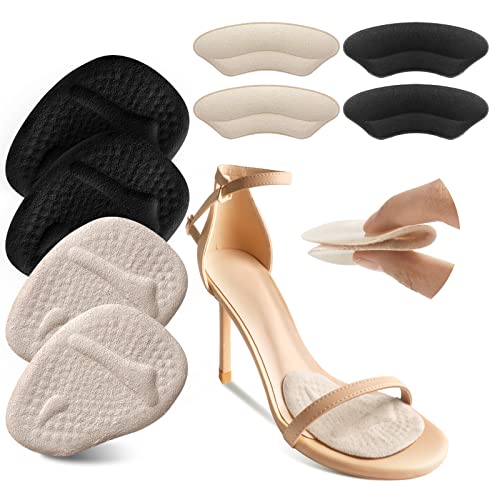
Riootlnm Metatarsal and Heel Pads is the only set here that combines forefoot cushions with separate heel pads, so it can address a loose heel fit as well as ball-of-foot cushioning. The maker describes a soft gel cushion with a suede surface; the forefoot pieces can also be cut to shape. That flexibility may help when a standard pad outline does not match a shoe. Its tradeoff is the extra heel-pad material, which is useful only if the shoe needs heel grip and may add unwanted bulk in an already snug heel.
Bottom line: Pick this if your heels slip in the shoe and you also want forefoot cushions.
Ball of Foot Cushions, 2 Pairs

Ball of Foot Cushions, 2 Pairs differentiates itself with a cloth-covered gel surface rather than the suede surfaces on the other two options. The set contains two pairs and is described as one size, making it a straightforward choice for someone seeking forefoot cushioning without a separate heel grip. The maker says the adhesive backing is intended to keep the pads in place. The limitation is its simpler shape: it lacks the toe-area contour of KTSAY Gel Metatarsal Pads, 2 Pairs and the heel pads included with Riootlnm Metatarsal and Heel Pads, so it may not address sliding or loose heels.
Bottom line: Choose this if you want a cloth-covered gel cushion and do not need heel pads.
How to Position Metatarsal Pads in High Heels
Place a metatarsal pad just behind the ball of the foot, not directly beneath the most tender point. The raised area should sit behind the metatarsal heads so it can help spread pressure across the forefoot rather than create a new pressure spot. Try the shoe on while seated, then stand and walk a few steps; shift the pad slightly if it feels like a lump under the ball. Adhesive pads generally hold best on a clean, dry shoe surface. Remove and reposition a pad that folds, curls, or causes numbness or sharper discomfort.
How to Choose Pads for High Heels
Choose by the problem you want to solve: forefoot pressure, forward sliding, or heel slippage. A metatarsal pad cushions the forefoot; a heel grip takes up space at the back of the shoe and does not replace forefoot cushioning. Shoe fit matters as much as pad material: if a pad makes toes press together or rub the sides, the shoe may be too narrow for an added insert. For a tight toe box, favor a thin pad and keep enough room to wiggle your toes. A pad that causes persistent pain, tingling, or numbness is a poor fit; stop wearing it and seek clinical advice if symptoms continue.
Metatarsal Pads Versus Heel Pads
Metatarsal pads sit under the forefoot area, while heel pads attach at the back of the shoe to reduce heel movement. They solve different fit problems, so identify where the shoe feels loose or uncomfortable before choosing. The table separates the two jobs and a combined set.
| Need | Pad type | Placement |
|---|---|---|
| Forefoot cushioning | Metatarsal cushion | Behind the ball of the foot |
| Heel slippage | Heel pad or grip | Inside the back of the shoe |
| Both concerns | Combination set | Forefoot and heel |
Do not use a heel grip to compensate for a shoe that is substantially too large; the shoe can still move at the forefoot. A combination set is useful only when both areas need adjustment.
When to Replace or Remove a Shoe Cushion
Remove a cushion when its adhesive lifts, the material bunches, or the pad shifts during walking. A curled edge can rub the skin, and a pad placed directly beneath a sore spot can concentrate pressure rather than spread it. Check fit while standing, since the forefoot bears more load in heels than when seated. Keep toes able to move, and avoid layering pads if the added thickness makes the shoe tight. Persistent or worsening foot pain deserves medical evaluation rather than a thicker insert; pads change shoe contact, but they do not diagnose the cause of pain.
Frequently Asked Questions
Where should a metatarsal pad sit in a high heel?
Place it just behind the ball of the foot, rather than directly under the tender area. Stand and walk briefly to make sure the raised part does not feel like a lump.
Can metatarsal pads stop feet sliding forward?
A raised ridge or contoured forefoot pad may help limit forward movement, but shoe shape and fit also matter. If toes are pressed together, choose a roomier toe box instead of adding bulk.
Do heel pads cushion the ball of the foot?
No, heel pads attach at the back of the shoe to reduce heel movement. Forefoot cushions sit near the ball of the foot and address a different fit concern.
Can I trim a metatarsal cushion to fit?
Some cushions can be trimmed, but cutting may change their shape or adhesive coverage. Make small adjustments and check that the pad remains flat and sits behind the ball of the foot.
When should I stop wearing a foot pad?
Remove it if it causes numbness, sharper pain, rubbing, or toe crowding. Persistent foot symptoms should be assessed by a health professional rather than managed by adding more padding.