
Heated Houses for Feral Cats: 5 Outdoor Options Compared

For most feral-cat caretakers, K&H Heated Cat House, 20W is the clearest fit because it combines a 20-watt heated bed with two 6-by-8-inch exits. Choose Heated Outdoor Cat House, Long Size for its longer footprint or Indestructible Heated Cat House, 17.7 in for a compact shelter sized for cats weighing 8 to 12 pounds.
An outdoor heated cat house pairs an enclosed shelter with a warming surface; safe placement and an outdoor-appropriate power connection matter as much as the shelter itself.
We earn a commission if you buy through links on this page. As an Amazon Associate I earn from qualifying purchases. Products are compared on manufacturer specifications, not hands-on testing.
- Best overall: K&H Heated Cat House, 20W – Its 20-watt heated bed and two 6-by-8-inch exits make the heating and escape features clear.
- Best for a longer footprint: Heated Outdoor Cat House, Long Size – Its size is 25.7 by 13.5 by 18 inches.
- Best for smaller cats: Indestructible Heated Cat House, 17.7 in – It is designed for cats weighing 8 to 12 pounds and measures 17.7 by 15 by 19 inches.
| Product | Best for | Dimensions | Heating feature | Escape openings | Shop |
|---|---|---|---|---|---|
| K&H Heated Cat House, 20W | Clear heating specs | 22 × 19 × 17 in | 20 W heated bed | Two 6 × 8 in exits | Check Price on Amazon |
| Indestructible Heated Cat House, 17.7 in | Cats 8–12 pounds | 17.7 × 15 × 19 in | Built-in heating pad | Escape door | Check Price on Amazon |
| Heated Outdoor Cat House, Long Size | Longer shelter shape | 25.7 × 13.5 × 18 in | Heating pad with sensor | Escape door | Check Price on Amazon |
| Indestructible Heated Cat House, 17.7 in Square | Square footprint | 17.7 × 17.7 × 17.5 in | — | Double-door design | Check Price on Amazon |
| 30-Inch XL Outdoor Heated Cat House | Extra-long shelter | 30 × 14.3 × 20.5 in | Waterproof heating pad | Escape door | Check Price on Amazon |
Heated Houses for Feral Cats
Compare the shelter footprint, heat feature and exit arrangement to match the house to its site and the cats using it.
K&H Heated Cat House, 20W

Two escape openings and a 20-watt heated bed distinguish this shelter. The weather-resistant insulated house has removable clear door flaps, and the exits measure 6 by 8 inches each. The maker says the waterproof bed is MET Safety Listed and uses a smart thermostat. This is a strong match when caretakers want the heating wattage and exit dimensions spelled out. The tradeoff is its 22-by-19-inch footprint, which needs more floor space than the compact 17.7-inch-wide shelters.
Bottom line: Choose this if two measured exits and a 20-watt bed are priorities.
Indestructible Heated Cat House, 17.7 in

A compact footprint and a cat-weight range set this shelter apart. It measures 17.7 by 15 by 19 inches, has a double-layer shell with an insulating air cavity, and includes a built-in heating pad. The maker describes the pad as UL-approved and says the house is designed for cats weighing 8 to 12 pounds. That sizing makes it a more targeted choice for smaller cats than the longer shelters. Its weight range may not suit larger cats or a group sharing the space.
Bottom line: Pick this for a single cat within the 8-to-12-pound range.
Heated Outdoor Cat House, Long Size

The longer, narrower shape is the main distinction: the size is 25.7 by 13.5 by 18 inches. Its heating pad has an intelligent temperature sensor, and the shelter has an inclined roof, elevated base and escape opening. The maker says its five layers are waterproof and insulating. This shape may work where a narrow placement area favors length over width. The escape design is described as a single exit, so it offers fewer routes than the two-door model.
Bottom line: Choose this when a long, narrow footprint fits the shelter location.
Indestructible Heated Cat House, 17.7 in Square
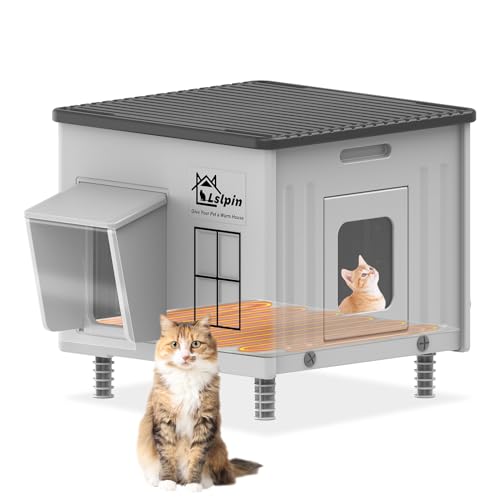
A square footprint and double-door design distinguish this shelter. It measures 17.7 inches on each side and 17.5 inches high, with an HDPE construction and double-layer sides that the maker says create heat circulation. The maker also calls it heated, but the maker does not explain the heating component, so confirm what provides warmth before choosing it for cold conditions. Its nearly square base can suit a location where a long shelter would not fit, though the unclear heating setup is a meaningful limitation.
Bottom line: Consider this for a square space only after confirming its heating setup.
30-Inch XL Outdoor Heated Cat House

At 30 inches long, this is the longest shelter in the group. It has an elevated base, a waterproof heating pad and an escape door; the maker says it assembles without tools and includes floor plugs for reinforcement. That length can be useful when a larger interior area matters more than a compact footprint. Its size is 30 by 14.3 by 20.5 inches, although the alternate size text gives slightly different width and height figures, so confirm the dimensions before buying if the fit is tight.
Bottom line: Pick this when the site can accommodate a 30-inch-long shelter.
How to choose a heated house for feral cats
Start with the cats’ body size and the shelter’s floor footprint, then compare the heating method and escape openings. A shelter should leave enough room for a cat to turn around and lie down, without so much unused interior volume that the cat’s body heat has more space to warm. Measure the intended spot before selecting a longer or wider model; a difference of several inches can decide whether a sheltered porch corner or barn aisle works. An escape opening is useful only if it remains accessible and does not face a wall or obstruction. For outdoor electric heat, use equipment intended for outdoor conditions, keep electrical connections dry, and protect the cord from chewing and damage.
How to size an outdoor cat shelter
Measure the floor space where the house will sit and compare its full outside dimensions, not just the door. A narrow 13.5-inch width and a 30-inch length call for a different placement than a roughly 18-inch square base. The interior may be smaller than the exterior because of insulated walls, so dimensions alone do not confirm how many cats can share a shelter. A practical rule is to prioritize one cat’s ability to enter, turn, and lie comfortably; do not assume a longer exterior means room for multiple cats. Keep the entrance clear of snow, standing water, and stored items, and position the shelter so wind and rain do not blow directly through the doorway.
Heated pad safety for outdoor cat houses
Outdoor electrical heat needs a dry, protected power path; moisture at plugs or damaged cords creates shock and fire hazards. Use a ground-fault circuit interrupter (GFCI)-protected outlet outdoors, and keep connectors off wet ground and under weather protection. Inspect the cord and pad regularly for fraying, chewing, or cracking, and discontinue use if damage appears. Do not substitute a human heating pad or an indoor-only pad for a product made for pet or outdoor use. Bedding also matters: avoid filling the shelter with thick blankets that can retain moisture, and keep the heating surface uncovered only as its maker directs. Leave a way for cats to exit rather than sealing the house for warmth.
Escape doors and placement for feral cats
Escape doors give a cat another route out if a predator or another animal blocks the main entrance, but the extra opening can also admit wind and rain. Place the secondary exit toward a clear, sheltered path rather than against a wall or fence. Removable flaps can limit exposure, but observe whether the cats will pass through them; an unused exit is not a dependable escape route. Raise the shelter off damp ground when its design allows, and stabilize it against shifting or wind. Avoid placing food inside the sleeping space: keeping feeding separate helps reduce spills and animal traffic around the resting area.
Frequently Asked Questions
Should an outdoor cat house have two exits?
Two exits give a cat an alternate way out if the main entrance is blocked, but both openings need a clear path. Face the second exit away from walls and likely wind-driven rain.
Can a heated cat house stay outside in rain?
Only use a shelter and heating equipment intended for outdoor exposure, and keep plugs and electrical connections dry. A waterproof claim for a pad does not make its plug or power connection waterproof.
What bedding works in a feral cat shelter?
Straw is commonly used because it sheds moisture better than fabric bedding. Replace damp or dirty bedding, and keep loose material from covering a heating pad unless the maker allows it.
How many cats fit in a heated cat house?
Exterior measurements do not establish how many cats fit because insulated walls reduce interior space. For a shelter around 17 to 18 inches wide, plan around one cat unless interior dimensions confirm more room.
Where should I put an outdoor heated cat house?
Choose a sheltered, level spot near a GFCI-protected outdoor outlet, with the entrance away from prevailing weather and the exit unobstructed. Keep cords protected from water, chewing and foot traffic.