
Lane Cedar Chest Key: 3 Replacement Options Compared

For a Lane cedar chest with an S-series safety lock, Lane S-Series 2-Key Set is the closest match because it includes both key styles and lists codes S83 through S99 plus S01 and S02. Choose a different option if your lock is not S-series: Lane LANEOLDER Replacement Key is identified for Lane older locks, while Lane S-Series 4-Key Set offers four keys for S-series locks.
We earn a commission if you buy through links on this page. As an Amazon Associate I earn from qualifying purchases. Products are compared on manufacturer specifications, not hands-on testing.
- Best overall: Lane S-Series 2-Key Set – Includes new- and old-style keys and names a broad S-series code range.
- Best for spares: Lane S-Series 4-Key Set – Includes four replacement keys for Lane S-series locks.
- Best for older locks: Lane LANEOLDER Replacement Key – Identified as a replacement for Lane LANEOLDER locks.
| Product | Best for | Keys included | Compatibility | Shop |
|---|---|---|---|---|
| Lane S-Series 2-Key Set | S-series fit | 2 keys | S83–S99, S01–S02 | Check Price on Amazon |
| Lane S-Series 4-Key Set | Extra spares | 4 keys | S83–S99, S01–S02 | Check Price on Amazon |
| Lane LANEOLDER Replacement Key | Older Lane locks | 1 key | Lane LANEOLDER | Check Price on Amazon |
Lane Cedar Chest Keys Compared
Match the code on the lock before choosing a replacement key set.
Lane S-Series 2-Key Set

For an S-series lock where the lock’s age may determine the key style, this set includes one new-style key and one old-style key. The maker says the new style is for chests from 1988 onward and the old style is for pre-1987 chests; check the code stamped on the lock against the range, S83–S99 and S01–S02, before ordering. The set is useful when the chest’s age is known but the key style is not. Its limitation is that it does not cover locks outside the S-series range.
Bottom line: Pick this if your Lane lock code is in the S-series range and you want both key styles.
Lane S-Series 4-Key Set

For S-series owners who want several copies, this four-key set supplies two more keys than Lane S-Series 2-Key Set. It names S83 through S99 and S01–S02 among its compatible codes, and the maker says the keys are intended as direct replacements for lost or worn Lane S-series keys. The larger set suits households that want separate spares for family members or safekeeping. Unlike Lane S-Series 2-Key Set, the features do not assign one key style to a chest-age range, so confirm the lock code and key style needed before relying on a particular key.
Bottom line: Choose this when your S-series lock matches and having four keys is useful.
Lane LANEOLDER Replacement Key
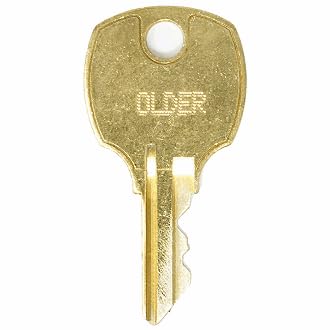
For a Lane lock identified as LANEOLDER, this is the only option in the group named for that older-lock designation rather than an S-series code range. The maker describes it as a custom-cut replacement key and says the manufacturer must match Lane. That makes the lock marking especially important: compare it with LANEOLDER before choosing this key.
Bottom line: Pick this only when the lock designation matches LANEOLDER.
How to match a Lane chest key to its lock
Start with the code stamped on the lock, not the chest’s appearance or assumed age. Lane S-series replacement keys are commonly organized by the code on the lock; the two S-series sets here give ranges that include S83–S99 and S01–S02. Compare each character carefully, since an S-series code and an older-lock designation are different compatibility targets. If the marking is hard to read, clean dust from the lock face and use a flashlight before ordering. A key that looks similar is not proof of a match: key blanks and cuts must correspond to the lock. With an unreadable or absent code, identify the lock before selecting from these options rather than guessing based on the chest’s manufacture date.
Which key style fits the chest age
The new- and old-style keys in Lane S-Series 2-Key Set are divided at the maker’s year boundary: new style for 1988 and later, old style for pre-1987. That leaves 1987 outside either stated category, so a chest from that year needs confirmation by lock code or key style rather than an assumption. Chest age can be a clue, but the code on the lock is the more direct compatibility check. The four-key S-series set names compatible lock codes but does not provide that year-based key-style distinction. Use the following practical rule: if the lock is S-series and chest age is known, compare the year with the split; if the age or marking conflicts, verify the lock marking before ordering.
When an older Lane key is a different fit
LANEOLDER is a separate compatibility label from the S-series codes shown by the other options. The older-lock replacement is therefore a partial match for the broad search, not a substitute for an S-series key. Read the lock designation exactly and compare it against the option’s compatibility target; do not treat “Lane” alone as a complete match. This table summarizes the deciding distinction.
| Lock marking | Relevant choice |
|---|---|
| S-series code listed in the range | One of the S-series key sets |
| LANEOLDER | Older Lane replacement key |
| Unreadable or different marking | Identify the lock before choosing |
Count matters only after fit: the four-key set offers extra copies, while the two-key set includes both styles.
Safe handling of a cedar chest lock
A replacement key is meant to operate a lock, not to make a chest safe for storing a person or pet. Keep children and pets away while checking or operating a chest, and never leave anyone inside a closed chest; a lid can close unexpectedly and the interior is not a safe enclosure. Test a correctly matched key gently with the lid open, so a stiff mechanism does not trap contents or encourage force. If the key does not turn, stop rather than twisting hard, since forcing a key can bend or break it in the lock. Confirm the lock code first and seek a locksmith if the mechanism remains stuck.
Frequently Asked Questions
Where is the code on a Lane chest lock?
The lock code is typically stamped on the lock face or nearby metal plate. Clean the surface and use angled light to make faint characters easier to see before matching the code.
Can I choose a key using the chest’s age alone?
Age is a clue only for the key styles that name an age range: new style is specified for 1988 onward and old style for pre-1987. A 1987 chest falls between those stated ranges, so verify the lock marking or key style.
What should I do if my Lane lock code is unreadable?
Do not guess from the chest’s appearance; replacement keys need to match the lock. Clean the lock face and inspect under bright light, then identify the lock before choosing a key.
Is it safe to keep a child inside a cedar chest?
No; a cedar chest is not a safe enclosure, and its lid can close unexpectedly. Keep children and pets away during lock checks and never close anyone inside.