
Acid-Free Paper for Storage: 4 Sizes Compared

For most storage needs, 300-Sheet 24 x 33-Inch Tissue Paper pairs a generous 300-sheet pack with 24 x 33-inch sheets, making it useful for larger items or repeated wrapping. Choose a smaller pack when you need less paper or a different sheet size; these unbuffered tissue sheets are intended for interleaving and wrapping, not rigid support.
We earn a commission if you buy through links on this page. As an Amazon Associate I earn from qualifying purchases. Products are compared on manufacturer specifications, not hands-on testing.
- Best overall: 300-Sheet 24 x 33-Inch Tissue Paper – Its 24 x 33-inch sheets and 300-sheet pack suit frequent wrapping of larger items.
- Best for small items: RYKOMO 15 x 20-Inch Tissue Paper – 15 x 20-inch sheets are more manageable for small keepsakes and compact layers.
- Best for wide coverage: 200-Sheet 24 x 36-Inch Tissue Paper – 24 x 36-inch sheets provide the broadest dimensions among these options.
| Product | Best for | Sheet size | Sheet count | Buffering | Shop |
|---|---|---|---|---|---|
| 300-Sheet 24 x 33-Inch Tissue Paper | Frequent wrapping | 24 x 33 in | 300 sheets | — | Check Price on Amazon |
| RYKOMO 20 x 30-Inch Tissue Paper | Medium textiles | 20 x 30 in | 100 sheets | Unbuffered | Check Price on Amazon |
| 200-Sheet 24 x 36-Inch Tissue Paper | Wide textile layers | 24 x 36 in | 200 sheets | Unbuffered | Check Price on Amazon |
| RYKOMO 15 x 20-Inch Tissue Paper | Small keepsakes | 15 x 20 in | 100 sheets | Unbuffered | Check Price on Amazon |
Acid-Free Paper for Storage Compared
Match the sheet dimensions and pack count to the items you plan to wrap and the number of layers you need.
300-Sheet 24 x 33-Inch Tissue Paper
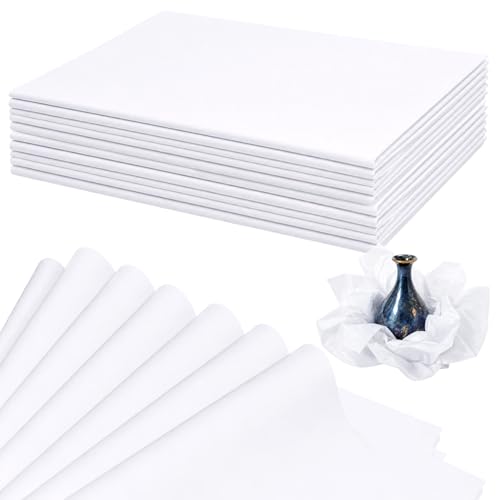
The 300-sheet pack separates this option from the smaller quantities here, while its 24 x 33-inch sheets cover broad surfaces such as larger artwork or folded textiles. The maker identifies the paper as lignin-free and intended for documents, artwork, photos, and textiles, as well as moving and packing. It suits people who expect to wrap many items or want fewer seams across a broad piece. Large sheets can be cumbersome for small keepsakes, so cut them down when a compact layer is easier to handle.
Bottom line: Choose it for repeated wrapping and broad coverage.
RYKOMO 20 x 30-Inch Tissue Paper

The 20 x 30-inch format offers a middle ground between compact sheets and the widest options, with 100 sheets in the pack. RYKOMO identifies this tissue as unbuffered and describes it for preserving clothing and storage; the lightweight paper can also be folded or cut for smaller layers. It fits garments and medium-sized objects that need a larger wrap than a 15 x 20-inch sheet can provide. The pack has fewer sheets than the 200- and 300-sheet choices, which matters when preparing many items or multiple layers per item.
Bottom line: Pick it for medium-sized items when a 100-sheet pack is enough.
200-Sheet 24 x 36-Inch Tissue Paper

The 24 x 36-inch sheets are the broadest in this group, useful when a single layer needs to cover a wide textile or a larger object. This pack contains 200 white, unbuffered sheets, and its product name specifies interleaving use. That makes it a practical fit for people prioritizing coverage while still wanting a substantial pack. Wider sheets take more room to fold and organize, and they may be unnecessary for small pieces; choose a smaller format if close-fitting layers are easier to store.
Bottom line: Choose it when wide sheets matter more than compact handling.
RYKOMO 15 x 20-Inch Tissue Paper

The 15 x 20-inch sheet is the smallest format here, so it is easier to use around compact keepsakes or as a small interleaving layer. RYKOMO supplies 100 white sheets and identifies them as unbuffered tissue for storage; the paper is also described as easy to fold, shape, and cut. It suits small documents or objects that do not need broad coverage. A sheet this size may require overlapping layers around larger textiles or artwork, so measure the item before deciding whether a wider format would be simpler.
Bottom line: Pick it for compact objects that fit within a 15 x 20-inch sheet.
How to choose acid-free storage paper
Start with the item’s dimensions and the number of layers, then choose a sheet that can wrap it without excessive seams. For an object wider than 20 inches, 24 x 33- or 24 x 36-inch tissue gives more coverage than a 15 x 20-inch sheet; smaller sheets can still work if you overlap them. Use tissue as a soft separator or wrap, not as a substitute for a rigid archival folder or box. For long-term paper storage, avoid ordinary newsprint because its acidic components can discolor adjacent materials. Select a pack count based on how many items you will wrap and whether each needs multiple layers.
Unbuffered tissue and what to wrap
Unbuffered tissue contains no alkaline reserve, while buffered paper includes an alkaline substance intended to counter acids. Unbuffered tissue is commonly preferred around protein-based materials such as wool and silk; buffered paper is often used with many paper-based objects, but material compatibility matters. Do not assume a tissue sheet alone protects an object from humidity, light, pests, or pressure. Keep stored materials clean and dry, and use a clean, closed archival container where appropriate. The products here are unbuffered or described as lignin-free, so verify suitability with a conservator before placing sensitive or mixed-material objects in prolonged contact.
Sheet sizes and pack quantities
These options range from 15 x 20 inches to 24 x 36 inches, so the largest sheet has 1.8 times the area of the smallest. The table helps match a format to a basic wrapping need; actual fit depends on the item’s shape and how much overlap you want.
| Need | Useful sheet size | Why |
|---|---|---|
| Compact keepsakes | 15 x 20 in | Smaller sheets are easier to fold around small objects |
| Medium garments or objects | 20 x 30 in | More coverage without the widest sheet |
| Broad textiles or artwork | 24 x 33 or 24 x 36 in | Fewer seams across larger surfaces |
Pack counts range from 100 to 300 sheets. Choose by both sheet area and the number of items: a high count of smaller sheets may still require more handling than a lower count of larger ones.
Common storage mistakes to avoid
Do not wrap a damp or soiled object for storage; moisture and dirt can contribute to staining or deterioration. Tissue paper offers cushioning and separation, but it does not provide strong impact protection, so fragile objects need a rigid container with suitable padding. Avoid tight folds that create sharp creases in delicate textiles or paper, and do not overfill a box until its contents are compressed. For photographs, artwork, or valuable textiles, confirm the tissue is appropriate for the specific material and use archival enclosures designed for that collection. Keep storage areas cool, dry, and away from direct sunlight to reduce environmental stress.
Frequently Asked Questions
What does unbuffered tissue paper mean?
Unbuffered tissue has no alkaline reserve added to counter acids. It is commonly used around protein-based materials such as wool and silk, while many paper objects may call for buffered materials; check material compatibility for mixed collections.
How large should storage tissue sheets be?
Choose sheets at least as wide as the surface you need to cover, allowing extra material for overlap. A 24-inch-wide sheet is more practical than a 15-inch-wide sheet for broad textiles, while smaller sheets are easier to handle for compact keepsakes.
Can acid-free tissue protect artwork by itself?
No: tissue provides a soft separation layer, not rigid support or environmental protection. Place flat artwork in a suitably sized archival folder or rigid enclosure, and avoid pressure that can bend or crease it.
Should clothing be folded with tissue paper?
Tissue can be placed between folds to reduce direct contact and sharp creasing, especially for delicate garments. Clean, fully dry clothing before storage, and avoid compressing it under heavy items.
How many tissue sheets are needed per item?
The amount depends on the object’s size, shape, and desired layers. A compact object may need one or two sheets, while a large garment or artwork can require multiple sheets or a larger format to avoid narrow overlaps.