
Best Groin Compression Wraps for Adjustable Support

For a low-profile groin compression wrap with a contoured fit and hook-and-loop closure, choose McDavid 475 Adjustable Groin Wrap.
A groin wrap applies external support around the upper thigh and groin area. These products are not interchangeable with medical evaluation; get professional advice for severe pain, marked swelling, or trouble bearing weight.
We earn a commission if you buy through links on this page. As an Amazon Associate I earn from qualifying purchases. Products are compared on manufacturer specifications, not hands-on testing.
- Best overall: McDavid 475 Adjustable Groin Wrap – Its contoured, latex-free neoprene design has a hook-and-loop closure and fits either leg.
- Best for universal fit: Neo-G Groin Brace – The adjustable, one-size brace fits the left or right leg.
- Best for waist support: Bodyprox Groin Wrap – A secondary strap wraps around the waist in addition to the groin wrap.
| Product | Best for | Closure or straps | Fit | Shop |
|---|---|---|---|---|
| McDavid 475 Adjustable Groin Wrap | Contoured neoprene fit | Hook-and-loop | One size; either leg | Check Price on Amazon |
| Neo-G Groin Brace | Adjustable universal fit | Adjustable compression system | One size; either leg | Check Price on Amazon |
| Bodyprox Groin Wrap | Waist strap support | Two straps, including waist strap | — | Check Price on Amazon |
Best groin compression wraps
Compare construction, fastening style and fit to find the wrap that matches your support needs.
McDavid 475 Adjustable Groin Wrap

The contoured, low-profile neoprene construction sets this wrap apart, and the hook-and-loop closure lets you fasten it around the upper thigh. The latex-free design has a textured inner layer; the maker says it is intended for thermal and compression therapy. Its one-size format fits either the left or right leg, so it suits someone who wants a single wrap that can be positioned on either side.
Bottom line: Choose this if you want a contoured neoprene wrap that can fit either leg.
Neo-G Groin Brace

The universal, adjustable design distinguishes this brace from the contoured neoprene wrap and the waist-strap design. It is made for the left or right leg and can be worn under or over clothing, according to the maker. The adjustable compression system and support for the hip and upper thigh suit people looking for a flexible fit during activity. Its trade-off is the one-size format: buyers who need a specific waist or thigh measurement should confirm fit before choosing it, rather than assuming the adjustment range will suit every body.
Bottom line: Choose this if adjustable compression and either-leg use matter most.
Bodyprox Groin Wrap
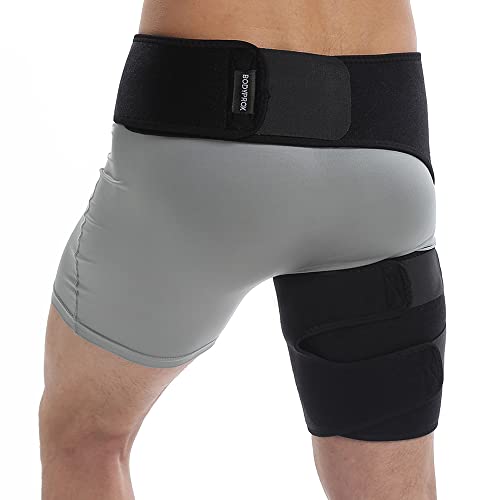
A secondary strap around the waist is the defining difference here; the wrap also compresses and stabilizes the affected muscles, according to the maker. That two-strap arrangement may suit someone who wants coverage beyond a single upper-thigh wrap. The product is described for the hip, groin, hamstring and thigh, with the waist strap intended to target sciatica-related discomfort. No material or sizing measurements accompany the specifications, so buyers who need a particular fabric or measured fit should verify those points before selecting this option.
Bottom line: Choose this if you specifically want a waist strap along with the wrap.
How to choose a groin compression wrap
Choose by fit, fastening style and coverage rather than by a general promise of support. A wrap that stays positioned without pinching is more useful than one tightened until it feels restrictive. Look for the coverage you need: a focused upper-thigh wrap differs from a hip brace that also covers the hamstring or hip flexor. Neoprene is a common material in compression supports because it holds warmth, but it can feel hot during prolonged wear or exercise. If you need latex-free construction, check that attribute specifically. For these options, choose the contoured neoprene style for a defined shape, an adjustable brace for a flexible closure, or a waist strap design when that extra fastening is wanted.
How a groin wrap should fit
A groin wrap should feel snug and secure without causing numbness, tingling, skin color change or increasing pain. Those symptoms are a reason to loosen or remove the wrap and seek medical advice if they persist. One-size designs can be less predictable than products with measured sizing, so take body measurements when a maker provides a chart. A practical rule: if a wrap slips during ordinary movement or requires painful tightness to stay put, stop using it and reassess the fit. Keep skin dry beneath the support and check the area after removing it, especially on first use. Do not use compression to mask severe pain or an injury that limits walking.
Groin wrap styles compared
The main practical distinction is whether a support is a focused wrap or a broader hip brace, and whether it uses one fastening area or adds a waist strap. A contoured design may sit differently from a universal adjustable wrap; neither style guarantees a better fit on every body. Use this comparison to match design to the coverage you want.
| Style | Best match | Fit consideration |
|---|---|---|
| Contoured neoprene wrap | Focused upper-thigh support | Check whether the one-size fit suits your measurements |
| Adjustable groin brace | Flexible fastening and either-leg use | Adjust snugly, not tightly |
| Wrap with waist strap | Added fastening around the waist | Position both straps without pinching |
| Broader hip brace | Hip, groin, thigh and hamstring coverage | Use waist or hip and thigh measurements |
Safe use and common fit mistakes
Compression should support movement without cutting off comfortable circulation; numbness, tingling, unusual coolness or a change in skin color means the wrap is too tight or poorly positioned. Remove it and reassess rather than tightening another strap. A common mistake is selecting a broad hip brace when only a focused groin wrap is wanted, which can add coverage without improving fit. Another is assuming one-size means universal fit: body shape and strap placement still matter. Follow the product’s wear guidance, and do not sleep in a compression wrap unless a clinician has advised it. Sudden severe pain, major swelling or inability to bear weight calls for prompt medical evaluation instead of self-managing with a brace.
Frequently Asked Questions
How tight should a groin compression wrap feel?
A groin wrap should feel snug without pain, tingling, numbness or skin color change. Loosen or remove it if those symptoms appear; persistent symptoms warrant medical advice.
Can a groin wrap be worn on either leg?
Some designs explicitly fit either the left or right leg, while others may require checking their intended orientation. Confirm the product’s fit guidance before fastening it, and make sure the straps sit securely without pinching.
Should I wear a groin wrap during exercise?
A support may be designed for activity, but pain that worsens during movement is a reason to stop rather than tighten the wrap. Severe pain or difficulty bearing weight needs medical evaluation.
How do I choose between a groin wrap and hip brace?
Choose a focused groin wrap when you want upper-thigh or groin coverage; choose a broader hip brace when coverage for the hip flexor, thigh and hamstring also matters. If the brace uses a size chart, measure the body areas it specifies before selecting a size.
What symptoms mean a groin wrap is too tight?
Numbness, tingling, unusual coolness, skin color change or increasing pain can signal excessive pressure or poor positioning. Remove or loosen the wrap, and seek medical advice if symptoms continue.