
Best Chimney Sweep Kit: 4 Options Compared

The VEVOR kit suits most people who need more reach and multiple brush types, with a 33-foot maximum extension and dual brush heads. Choose a 30-foot kit instead if a button-lock rod system is your priority; check that the brush can pass through your flue shape and dimensions before ordering.
We earn a commission if you buy through links on this page. As an Amazon Associate I earn from qualifying purchases. Products are compared on manufacturer specifications, not hands-on testing.
- Best overall: VEVOR 33-ft Dual-Head Kit – Its 33-foot maximum reach and dual brush heads cover more cleaning situations.
- Best for button-lock rods: Morinoli 30-ft Button-Lock Kit – The kit uses nine flexible rods with chrome button locks.
- Best for drill use: Sealegend 30-ft Drill Kit – The brush is designed to attach to an electric drill.
| Product | Best for | Maximum reach | Rod count | Brush bristles | Shop |
|---|---|---|---|---|---|
| VEVOR 33-ft Dual-Head Kit | Varied flue shapes | 33 ft | — | Nylon and steel wire | Check Price on Amazon |
| Morinoli 30-ft Button-Lock Kit | Button-lock rods | 30 ft | 9 | Nylon | Check Price on Amazon |
| Sealegend 30-ft Drill Kit | Drill-assisted cleaning | 30 ft | 9 | Nylon | Check Price on Amazon |
| Bluesea 30-ft Ergonomic Kit | Reduced rod joints | 30 ft | — | Nylon | Check Price on Amazon |
Chimney sweep kits compared
Match the rod system and brush design to your flue shape and the cleaning setup you plan to use.
VEVOR 33-ft Dual-Head Kit

The VEVOR kit stands apart with two brush heads and a 33-foot maximum reach, rather than the single-brush, 30-foot configurations here. Its nylon rod can bend over 90 degrees, and the kit includes goggles. The maker says the aluminum-alloy brush head combines soft nylon and steel-wire bristles for regular and deeper cleaning. This option suits buyers who want a longer reach and two bristle types for square, rectangular or arched chimneys. Its steel-wire bristles make checking flue compatibility especially important before use.
Bottom line: Choose this if you want dual brush heads and up to 33 feet of reach.
Morinoli 30-ft Button-Lock Kit
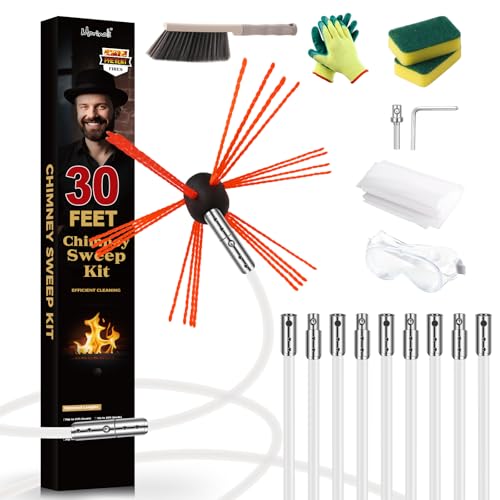
The Morinoli kit uses nine flexible rods with chrome button locks, making its connection style the key difference from the drill-oriented Sealegend and dual-head VEVOR options. The maker says the locks resist loosening in either direction of rotation. Its rectangular nylon brush and chemically resistant nylon rods suit buyers seeking a single-brush system with a button-release connection. The kit reach is 30 feet, so it is a less suitable choice when a flue requires more than that distance; confirm the needed reach and brush fit for your flue.
Bottom line: Pick this if a button-lock connection matters more than extra reach.
Sealegend 30-ft Drill Kit

The Sealegend kit is the clearest match for drill-assisted cleaning: its brush can attach to an electric drill, unlike the other kits’ stated features. It includes nine rods with chrome button locks and a rectangular nylon brush. The maker says the rods remain secure during rotation and the brush removes soot and creosote. It also mentions dryer-vent duct use, though buyers shopping for a chimney kit should focus on flue compatibility. Its 30-foot reach is the limiting factor for taller flues, so measure the cleaning path before choosing it.
Bottom line: Choose this if you specifically want a drill-compatible brush kit.
Bluesea 30-ft Ergonomic Kit
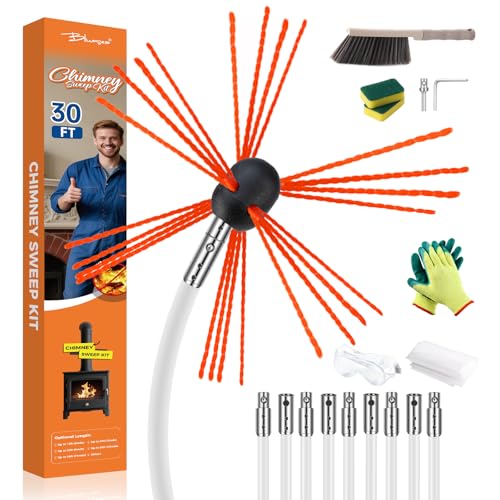
Bluesea emphasizes 39.3-inch rods, which can reach a given distance with fewer connections than shorter rod sections. Its chrome button-lock system is intended to stay connected during clockwise or counterclockwise rotation, and the brush has rectangular nylon bristles. That makes it a practical alternative to the Morinoli kit for buyers who value longer individual rods.
Bottom line: Pick this if longer individual rods and a 30-foot reach suit your setup.
How to choose a chimney sweep kit
Choose a chimney sweep kit by flue shape, cleaning reach and bristle material, not by rod count alone. Measure the path from the access point to the area you intend to clean, then leave room to handle the rods; a 30-foot kit is a poor fit if the path exceeds 30 feet. Flexible rods help follow bends, but a brush must also pass through the narrowest section. For a rectangular or arched flue, verify the brush dimensions and shape before committing.
Nylon bristles are a common choice for general chimney brushing, while steel-wire bristles are more abrasive and may be unsuitable for some liners. The VEVOR kit includes nylon and steel-wire bristles; the other three specify nylon. Use the brush material only when it is compatible with the flue liner, and do not assume a more aggressive brush is safer or more effective for every chimney.
Rod connections and drill use
Rod connections determine how the sections stay together during cleaning. Button-lock fittings join rods with a spring button that engages a hole; the three 30-foot kits here use this style, while VEVOR specifies a plastic swivel connector. A loose connection can leave a rod or brush in the flue, so assemble each joint fully and keep the next section supported as you work.
Use drill rotation only when the kit and its connection system are made for it. Sealegend explicitly says its brush can attach to an electric drill, and Morinoli says its button locks are designed for rotation in either direction. Start at low speed and avoid forcing a brush through a restriction. Never reverse a rotating system unless its instructions explicitly allow it; an incompatible rotation direction can loosen joints.
Match the brush to your flue
Flue shape and liner material determine which brush is appropriate. Round brushes are commonly matched to round flues, while square or rectangular flues need a shape that can reach corners; flexible brush designs are useful when the route bends. Check the chimney or appliance documentation for liner material before using a steel-wire brush. This is particularly important with stainless-steel liners, which can be scratched by unsuitable tools.
Use a simple fit check before choosing: if the flue opening is narrower than the brush head, choose a smaller head; if it is much wider, a round head may leave corners untouched. The maker names square, rectangular and arch flues for VEVOR, but does not provide brush dimensions for any kit. Confirm the actual head size and liner compatibility before use.
Safety and cleanup while sweeping
Creosote is combustible, so chimney sweeping is a fire-safety task rather than routine dusting. Sweep only when the fireplace and flue are completely cool, and wear eye protection and a properly fitted particulate respirator; goggles are included with the VEVOR kit. Close fireplace openings and cover nearby furnishings to limit soot spread. Keep children and pets away from the work area.
Mechanical kits remove deposits but cannot reliably diagnose a damaged liner, obstruction or unsafe installation. The National Fire Protection Association recommends annual chimney, fireplace and venting-system inspections, with cleaning, maintenance or repairs as needed. Stop if the brush catches, a rod joint loosens, or you encounter substantial hard or glazed deposits; a qualified chimney professional can assess conditions that a home kit cannot safely resolve.
Frequently Asked Questions
How long should a chimney sweep kit be?
Choose a kit whose reach covers the full path you need to brush, with enough rod length left to handle from the access point. These choices reach 30 or 33 feet, but the actual path and cleaning access decide which length fits.
Can I use a drill with a chimney brush kit?
Only use a drill when the kit is designed for powered rotation. Sealegend says its brush attaches to an electric drill; check the kit’s directions for the permitted speed and rotation direction before operating it.
Are nylon or wire chimney brushes better?
Neither material is right for every liner: nylon bristles are less abrasive, while steel wire is more aggressive and can damage unsuitable liners. Check the liner material and brush compatibility before sweeping; VEVOR includes both nylon and steel-wire bristles.
How often should a chimney be inspected?
The National Fire Protection Association recommends an inspection at least once a year. Cleaning frequency depends on how often and what you burn, so an inspection should determine whether deposits or damage need attention.
Can a chimney sweep kit clean an arched flue?
A flexible rod helps navigate a bend, but the brush must also fit the opening and reach the flue surfaces. VEVOR identifies square, rectangular and arch chimneys as intended shapes; verify the brush head dimensions and liner compatibility before use.