
Insulated Rubber Boots for Women: 4 Models Compared

For the coldest conditions among these insulated rubber boots for women, MUCK Arctic Sport II Tall stands out for its maker-rated range down to -40°F and 16-inch shaft.
We earn a commission if you buy through links on this page. As an Amazon Associate I earn from qualifying purchases. Products are compared on manufacturer specifications, not hands-on testing.
- Best overall: MUCK Arctic Sport II Tall – Its 16-inch shaft and maker-rated comfort down to -40°F suit colder, wetter conditions.
- Best for year-round chores: HISEA Mid-Calf Neoprene Mud Boots – Its maker-rated range extends from -4°F to 68°F.
- Best for 6 mm insulation: Kalkal 6 mm Neoprene Boots – Its 6 mm neoprene upper pairs with a maker-rated range of -4°F to 50°F.
| Product | Best for | Insulation | Shaft/fit | Comfort range | Shop |
|---|---|---|---|---|---|
| MUCK Arctic Sport II Tall | Cold weather | 5 mm neoprene | 16 in tall | -40°F to 40°F | Check Price on Amazon |
| Kalkal 6 mm Neoprene Boots | Flexible outdoor work | 6 mm neoprene | Calf-high | -4°F to 50°F | Check Price on Amazon |
| HISEA Mid-Calf Neoprene Mud Boots | Year-round chores | Neoprene | Mid-calf | -4°F to 68°F | Check Price on Amazon |
| TIDEWE 6 mm Neoprene Boots | Mixed-size fit | 6 mm neoprene | — | -4°F to 50°F | Check Price on Amazon |
Insulated Rubber Boots for Women Compared
Compare the insulation, coverage and maker-rated temperature ranges to match boots to your conditions and fit needs.
MUCK Arctic Sport II Tall

MUCK Arctic Sport II Tall has the coldest maker-rated lower limit here, paired with a 16-inch shaft for more coverage than mid-calf chore boots. Its 5 mm neoprene flexes around the foot, while a fleece lining and comfort insole add warmth and cushioning. The women’s last is designed to support a female foot, and the rugged outsole is slip-resistant. The tradeoff is its tall coverage and cold-weather focus: shoppers seeking a breathable boot for warm, muddy work may prefer a lighter-lined option.
Bottom line: Choose it for cold, wet conditions where extra shaft coverage matters.
Kalkal 6 mm Neoprene Boots

Kalkal 6 mm Neoprene Boots is the 6 mm neoprene option among these women’s boots, with a calf-high cut rather than a 16-inch shaft. Natural rubber helps keep water out, while an EVA midsole and flexible rubber outsole are intended to absorb shock during extended work. The maker gives a comfort range of -4°F to 50°F. Its pink color and size 8 configuration distinguish this particular option; buyers seeking another size or color should check the available fit before choosing. It is not the coldest-rated choice for prolonged frigid conditions.
Bottom line: Pick it for calf-high coverage and flexible work in moderate cold.
HISEA Mid-Calf Neoprene Mud Boots

HISEA Mid-Calf Neoprene Mud Boots has the broadest maker-rated upper temperature here, reaching 68°F, which makes it the warm-weather-leaning choice for wet chores. The sealed rubber shell extends above the ankle, and handles help with pulling the boots on. Its lugged outsole is designed to shed debris in mud. The maker cautions that the boots are not wide-calf, so calf circumference matters as well as shoe size. Choose a different option if a wide-calf fit or a tall shaft is essential.
Bottom line: Choose it for chores across a broad range of mild and cool weather.
TIDEWE 6 mm Neoprene Boots
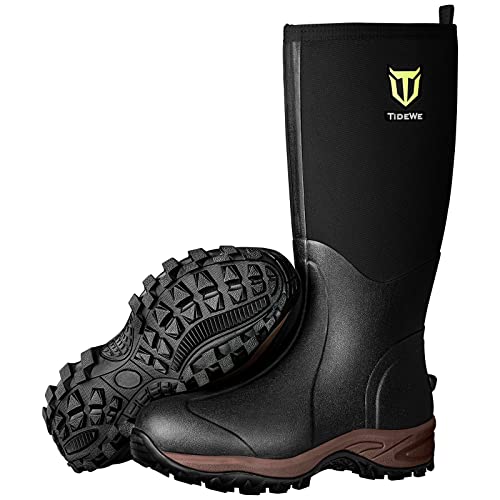
TIDEWE 6 mm Neoprene Boots uses a men’s-and-women’s size system, so the included women’s size 7 corresponds to men’s size 6; the maker specifically advises checking its size chart. Its 6 mm CR flex-foam is waterproof and flexible, with heat-retaining insulation and 4-way stretch nylon. The maker rates comfort from -4°F to 50°F. This configuration is black and reinforced at the toe, but the mixed sizing can make selection less straightforward than a women’s-only size label. Confirm the size conversion before choosing.
Bottom line: Pick it if the mixed men’s/women’s sizing matches your fit.
How to choose insulated rubber boots
Choose insulation by the coldest conditions you expect, then balance coverage against breathability. Neoprene thickness is one useful comparison: options here range from 5 mm to 6 mm, but thickness alone does not determine warmth because lining, fit and activity also matter. Maker comfort ranges span -40°F to 68°F, so a boot rated to -4°F is not the same cold-weather choice as one rated to -40°F. For frequent work near freezing or below, favor a lower temperature rating; for warm, wet chores, a mesh lining can reduce heat buildup. Temperature ratings are comfort guidance, not a guarantee for every wearer or activity level.
How shaft height and fit affect coverage
Shaft height controls how much splash, mud and brush can reach the leg: a 16-inch shaft provides more leg coverage than a mid-calf or roll-down design. Fit should be checked at both the foot and calf, especially when wearing thick winter socks. A snug but not constricting fit helps preserve warmth, while too little room can make a boot uncomfortable during long chores. HISEA Mid-Calf Neoprene Mud Boots is specifically not a wide-calf design, and TIDEWE 6 mm Neoprene Boots uses combined men’s and women’s sizing. Measure calf circumference and consult the maker’s size chart when either factor applies; do not select by shoe size alone.
How insulation and lining differ
Neoprene boots insulate through a flexible foam layer, while fleece or fabric linings affect next-to-foot comfort and airflow. A 5–6 mm neoprene wall is common in cold-weather rubber-boot styles, but no single thickness guarantees a temperature outcome. Fleece favors warmth, whereas breathable mesh favors ventilation and can feel cooler during active work. This difference matters when moving between indoor barns and outdoor mud: too much insulation can become uncomfortable with exertion, while a breathable lining may not suit stationary work in subfreezing weather. Use each maker’s temperature range as a comparison point, not as a substitute for appropriate socks or sensible exposure limits.
Safe use and care for rubber boots
Rubber boots improve water resistance but do not make every wet surface safe; mud, algae and smooth floors can still be slippery. Choose deeper, clean lugs for muddy ground and remove packed debris before walking on slick indoor surfaces. Neoprene and rubber also perform best when cleaned of grit and allowed to dry fully between uses, away from direct high heat that can damage materials. Check soles for worn tread and seams for cracks before work around livestock, tools or uneven terrain. A boot that leaks, has a damaged sole or does not fit securely should not be relied on for protection.
Common fit mistakes with insulated boots
The most common mistake is choosing a size without accounting for sock thickness, calf width or a combined sizing chart. Thick winter socks need room, but excess space can let the foot shift and reduce walking control. Another mistake is treating a comfort temperature range as a safety rating: wind, standing still, damp socks and individual circulation all change how cold feet feel. If you have under 2 inches of clearance above the boot shaft during muddy work, choose a taller shaft to reduce splash entry. Keep pant legs arranged to shed water outside the boot top when conditions allow.
Frequently Asked Questions
Are 5 mm or 6 mm neoprene boots warmer?
Six millimeters is thicker than 5 mm and can provide more insulating material, but lining, fit and activity also affect warmth. Compare the maker’s temperature range as well as neoprene thickness.
How tall should women’s rubber boots be for mud?
A 16-inch shaft offers more leg coverage than a mid-calf style. For deep mud or brush that reaches above the shaft, choose taller protection and avoid entering conditions that can overtop the boot.
Can insulated rubber boots be worn in warm weather?
Some are rated for mild conditions; one option here reaches 68°F. Breathable mesh and removable layers can help with heat, but thick neoprene may feel hot during active work.
Should winter rubber boots fit tightly?
They should hold the heel without squeezing toes or calves, with enough room for the socks you plan to wear. Tight boots can reduce comfort, while excessive space can let the foot shift.
How do you dry neoprene rubber boots?
Rinse away mud and let boots air-dry fully in a ventilated place, away from direct heat. Drying between wears helps limit odor and preserves the materials.