
Arm Sleeves for Volleyball: 4 Options Compared

For volleyball, Mizuno Arm Sleeves, Black, OSFM is the most direct match because the sleeves extend from biceps to forearm and are designed for warmth, sweat, and ball impact sting. Choose Achiou Cooling Ice Silk Sleeves, 2 Pairs instead for stated UPF 50+ sun protection, or consider Nike Dri-FIT UV Solar Sleeves, Adult S/M or ROXUN Cooling UV Sleeves, 4 Pairs for sleeves with more general training or outdoor-use features.
Volleyball arm sleeves cover the arm from near the biceps toward the wrist; they are not the same as padded elbow protection.
We earn a commission if you buy through links on this page. As an Amazon Associate I earn from qualifying purchases. Products are compared on manufacturer specifications, not hands-on testing.
- Best overall: Mizuno Arm Sleeves, Black, OSFM – The sleeves are explicitly described for warmth, sweat absorption, and reducing ball-impact sting.
- Best for sun exposure: Achiou Cooling Ice Silk Sleeves, 2 Pairs – The fabric is described as cooling and rated UPF 50+.
- Best for measured sizing: Nike Dri-FIT UV Solar Sleeves, Adult S/M – Two sizes include sleeve length and wrist and upper-arm measurements.
- Best for multiple pairs: ROXUN Cooling UV Sleeves, 4 Pairs – The package contains four pairs of seamless sleeves with UPF 50+ protection.
| Product | Best for | Material | Size options | Sun protection | Shop |
|---|---|---|---|---|---|
| Mizuno Arm Sleeves, Black, OSFM | Volleyball play | 91% polyester, 5% polyurethane, 4% nylon | OSFM | — | Check Price on Amazon |
| Achiou Cooling Ice Silk Sleeves, 2 Pairs | Outdoor volleyball | Ice silk; composition not given | One size | UPF 50+ | Check Price on Amazon |
| Nike Dri-FIT UV Solar Sleeves, Adult S/M | Measured sizing | Lightweight moisture-wicking fabric | S/M or L/XL | UV protection; rating not given | Check Price on Amazon |
| ROXUN Cooling UV Sleeves, 4 Pairs | Multiple pairs | 90% nylon, 10% spandex | One size | UPF 50+ | Check Price on Amazon |
Arm sleeves for volleyball
Compare each option by its fit, fabric, and intended use before choosing for indoor play or outdoor sessions.
Mizuno Arm Sleeves, Black, OSFM
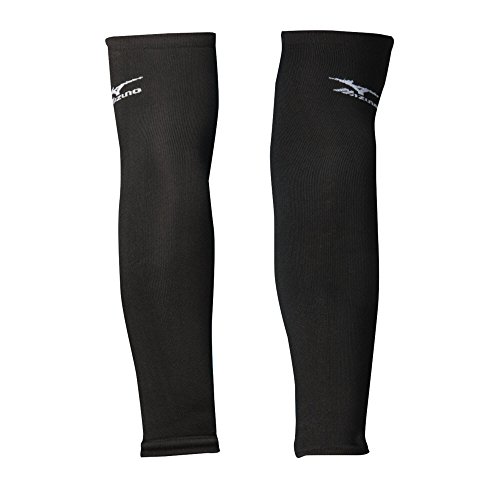
Designed with volleyball in mind, these sleeves are based on a model used by the US National Teams in international competition, according to Mizuno. The polyester, polyurethane, and nylon blend extends from biceps to forearm, and the pair is intended to add warmth, absorb sweat, and decrease the sting of ball impact. The one-size-fits-most format suits players who prefer a simple sizing choice.
Bottom line: Choose these for volleyball-specific coverage and a focus on ball-impact sting.
Achiou Cooling Ice Silk Sleeves, 2 Pairs

For outdoor volleyball in strong sun, this option combines a cooling-fabric claim with UPF 50+ protection, unlike the indoor-focused Mizuno pair. The package includes one black pair and one white pair, and the sleeves are described as smooth and breathable. Achiou recommends hand washing and limiting prolonged exposure to direct sunlight during drying. The one-size format may be less useful if you need a close fit based on arm measurements, and the product is positioned for sun coverage rather than ball-impact sting; do not treat it as padding.
Bottom line: Pick these when outdoor sun coverage and two color choices matter most.
Nike Dri-FIT UV Solar Sleeves, Adult S/M

The clearest sizing guidance belongs to this general-purpose Nike pair: S/M is approximately 14.5 inches long, with 6-inch wrist and 10-inch upper-arm measurements; L/XL is approximately 17 inches long, with 8-inch wrist and 13-inch upper-arm measurements. Nike describes the fabric as breathable and moisture-wicking, with compression intended to support circulation and reduce muscle fatigue. It is made for several activities rather than specifically for volleyball, so players seeking sleeves focused on ball-impact sting may prefer Mizuno Arm Sleeves, Black, OSFM. Measure around your wrist and biceps and compare the result with the size offered.
Bottom line: Choose these if you want stated wrist and upper-arm measurements for sizing.
ROXUN Cooling UV Sleeves, 4 Pairs

Four pairs make this option useful for players who want several sleeves ready for outdoor practices or other activities. The seamless nylon-and-spandex blend is described as snug, sweat-wicking, and cooling, with UPF 50+ protection; the maker says it blocks over 98% of UVA and UVB rays. Its uses center on outdoor wear and sports such as basketball and baseball, not volleyball-specific impact coverage. One size may not suit every arm, so check the fit before relying on a snug sleeve through a full practice.
Bottom line: Pick this set when multiple pairs and stated sun protection are priorities.
How to choose volleyball arm sleeves
Choose by the job the sleeve needs to do: game comfort, measured compression fit, or outdoor sun coverage. Volleyball-specific wording matters if you want a sleeve intended to manage sweat or the sting of ball contact; a soft fabric sleeve is not the same as a padded elbow guard. For sun exposure, look for an explicit UPF rating rather than assuming that any opaque fabric blocks the same amount of UV. UPF 50 fabric allows about 1/50 of UV through under test conditions, but coverage can shift as fabric stretches or gets wet. For a close fit, measure your wrist and upper arm and match both dimensions, not just sleeve length. If protection from impact is the priority, choose actual protective padding rather than relying on compression fabric.
How to size arm sleeves for volleyball
Measure around the wrist and the widest part of the biceps, then compare both measurements with a maker’s size range; sleeve length alone cannot confirm a secure fit. The Nike option gives wrist, upper-arm, and length measurements for S/M and L/XL, while OSFM or one-size choices provide less specific sizing guidance. A properly fitted sleeve should stay in place without pinching or causing numbness; loosen or remove a sleeve if discomfort or tingling develops. Sleeve fabric stretches during movement, so avoid choosing a size that only fits when the arm is relaxed. The following comparison separates sizing guidance from fabric claims; it is not a universal sizing chart.
| Choice | Useful when | Fit cue |
|---|---|---|
| Measured size range | You want wrist and upper-arm dimensions | Compare both circumferences |
| One size or OSFM | You prefer a single size option | Check that it stays comfortable in motion |
Sun protection and volleyball sleeves
UPF 50+ is the clearest sun-protection indicator among these options, and two products include that rating. UPF measures how much UV radiation fabric transmits: UPF 50 permits roughly 1/50 of UV through under test conditions. A sleeve protects only the skin it covers, so uncovered areas still need their usual sun protection. Stretching, wear, or wet fabric can affect coverage, and a sleeve is not a substitute for shade or sunscreen on exposed skin. For indoor volleyball, the sun rating may be less important than sleeve fit, moisture handling, and whether you want warmth or a softer contact feel. Do not infer a particular level of UV protection from color or fabric appearance.
Care and common fit mistakes
Follow the care method specified for the pair: Achiou recommends hand washing and avoiding prolonged time in direct sunlight while drying. For elastic sports fabrics generally, gentler washing and air drying help limit unnecessary heat and abrasion; avoid assuming that every sleeve tolerates high-heat drying. A common mistake is treating a compression sleeve as protective padding: fabric coverage does not provide the cushioning of a padded guard. Another is buying by length alone, even though wrist and upper-arm circumference influence whether a sleeve slips or feels restrictive. Check for bunching or a tight band after moving through a few overhead reaches, and remove the sleeve if it causes numbness or persistent discomfort.
Frequently Asked Questions
Do volleyball arm sleeves protect against hard hits?
Most fabric sleeves provide coverage or compression, not impact padding. Mizuno describes its pair as helping decrease the sting of ball impact, but that is not the same as a protective elbow guard.
How tight should a volleyball arm sleeve feel?
A sleeve should stay in place without pinching, numbness, or tingling. Compare wrist and upper-arm measurements where available, and loosen or remove it if discomfort develops.
Are UPF 50 sleeves enough for outdoor volleyball?
UPF 50 fabric transmits roughly 1/50 of UV under test conditions, but it only covers the skin beneath the sleeve. Protect exposed skin separately, and remember that stretch and wetness can affect fabric coverage.
Can volleyball arm sleeves be worn under a jersey?
A sleeve can be worn under a jersey if the fabric and fit allow comfortable arm movement. Try overhead reaches and swings before play; bunching or restricted movement is a sign to adjust the fit.
How should volleyball sleeves be washed?
Achiou recommends hand washing and avoiding prolonged direct sun while drying. For elastic sports fabrics, gentler washing and air drying can reduce heat and abrasion.