
Best Grinder for Flax Seeds: 5 Options Compared

Compact Electric Flax Seed Grinder suits most people because it is designed specifically for flax seeds and uses simple one-touch electric operation. Choose Manual Chia & Flax Seed Mill instead if you want a manual mill with adjustable grind settings, or a multipurpose electric grinder if you also grind coffee, spices or nuts.
We earn a commission if you buy through links on this page. As an Amazon Associate I earn from qualifying purchases. Products are compared on manufacturer specifications, not hands-on testing.
- Best overall: Compact Electric Flax Seed Grinder – Designed specifically for flax seeds and operates with one touch.
- Best for adjustable grinding: Manual Chia & Flax Seed Mill – A manual ceramic mill offers adjustable settings from fine powder to coarse granules.
- Best for removable cleanup: SHARDOR One-Touch Grinder with Removable Bowl – Its stainless steel bowl detaches and is dishwasher safe.
| Product | Best for | Type | Grind control | Cleaning feature | Shop |
|---|---|---|---|---|---|
| Compact Electric Flax Seed Grinder | Daily flax grinding | Electric blade mill | One-touch button | — | Check Price on Amazon |
| Manual Chia & Flax Seed Mill | Adjustable manual grind | Manual ceramic mill | Adjustable knob | Detachable parts | Check Price on Amazon |
| SHARDOR One-Touch Grinder with Removable Bowl | Removable bowl cleanup | Electric blade grinder | Press and hold | Removable, dishwasher-safe bowl | Check Price on Amazon |
| Cuisinart SG-10 Spice and Nut Grinder | Measured batch capacity | Electric spice-and-nut grinder | Push-top lid | Dishwasher-safe lid and bowl | Check Price on Amazon |
| Wancle One-Touch Coffee and Spice Grinder | Visible grinding progress | Electric blade grinder | Press and hold | Transparent lid | Check Price on Amazon |
Best grinders for flax seeds
Compare the dedicated flax mills with multipurpose electric grinders by operation and cleanup.
Compact Electric Flax Seed Grinder

Unlike general-purpose coffee mills, this compact electric grinder is specifically designed for flax seeds. The maker says its blade geometry and motor are optimized for flax, and the one-touch control keeps operation simple. Its 6.1-inch height and 3.7-inch width suit a crowded countertop, and it is also intended for chia, sesame, coffee beans, spices and herbs. It is the clearest fit for someone who wants an electric mill focused on small dry seeds. The tradeoff is that no adjustable grind setting or removable bowl is identified, so buyers wanting those features should consider another style.
Bottom line: Choose this if flax is the main ingredient you plan to grind and you want electric one-touch operation.
Manual Chia & Flax Seed Mill
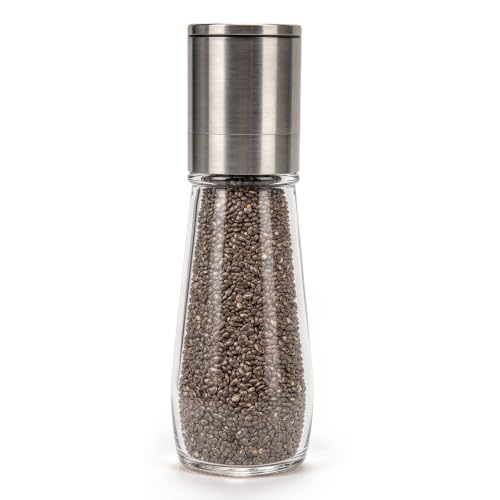
For adjustable grinding without a motor, this manual mill has a ceramic core and a stainless steel top knob. Its maker says the settings span fine powder through coarse granules, and the transparent 4.73-fluid-ounce glass body lets you see the fill level. The BPA-free borosilicate body and detachable parts make it a portable option for a kitchen, office or trip. This mill is intended for dry ingredients, including flax, chia, peppercorns, sea salt and dry spices. Manual operation takes more effort than pressing an electric control, so it is less suited to frequent large batches.
Bottom line: Pick this if you want adjustable texture and a battery-free mill for occasional dry grinding.
SHARDOR One-Touch Grinder with Removable Bowl

The removable stainless steel bowl distinguishes this multipurpose grinder from the dedicated flax options. The maker says it handles flaxseed along with coffee beans, spices, herbs, nuts and coarse salt; releasing the press control stops grinding, while a longer press produces a finer result. The 8.6-inch height is taller than the compact dedicated electric mill, so measure available cabinet clearance if that matters in your kitchen. A dishwasher-safe, detachable bowl can simplify filling and pouring. The control requires holding a finger down, which may be less convenient than a one-press operation.
Bottom line: Choose this if you want a detachable bowl and expect to grind several kinds of dry ingredients.
Cuisinart SG-10 Spice and Nut Grinder

The 90-gram bowl capacity is the distinguishing specification for this electric spice-and-nut grinder. Its push-top lid controls on and off, and the manufacturer identifies stainless steel blades, a heavy-duty motor, non-slip rubber feet, and dishwasher-safe bowl and lid. Flaxseed is not named among its ingredients, so this is a less direct match than mills built or described for flax. Consider it if its bowl capacity and broader spice-and-nut role suit your kitchen; buyers seeking an explicit flax focus should prefer a dedicated option.
Bottom line: Consider this if a 90-gram bowl and multipurpose spice grinding matter more than a dedicated flax design.
Wancle One-Touch Coffee and Spice Grinder
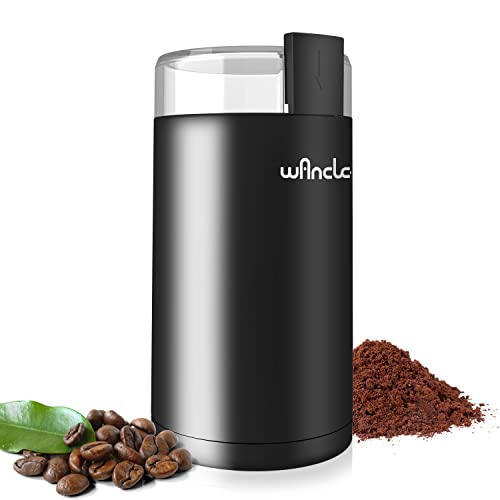
The transparent lid lets you watch the grind progress, making this coffee-and-spice grinder distinct among the general-purpose electric options. The maker says its stainless steel blade and bowl handle beans, while its press-and-release control lets the user stop at a preferred texture. Its maximum is 60 grams of beans; that figure is for beans, not a confirmed flax capacity. Flax is not named in the ingredient range, so it is a weaker match for a flax-first purchase. Choose it for visible progress and coffee use, not when explicit flax compatibility is the deciding factor.
Bottom line: Pick this for coffee grinding and visible progress if flax-specific compatibility is not essential.
How to choose a flax seed grinder
Choose an electric blade mill for quick countertop grinding, or a manual mill when adjustable texture and portability matter more. Blade mills chop seeds inside a small chamber; manual ceramic mills grind as their surfaces turn against one another. Flax seeds contain oil, so grinding very long or in oversized batches can leave a sticky residue and make cleanup harder. For daily use, favor a mill explicitly intended for flax; for occasional use, a manual option can avoid relying on a power outlet.
Match the control to how you want to adjust texture: a press-and-hold control stops when released, while an adjustable knob offers settings without timing each grind. Bowl capacity is useful only when stated for the ingredient you plan to grind; a bean capacity does not automatically establish the same flax capacity.
Blade and ceramic mills compared
Blade mills use a rotating blade to chop dry seeds, while ceramic mills use turning grinding surfaces to crush them. A blade grinder often relies on how long you run it for a finer result; an adjustable manual mill can set a coarser or finer range. Choose a dedicated flax model when ingredient fit is your priority, and choose a multipurpose model only when its uses cover your other needs.
The table separates the main grinder styles by their working method and practical tradeoff.
| Mill type | How it grinds | Best fit |
|---|---|---|
| Electric blade | Rotating blade chops seeds | Quick small-batch grinding |
| Manual ceramic | Turning surfaces crush seeds | Portable use and adjustable texture |
Do not assume every coffee grinder is suitable for flax just because it handles beans: verify that flax is among its intended ingredients when that compatibility is important.
Batch size, texture and cleanup
Grind only the amount you plan to use soon; whole seeds are easier to store without exposing their interior oils to air. Short pulses with a blade grinder help you check texture between bursts, while a manual adjustable mill changes the setting mechanically. Fine powder suits mixing into liquids and batters; a coarse result works when you want visible seed pieces.
Oil-rich flax can cling to a chamber after grinding, so clean the mill before residue dries. Keep electric units unplugged while cleaning, and do not put a body or motor base in water. A detachable bowl can be easier to wash than a fixed grinding chamber, but follow the specific appliance’s cleaning guidance before using a dishwasher.
Safe use and common grinder mistakes
Keep fingers and utensils away from blades, and unplug an electric grinder before reaching into its chamber. A small countertop mill is not a food processor: overfilling can prevent seeds from moving freely around the blade and produce uneven results. Use the capacity when available, and if flax capacity is unknown, grind a modest amount rather than assuming the bean or spice maximum applies.
Use dry seeds only in mills intended for dry ingredients; wet mixtures and pastes can cling to grinding surfaces and complicate cleaning. Avoid running a blade grinder continuously for a long stretch, since repeated short pulses give more control over texture and reduce unnecessary friction. Let the chamber cool before cleaning if it feels warm.
Frequently Asked Questions
Should flax seeds be ground before eating?
Ground flax is easier to incorporate into foods than whole seeds. Grind only what you expect to use soon, since exposing the inside of the seed to air makes storage more demanding.
Can a coffee grinder grind flax seeds?
Some multipurpose coffee grinders explicitly include flaxseed, but not all do. Check the grinder’s intended ingredients, and remember that a bean capacity does not establish its flax capacity.
How do I keep ground flax from clumping?
Use dry seeds and grind in short pulses rather than running a blade continuously. Oil-rich flax can leave a sticky film, so clean the chamber soon after grinding.
Is a manual or electric flax mill better?
An electric mill suits frequent quick batches, while a manual ceramic mill suits portable use and adjustable texture. Choose electric when minimizing hand effort matters more than battery-free operation.
Can I wash an electric seed grinder with water?
Unplug the grinder first and keep its motor base out of water. Only wash removable parts according to their cleaning guidance; a detachable bowl may be dishwasher safe when the maker says so.