
Magnetic Roofing Shoes for Metal Roofs Compared

For a magnetic option, LOUYENOUS Magnetic Steel-Toe Covers is the closest match because its name identifies it for metal roofing, while Spikeless Rubber Roofing Cleats, L/XL is the clearer choice if you want rubber tread and adjustable straps. Magnetic traction only works when the roof metal attracts a magnet; confirm the sole magnet configuration before ordering LOUYENOUS Magnetic Steel-Toe Covers.
Choose spikeless rubber covers instead when you need nonmetal tread or the roof material does not attract magnets. These covers stretch over regular footwear and use tread rather than magnetic hold.
We earn a commission if you buy through links on this page. As an Amazon Associate I earn from qualifying purchases. Products are compared on manufacturer specifications, not hands-on testing.
- Best overall: LOUYENOUS Magnetic Steel-Toe Covers – Its name specifically identifies magnetic footwear for metal roofing, though sole magnet placement needs confirmation.
- Best for rubber tread: Spikeless Rubber Roofing Cleats, L/XL – A full-foot rubber tread and adjustable straps provide a nonmagnetic alternative.
- Best for scratch-sensitive roofs: Spikeless Rubber Roofing Covers, L/XL – Its spikeless rubber tread is intended to avoid scratching or puncturing roofing material.
| Product | Best for | Traction type | Fit | Material | Shop |
|---|---|---|---|---|---|
| LOUYENOUS Magnetic Steel-Toe Covers | Magnetic-style roofing | Magnetic (name) | — | — | Check Price on Amazon |
| Spikeless Rubber Roofing Cleats, L/XL | Wet roof traction | Rubber tread | US 9–12 | Rubber | Check Price on Amazon |
| Spikeless Rubber Roofing Covers, L/XL | Roof-safe tread | Spikeless rubber tread | US 9–12 | Rubber | Check Price on Amazon |
| Spikeless Rubber Cleats, S–M | Small footwear | Textured rubber tread | US 5.5–8 | Rubber | Check Price on Amazon |
Magnetic Roofing Shoes for Metal Roofs
Compare the magnetic-named option with spikeless rubber covers, which rely on tread rather than magnetic attraction.
LOUYENOUS Magnetic Steel-Toe Covers

LOUYENOUS Magnetic Steel-Toe Covers is the only option named for magnetic metal-roof use, but the product name also emphasizes a steel-toe cap rather than describing the sole. Buyers seeking magnetic grip should confirm where the magnets sit and whether they contact the roof; a steel-toe cap alone does not establish magnetic traction. This choice is the closest match for someone specifically looking for magnetic roofing footwear, but it is not the clearest pick if you need documented tread or fit sizing. Steel-toe protection and magnetic hold are separate functions, so evaluate each for the job.
Bottom line: Choose this only if its magnetic sole arrangement matches your roof and work needs.
Spikeless Rubber Roofing Cleats, L/XL
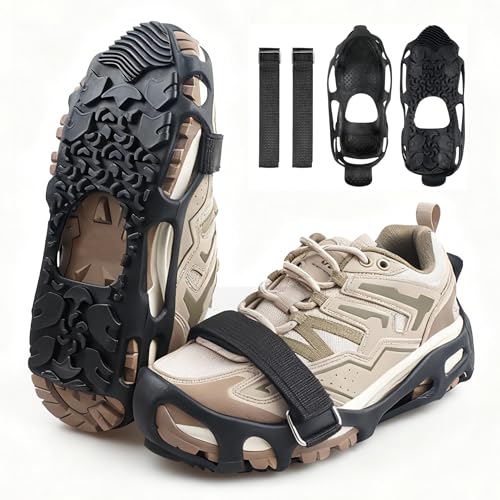
Spikeless Rubber Roofing Cleats, L/XL offers the most explicit roofing-focused rubber alternative: a full-foot tread pattern and adjustable straps, with a fit for US shoe sizes 9–12. The maker says its rubber remains elastic to −45°C, and the tread is intended to channel water on wet or snowy surfaces. This is a better match than a magnetic-style shoe cover when you want a strap-secured, spikeless overshoe. It does not provide magnetic attraction, so it may not satisfy a job that specifically depends on magnets gripping steel roofing.
Bottom line: Pick these for a strap-secured rubber tread cover in the size range.
Spikeless Rubber Roofing Covers, L/XL

Spikeless Rubber Roofing Covers, L/XL emphasizes nonmetal tread intended to avoid scratching, puncturing, or damaging roofing material, making it the more relevant alternative when surface protection matters. The covers are described as stretch rubber and include straps in the US 9–12 size range. They provide traction through a high-friction tread rather than through magnets or metal studs. That distinction matters on roofs where magnetic attraction is unavailable or unwanted; however, these covers are not a magnetic-grip substitute for a steel roof.
Bottom line: Choose these when avoiding metal studs and protecting the roof surface are priorities.
Spikeless Rubber Cleats, S–M

Spikeless Rubber Cleats, S–M is the small-fit, spikeless option, sized for US 5.5–8 footwear and made from flexible natural rubber with a polymer blend. Its textured grooves are intended to disperse water, oil, and grease, and the maker describes indoor and outdoor use. The smaller fit sets it apart from the large/extra-large roofing covers. It may suit a wearer in that size range who needs general slippery-surface traction, but its name and features do not establish magnetic grip or a metal-roof-specific fit.
Bottom line: Pick these for smaller shoes when general rubber traction is the goal, not magnetic hold.
How magnetic roofing shoes grip a metal roof
Magnetic footwear can grip only where the roof metal attracts a magnet, usually ferrous steel; aluminum panels do not attract ordinary permanent magnets. Roofs made of copper or many stainless-steel alloys also will not provide dependable magnetic hold. Test a small magnet on the actual roof panel, not just a fastener, because roofing can mix materials. A positive attraction is necessary but does not prove a shoe will hold on a slope: magnet strength, sole contact, dirt, coatings, seams, and water all affect traction. Use a compatible fall-protection system on elevated work; magnetic footwear is not fall protection. A buyer whose roof fails the magnet test should choose a compatible nonmagnetic traction method rather than relying on a shoe label.
Choosing magnetic grip or rubber tread
Magnetic soles and spikeless rubber covers work differently: magnets need a magnetic roof surface, while rubber tread relies on friction and tread contact. Check the roof material first, then choose the traction method; when the roof material is unknown or fails a magnet test, do not assume magnetic shoes will hold. Rubber covers avoid metal studs, which can scratch or puncture some surfaces, but rubber tread alone does not guarantee safe footing on steep, wet roofing. Shoe-cover fit also matters: a loose overshoe can shift underfoot, so match the footwear size and ensure straps or elastic keep it seated. For Spikeless Rubber Roofing Cleats, L/XL and Spikeless Rubber Roofing Covers, L/XL, the range is US 9–12; Spikeless Rubber Cleats, S–M is US 5.5–8.
| Roof or work need | Traction choice | Condition to check |
|---|---|---|
| Magnetic hold | Magnetic footwear | Roof panel attracts a magnet |
| Nonmetal contact | Spikeless rubber cover | Tread and cover fit suit the task |
Roofing shoe fit and surface contact
Choose an overshoe by the shoe size it must cover, not by the size of the roof or the wearer’s usual boot category. The size windows here are US 5.5–8 for Spikeless Rubber Cleats, S–M and US 9–12 for Spikeless Rubber Roofing Cleats, L/XL and Spikeless Rubber Roofing Covers, L/XL, so footwear outside those ranges needs another size. A full-foot cover should sit flat under the heel and forefoot; folds or a shifted strap can reduce contact and create a trip hazard. Roofing panels also have seams, ribs, coatings, and debris that interrupt sole contact. Before climbing, confirm the cover remains secure on the actual work boot and that its tread does not bridge or catch on panel ribs.
Safe use of traction footwear on roofs
Roof traction footwear does not replace fall protection: use the required personal fall-arrest or restraint equipment for the job and roof conditions. Wet metal, frost, loose granules, algae, and steep pitch can overwhelm either magnets or rubber tread. Avoid treating a magnetic attachment as an anchor; a shoe’s hold is not a rated tie-off point. Keep covers free of mud and grit, which can reduce contact and scratch finished panels, and inspect rubber for cuts or stretched areas before each use. If a shoe shifts, a magnet releases, or the surface is contaminated, stop work and address the condition from a safe position rather than testing grip while moving on the roof.
Frequently Asked Questions
Will magnetic shoes stick to aluminum roofing?
No, ordinary magnets do not attract aluminum roofing panels. Test the actual panel with a small magnet; a steel screw or flashing piece does not prove the roof surface itself is magnetic.
Do magnetic roofing shoes replace a safety harness?
No, footwear is not a fall-arrest anchor or substitute for fall protection. A shoe’s grip is not a rated tie-off point, especially on wet or sloped roofing.
How do I choose a roofing shoe cover size?
Match the cover’s US shoe range to the boot it will fit over. The options here cover US 5.5–8 or US 9–12; make sure the cover stays seated without folds or strap movement.
Can spikeless rubber covers damage roof panels?
Spikeless covers avoid metal studs that can puncture or scratch some surfaces, but grit trapped in the tread can still abrade a finish. Brush the soles clean before stepping onto coated panels.
What if my roof does not attract a magnet?
Do not rely on magnetic footwear on a nonmagnetic panel. Choose a suitable nonmagnetic traction method and use the job’s required fall-protection measures.