
Athlon Rifle Scopes: Five Models Compared by Fit

For an Athlon rifle scope with a 6-24×50 range and an illuminated first-focal-plane MOA reticle, choose Athlon Argos BTR GEN2 6-24×50 APLR2; its reticle scales with magnification, and its APLR2 reticle distinguishes it from the other models. Shooters who need MIL adjustments should consider Athlon Argos BTR GEN2 6-24×50 APMR, while those prioritizing a lower 4x starting magnification can look at Athlon Helos BTR GEN2 4-20×50 APLR6.
We earn a commission if you buy through links on this page. As an Amazon Associate I earn from qualifying purchases. Products are compared on manufacturer specifications, not hands-on testing.
- Best overall: Athlon Argos BTR GEN2 6-24×50 APLR2 – Its 6-24×50 range, illuminated FFP APLR2 MOA reticle, and etched reticle cover a versatile set of needs.
- Best for MIL adjustments: Athlon Argos BTR GEN2 6-24×50 APMR – It uses 0.1 MIL clicks and offers 18 MIL total adjustment.
- Best for lower starting magnification: Athlon Helos BTR GEN2 4-20×50 APLR6 – The 4-20×50 range starts at 4x, lower than the other models here.
| Product | Best for | Magnification | Objective lens | Reticle and units | Shop |
|---|---|---|---|---|---|
| Athlon Argos BTR GEN2 6-24×50 APLR2 | Illuminated MOA reticle | 6-24x | 50 mm | APLR2 FFP IR MOA | Check Price on Amazon |
| Athlon Argos BTR GEN2 6-24×50 APMR | MIL adjustments | 6-24x | 50 mm | APMR FFP IR MIL | Check Price on Amazon |
| Athlon Helos BTR GEN2 4-20×50 APLR6 | Lower starting power | 4-20x | 50 mm | APLR6 FFP IR MOA | Check Price on Amazon |
| Athlon Argos BTR GEN3 6-24×50 APLR11 | Protected lenses | 6-24x | 50 mm | APLR11 FFP IR MOA | Check Price on Amazon |
| Athlon Argos BTR GEN3 8-34×56 APLR11 | Higher magnification | 8-34x | 56 mm | APLR11 FFP IR MOA | Check Price on Amazon |
Athlon Rifle Scopes Compared
Compare the magnification range, objective size, and reticle setup to narrow down the right scope for your needs.
Athlon Argos BTR GEN2 6-24×50 APLR2

Among these scopes, Athlon Argos BTR GEN2 6-24×50 APLR2 pairs an etched APLR2 first-focal-plane reticle with illumination. The 6-24×50 configuration has a 50mm objective, and the reticle grows or shrinks with the target as magnification changes. Fully multicoated optics are intended to reduce reflected light and increase light transmission. This model suits shooters who want an illuminated MOA reticle across the zoom range. The tradeoff is that its reticle uses MOA rather than MIL, so it is a less direct match for a setup or preference built around MIL adjustments.
Bottom line: Choose this if an illuminated APLR2 MOA reticle is your priority.
Athlon Argos BTR GEN2 6-24×50 APMR
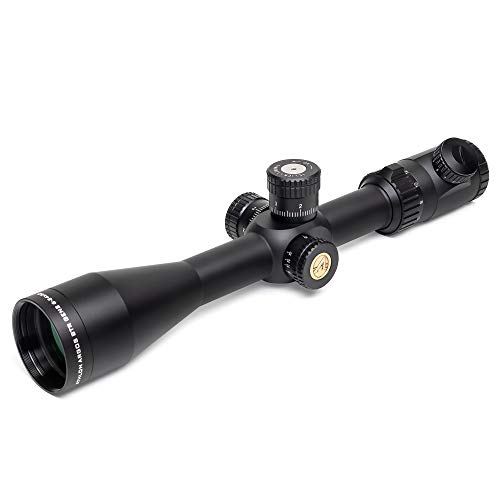
Athlon Argos BTR GEN2 6-24×50 APMR is the MIL option among the two Argos BTR GEN2 6-24×50 scopes here: it has 0.1 MIL click values and 18 MIL total adjustment. Its first-focal-plane APMR reticle remains valid at every magnification, and the scope has parallax adjustment from 10 yards to infinity. A precision zero stop lets the shooter return to the set zero after dialing. These features suit a shooter who wants MIL-based adjustment and parallax control. The reticle and turret units make it a poor match for someone who specifically wants MOA graduations.
Bottom line: Choose this for a 0.1 MIL click value and MIL reticle.
Athlon Helos BTR GEN2 4-20×50 APLR6
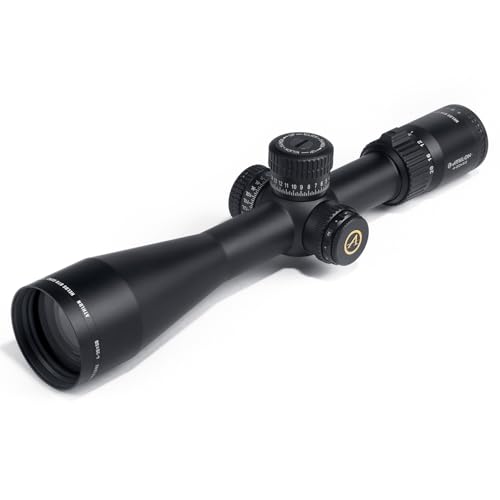
Athlon Helos BTR GEN2 4-20×50 APLR6 starts at 4x, the lowest minimum magnification among these five scopes, and tops out at 20x. Its APLR6 MOA reticle is first focal plane and illuminated; advanced fully multicoated optics are another distinguishing feature. The scope is waterproof, and its elevation and windage turrets lock by pulling them up to dial and pushing them down to secure them. This setup suits shooters who value a lower starting power and locking turrets. Its 20x ceiling is lower than the 24x and 34x options in this group, which matters when higher maximum magnification is a priority.
Bottom line: Choose this if a 4x minimum and locking turrets suit your needs.
Athlon Argos BTR GEN3 6-24×50 APLR11

Athlon Argos BTR GEN3 6-24×50 APLR11 differs from the GEN2 Argos models with XPL lens coatings, which are intended to protect against oil, dirt, and scratches. It has a 6-24×50 configuration, an illuminated first-focal-plane APLR11 MOA reticle, advanced multicoating, and a precision zero stop. The reticle and magnification range suit long-range shooting where a consistent reticle scale across powers is useful. Consider it if lens-surface protection and returning to zero after adjustments matter to your setup. Its minimum magnification is 6x, so it is not the best fit here for a shooter wanting a wider low-power view.
Bottom line: Choose this for XPL-coated lenses and an illuminated APLR11 MOA reticle.
Athlon Argos BTR GEN3 8-34×56 APLR11

Athlon Argos BTR GEN3 8-34×56 APLR11 reaches 34x, the highest maximum magnification in this group, and uses a 56mm objective rather than the 50mm objective on the other four. Its illuminated first-focal-plane APLR11 MOA reticle scales with magnification; advanced multicoating, XPL coatings, and a precision zero stop round out its features. It suits shooters who want the highest upper magnification range here and a larger objective. The 8x minimum is also the highest in the group, so a shooter who needs a lower starting power should compare the 4-20x or 6-24x options instead.
Bottom line: Choose this if 34x maximum magnification and a 56mm objective fit your needs.
How to Choose an Athlon Rifle Scope
Start with the magnification range and reticle units you will actually use. A 6-24x scope offers a 4x zoom ratio, while the 8-34x model offers about 4.25x; the 4-20x model also spans 5x. First-focal-plane reticles change apparent size as magnification changes, keeping their subtensions consistent for ranging or holds at any power. Match reticle units to your adjustment method: MOA and MIL are different angular systems, so avoid mixing a MIL reticle with MOA adjustments unless you deliberately convert. Choose lower minimum magnification when a wider field of view matters; choose a higher maximum only if you have a use for it.
What Objective Size and Magnification Mean
Exit pupil is objective diameter divided by magnification, so it shrinks as power rises. A 50mm objective at 24x gives about a 2.1mm exit pupil, while the 56mm objective at 34x gives about 1.6mm; at the low end, 50mm at 4x gives 12.5mm. A larger exit pupil can make eye placement more forgiving, but perceived brightness also depends on lighting, optical transmission, and the shooter’s pupil. Pick a scope with enough upper power for the target and conditions rather than assuming more magnification always helps. Higher power narrows the field of view and makes image movement more noticeable.
First Focal Plane and Reticle Units
First-focal-plane reticles preserve their angular subtensions throughout the zoom range because the reticle changes apparent size with the target. This makes holdover and ranging marks usable at any magnification, although the reticle can look small at low power and finer details can be harder to see. MOA and MIL are both angular measurement systems, but their markings and adjustment increments are not interchangeable without conversion. Before selecting a scope, align the reticle units with the turret clicks and the method you already use. These options have illuminated reticles, but illumination does not change the reticle’s measurement units or focal-plane behavior.
Mounting and Safe Scope Setup
Mount the scope so the full sight picture is visible at the shooting position you actually use; eye relief and ring position vary by scope and rifle, so verify fit before tightening the mount. Keep the firearm pointed in a safe direction and confirm it is unloaded before mounting or adjusting any optic. Leveling the reticle matters: a tilted reticle can cause horizontal error when using elevation holds or dialing at distance. Use a torque wrench and the mount maker’s torque specification rather than guessing, since excessive torque can damage a tube or mount. After mounting, confirm zero at a safe range and recheck that the mount and turrets remain secure.
Frequently Asked Questions
What does first focal plane mean on a rifle scope?
A first-focal-plane reticle changes apparent size with magnification so its angular subtensions remain consistent across the zoom range. It may appear smaller at low power, so check whether the reticle is still easy to see at the magnification you expect to use.
How do I choose between MOA and MIL reticles?
Choose the unit that matches your adjustment method and existing references. MOA and MIL measure angles differently, so using one for the reticle and the other for turret adjustments requires conversion rather than a direct match.
Does a larger objective lens make a scope brighter?
A larger objective can produce a larger exit pupil at the same magnification, but it does not guarantee a brighter view by itself. Exit pupil equals objective diameter divided by magnification; a 50mm objective at 25x gives a 2mm exit pupil.
Why does a rifle scope need parallax adjustment?
Parallax adjustment helps align the reticle and target image for the viewing distance, reducing apparent reticle movement over the target when your eye shifts. The useful setting depends on target distance and eye position; adjust until the reticle appears steady against the target.
What should I check after mounting a rifle scope?
Confirm the firearm is unloaded before any mounting work, then verify the reticle is level and the full sight picture is visible from your normal position. Zero the rifle at a safe range and follow the mount maker’s torque specification to avoid overtightening.