
Extend Rust Treatment Loctite: 4 Options Compared

For a larger metal project, Loctite Extend Rust Treatment 1 Quart is the Loctite Extend rust treatment to consider: it comes in a 1-quart bottle and dries black as a paint primer. Choose one of the smaller formats if you need less product or want a single 8 oz bottle.
Rust converters treat rusted iron or steel; they do not rebuild metal lost to corrosion, so replace or repair badly weakened parts rather than relying on a coating.
We earn a commission if you buy through links on this page. As an Amazon Associate I earn from qualifying purchases. Products are compared on manufacturer specifications, not hands-on testing.
- Best overall: Loctite Extend Rust Treatment 1 Quart – The 1-quart bottle size suits larger jobs, and the cured black coating acts as a primer for painting.
- Best for an 8 oz bottle: Loctite Extend Rust Neutralizer 8 oz – The 8 oz single pack has a black finish and sets in 20 minutes per coat, according to the maker.
- Best for a six-pack: Loctite Extend Rust Neutralizer 10.25 fl oz – Six 10.25 fl oz containers offer a multi-container format for jobs that need several smaller bottles.
| Product | Best for | Package size | Pack count | Finish | Shop |
|---|---|---|---|---|---|
| Loctite Extend Rust Treatment 1 Quart | Larger metal jobs | 1 quart | 10 | Black | Check Price on Amazon |
| Loctite Extend Rust Neutralizer 10.25 fl oz | Six small containers | 10.25 fl oz | 6 | Blue | Check Price on Amazon |
| Loctite Extend Rust Neutralizer 8 oz | Single small project | 8 oz | 1 | Black | Check Price on Amazon |
| Loctite Extend Rust Neutralizer 8 oz Bottle | Basic 8 oz option | 8 oz | — | — | Check Price on Amazon |
Loctite Extend rust treatment options
Compare the Loctite formats by package size, pack count and finish before choosing one for your project.
Loctite Extend Rust Treatment 1 Quart
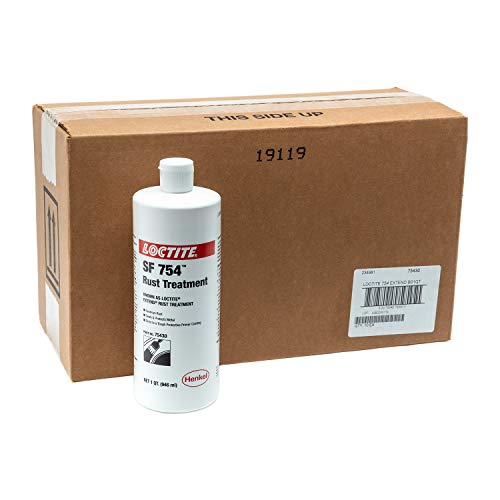
Loctite Extend Rust Treatment 1 Quart is the largest single-container format among these Loctite options, with a 1-quart bottle sold in a 10-pack. The maker says the cured product acts like a primer for painting, dries black, and resists continuous heat aging up to 200°F, with short exposure up to 250°F. It is formulated for use with body filler and fiberglass as well as metal parts. This format suits repeated or larger-area work; the limitation is the 10-pack commitment, which may be more than a small repair needs.
Bottom line: Choose this format for larger or repeated projects that can use quart containers.
Loctite Extend Rust Neutralizer 10.25 fl oz

Loctite Extend Rust Neutralizer 10.25 fl oz comes as six 10.25 fl oz containers, giving a multi-container option rather than a single larger bottle. Its product name identifies it as a Loctite Extend rust neutralizer, while the package color is blue. That format may suit a buyer who prefers several smaller containers for separate tasks. The maker does not establish the coating’s cured finish or application time, so this choice is less informative for buyers who need a particular finish or turnaround.
Bottom line: Pick it when you want six smaller containers and do not need a specified finish.
Loctite Extend Rust Neutralizer 8 oz

Loctite Extend Rust Neutralizer 8 oz is a single 8 oz Loctite Extend rust neutralizer with a black finish, distinct from the multi-container formats. The maker says it converts rust on iron and steel to a neutral black surface, can be coated with oil- or lacquer-based paint, and sets in 20 minutes per coat. That makes it a practical fit when the project is limited and a coat interval matters. Its 8 oz quantity is the constraint: a larger surface or multiple jobs may call for a larger package.
Bottom line: Choose this one for a small iron or steel job needing one 8 oz container.
Loctite Extend Rust Neutralizer 8 oz Bottle

Loctite Extend Rust Neutralizer 8 oz Bottle is a Loctite Extend rust neutralizer in an 8 oz size, matching the single-container capacity of Loctite Extend Rust Neutralizer 8 oz but without its finish or application timing. The size makes it suitable for a small rust treatment job when an 8 oz container is the priority. The package attributes do not establish a finish, coat interval or pack count, so buyers who need a known appearance or timing should choose an option with those characteristics specified. Confirm the package is the 8 oz version before purchase.
Bottom line: Consider this option when you want an 8 oz container and do not need specified finish or timing.
How to choose Loctite Extend rust treatment
Choose a rust converter by substrate, surface condition and the coating you plan to apply afterward. Converters are intended for ferrous metals such as iron and steel; they are not a way to restore metal lost to deep corrosion. Remove loose rust and scale, then clean off oil and dirt so the treatment can contact the remaining rust. A tight, thin rust layer is a better candidate than flaking corrosion or a perforated panel. If the part carries a load or has deep pitting, repair or replacement is the safer decision. After treatment, use a compatible topcoat where exposure to moisture is expected, because a converter is not a substitute for sound metal or ongoing corrosion protection.
Rust converter preparation and timing
Surface preparation determines whether a rust treatment can reach the rust rather than sit on dirt, oil or loose scale. Scrape or wire-brush away material that is already detached, degrease the surface, and let it dry before application. Do not apply a converter over intact paint when the goal is to treat rust underneath; remove the coating around the rust first. Coat timing is product-specific: Loctite Extend Rust Neutralizer 8 oz gives a 20-minute set time per coat according to the maker, but that timing should not be transferred to other formats. Work in ventilation, wear gloves and eye protection, and keep chemical treatment away from food-contact surfaces and children.
Choosing between 8 oz, 10.25 fl oz and quart formats
Package size is the clearest distinction among these Loctite options: the 8 oz containers suit smaller jobs, while a quart bottle is aimed at greater quantity needs. Pack count also changes how much material is on hand, not what a treatment can do on a given substrate. Before buying, estimate the surface area and consider whether the job has one panel or several separate parts. This table summarizes only the format and finish attributes available for comparison.
| Need | Format to consider | Known finish |
|---|---|---|
| Small single job | 8 oz container | Black for Loctite Extend Rust Neutralizer 8 oz |
| Several smaller containers | Six 10.25 fl oz containers | Blue package color |
| Larger or repeated work | 1-quart bottle, 10-pack | Dries black |
Package color and cured finish are different attributes, so do not treat a blue container as evidence of a blue coating. Verify that the chosen product’s label matches the substrate and coating plan before opening it.
Frequently Asked Questions
Can rust converter repair metal weakened by corrosion?
No, a converter changes the surface rust but does not replace lost steel. If corrosion has caused holes, deep pitting or reduced strength in a load-bearing part, repair or replace that part.
Should loose rust be removed before treatment?
Yes, remove loose scale and flaky rust before applying a converter. A wire brush or scraper can expose the remaining rust so treatment contacts the surface rather than detached debris.
Can rust treatment go over existing paint?
Rust treatment should contact the rusted metal, so remove paint around the affected area instead of coating over intact paint. After conversion, use a compatible topcoat to protect the prepared metal from moisture.
How long should I wait between rust converter coats?
Use the timing for the specific product rather than assuming all Loctite formats share one interval. The maker gives 20 minutes per coat for Loctite Extend Rust Neutralizer 8 oz, while the other formats do not establish a coat interval here.
Is rust converter suitable for aluminum?
Rust converters are generally intended for iron and steel, not aluminum, which does not form iron rust. Check that a product explicitly supports the metal before applying it to a non-ferrous surface.