
Best Wiffle Ball Strike Zone Targets Compared by Fit

GoSports 22 x 18-Inch Target suits most backyard games because pitches hitting either its fabric target or outer frame count as strikes. Choose Xmortar 30 x 22-Inch Target or Hikeen Metal-Frame Target instead if you want an all-metal frame; their strike rules and target dimensions differ.
A Wiffle ball strike zone is a physical target that gives pitchers and batters a shared way to call strikes during informal games. Before playing, agree on whether a frame hit counts, since target rules vary.
We earn a commission if you buy through links on this page. As an Amazon Associate I earn from qualifying purchases. Products are compared on manufacturer specifications, not hands-on testing.
- Best overall: GoSports 22 x 18-Inch Target – Its 22-by-18-inch frame counts both the target and outer frame as strikes.
- Best for a larger target: Xmortar 30 x 22-Inch Target – Its 30-by-22-inch target has a powder-coated steel frame.
- Best for a tall fabric target: Hikeen Metal-Frame Target – Its fabric target measures 20.5 by 31.5 inches and uses a steel frame.
| Product | Best for | Target dimensions | Frame material | Strike rule | Shop |
|---|---|---|---|---|---|
| GoSports 22 x 18-Inch Target | Clear strike calls | 22 x 18 in. frame; 19 x 14 in. target | PVC | Target or outer frame hit | Check Price on Amazon |
| Xmortar 30 x 22-Inch Target | Larger target area | 30 x 22 in.; 12 in. off ground | Powder-coated steel | Cloth target hit | Check Price on Amazon |
| Hikeen Metal-Frame Target | Tall fabric target | 20.5 x 31.5 in. fabric target | Steel | — | Check Price on Amazon |
Wiffle Ball Strike Zone Targets
Compare the target size, frame construction and strike rule before settling on one for your game.
GoSports 22 x 18-Inch Target

The GoSports target makes the strike rule especially clear: a pitch that hits the fabric or outer frame is a strike, while a leg hit or miss is a ball. The frame measures 22 by 18 inches, with a 19-by-14-inch fabric target, so the strike area is smaller than the full frame. Its PVC construction resists tipping on impact, and the tear-resistant fabric is intended for repeated throws. Choose it when you want the frame to count; players who want only direct target hits to count should choose a different rule setup.
Bottom line: Pick this if you want both the fabric and frame to count as strikes.
Xmortar 30 x 22-Inch Target
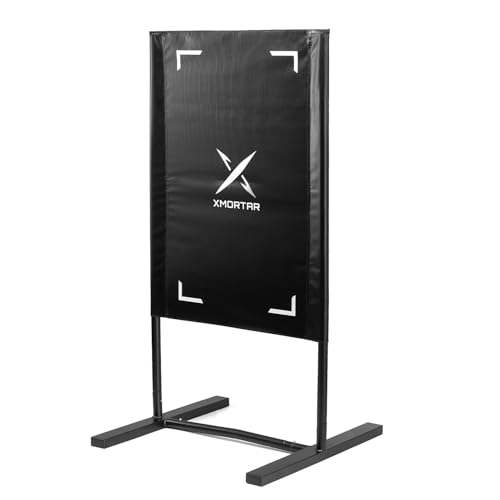
The Xmortar gives pitchers a larger 30-by-22-inch target, and its strike rule counts only a hit on the cloth; a frame hit is not described as a strike. The powder-coated steel pipes form an all-metal frame, and the cloth target is marine vinyl. Its target sits 12 inches off the ground, a useful dimension to consider if you want a low target position. Choose it for the larger target and cloth-only calls, but players who prefer a frame hit to count should agree on a house rule before play.
Bottom line: Choose this for the largest specified target and cloth-only strike calls.
Hikeen Metal-Frame Target

The Hikeen stands out for its tall 20.5-by-31.5-inch fabric target and steel frame, rather than a specified strike-call rule. The maker says the heavy-duty frame is designed to resist tipping or wobbling during pitching, and the fabric is tear-resistant. Its dimensions suit players who want a taller target, but the strike zone’s width is smaller than the Xmortar’s 30-inch width. Agree before play on whether frame hits count, since the included specifications do not settle that rule.
Bottom line: Pick this when a taller fabric target matters more than a strike rule.
How to choose a Wiffle ball strike zone
Choose by target dimensions and the strike rule your group will use, not by frame material alone. These targets range from a 19-by-14-inch fabric target inside a 22-by-18-inch frame to a 30-by-22-inch target; that difference changes how much area pitchers can aim for. Decide whether a frame hit counts before the first pitch: one target explicitly counts the outer frame, while another counts only cloth hits. For informal games, write or say one consistent rule and keep it for both teams. A larger target can make practice easier, while a smaller fabric target rewards tighter aim.
Target size and strike calls
Target measurements may refer to the frame or the fabric, so compare like with like. The GoSports frame is 22 by 18 inches, but its fabric target is 19 by 14 inches; the Xmortar target is 30 by 22 inches, and the Hikeen fabric target is 20.5 by 31.5 inches. The product dimensions do not establish a universal strike-zone height for every batter. Use the physical target as your house-rule boundary and keep it at the same height for both sides. For the Xmortar, the target is 12 inches off the ground. This table shows the practical distinction to settle before choosing.
Match the target’s area and call rule to your game.
| Need | Choice | Rule or dimension |
|---|---|---|
| Frame hit counts | GoSports | 22 x 18 in. frame |
| Largest target | Xmortar | 30 x 22 in.; cloth hit only |
| Taller fabric target | Hikeen | 20.5 x 31.5 in. |
Frame materials and backyard setup
Steel and PVC are the main frame differences among these targets, but a sturdy setup still needs a level, clear pitching area. GoSports uses PVC and says it resists tipping on impact; Xmortar uses powder-coated steel pipes, and Hikeen uses a steel frame. Set the target on firm, level ground and leave enough open space behind and around it for missed pitches and retrieving balls. Keep spectators out of the throwing lane, and use only compatible plastic balls: the GoSports target specifically says not to use real baseballs. Do not assume a frame’s material makes a target safe to stand close to during pitching.
Rules to agree on before play
Set the strike boundary and batter turn rules before pitching, because a target can make ball-and-strike calls more consistent but cannot define every rule for your group. Decide whether cloth-only hits count or whether the frame also counts; the GoSports target specifies frame hits as strikes, while the Xmortar specifies cloth hits. Also decide whether pitches that bounce first count, since the target rules do not resolve that situation. Keep the target position fixed during a game and use the same call for both teams. For safety, take turns pitching toward an empty area and never use real baseballs with a plastic-ball target.
Frequently Asked Questions
Does a Wiffle ball strike zone need to match a batter?
A backyard target is a fixed house-rule boundary, not an individualized strike zone. The baseball rulebook defines the zone in relation to the batter, so agree on how the target governs your informal game before play.
Should frame hits count as strikes in backyard games?
Either rule can work if everyone agrees before pitching. One target here explicitly counts frame hits, while another counts only cloth hits, so make the boundary clear to both teams.
How wide is a typical backyard strike zone target?
These targets span 18 to 30 inches in width, depending on the model and whether the measurement is for the frame or target. Compare fabric dimensions separately from frame dimensions when both are given.
Can I use real baseballs with a plastic-ball strike zone?
No; the GoSports target specifically says not to use real baseballs. Use compatible plastic balls and keep people out of the pitching lane, especially when collecting missed pitches.
Where should I set up a backyard pitching target?
Place the target on firm, level ground with clear space around and behind it for errant pitches. Keep bystanders out of the throwing lane and keep the target position consistent throughout the game.