
Walking Sticks for the Elderly: 3 Cane Styles Compared

For a height-adjustable everyday cane, REHAND Adjustable Folding Cane suits the widest range here, with eight settings for users from 5 to 6 feet 5 inches. Choose REHAND Pivoting Quad Cane if a pivoting four-pronged base and self-standing design matter more; choose Comfkey Folding Adjustable Cane for a simple folding cane with a 33-to-37-inch adjustment range.
A cane is meant to provide one-sided support; someone who needs substantial balance support may need a walker instead.
We earn a commission if you buy through links on this page. As an Amazon Associate I earn from qualifying purchases. Products are compared on manufacturer specifications, not hands-on testing.
- Best overall: REHAND Adjustable Folding Cane – Eight one-inch height settings fit users from 5 to 6 feet 5 inches.
- Best for pivoting support: REHAND Pivoting Quad Cane – Its four-pronged pivoting base is self-standing.
- Best for simple travel: Comfkey Folding Adjustable Cane – It folds into five sections and adjusts from 33 to 37 inches.
| Product | Best for | Height range | Base style | Folding design | Shop |
|---|---|---|---|---|---|
| REHAND Adjustable Folding Cane | Broad height range | 31–38 in. | All-terrain tip | Foldable | Check Price on Amazon |
| REHAND Pivoting Quad Cane | Pivoting base | — | Four-pronged pivoting base | Foldable | Check Price on Amazon |
| Comfkey Folding Adjustable Cane | Compact folding | 33–37 in. | Rubber base | Five-section folding | Check Price on Amazon |
Walking sticks for the elderly
Compare the cane height range and base style to match support needs and portability.
REHAND Adjustable Folding Cane
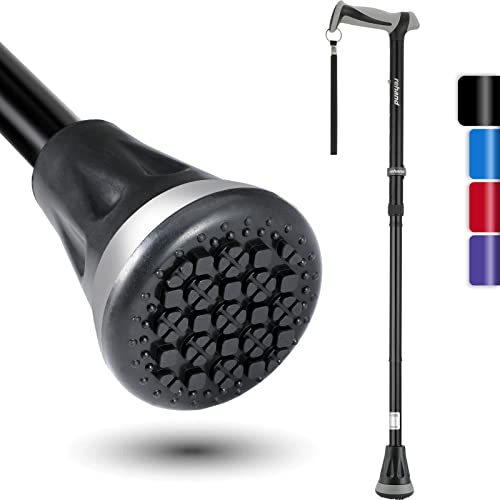
REHAND Adjustable Folding Cane stands out for its eight height settings, spanning users from 5 feet to 6 feet 5 inches. The cane adjusts from 31 to 38 inches in one-inch increments and folds for carrying; its handle combines hard PP and soft TPR, and a travel bag is included. This range makes it a flexible choice when several users may need different settings or when a precise fit is important. Its single all-terrain tip is less supportive than a multi-pronged base for someone who wants a cane that stands on its own.
Bottom line: Choose this if a wide height range and folding design are priorities.
REHAND Pivoting Quad Cane

Unlike a single-tip cane, REHAND Pivoting Quad Cane has a four-pronged pivoting base with rubber foot pads and a self-standing design. Its longer, wider handle uses soft TPR, and a wrist strap helps keep the cane from falling when released. That base style may appeal to users who want a cane to remain upright between steps, while the pivoting action supports contact as the cane changes angle. The input provides no height adjustment range, so confirm the cane can be set to a suitable height before choosing it.
Bottom line: Pick this for a self-standing cane with a pivoting four-pronged base.
Comfkey Folding Adjustable Cane

Comfkey Folding Adjustable Cane is the most straightforward option here: an aluminum cane that adjusts from 33 to 37 inches and folds into five sections for storage. It has a contour grip, hand strap, brass collar and non-slip rubber base. That narrower height range can work for someone whose correct cane height falls within those limits, and the folding format suits packing in luggage or a backpack. It lacks the pivoting multi-pronged base of REHAND Pivoting Quad Cane and the broad height range of REHAND Adjustable Folding Cane, so its fixed range is the main constraint.
Bottom line: Choose this if your fitted height falls within 33 to 37 inches and folding is useful.
How to choose a walking stick height
Set a cane so its handle reaches the wrist crease when you stand upright with arms relaxed at your sides. The elbow should bend about 15 to 30 degrees while holding the handle; too much bend or a locked elbow can make walking awkward. Measure in the shoes you normally wear, and adjust before relying on the cane outdoors. A cane that is too tall can raise the shoulder, while one that is too short can make you lean. Compare the measured handle height with the adjustment range before choosing; for example, Comfkey Folding Adjustable Cane only adjusts from 33 to 37 inches. Ask a clinician or physical therapist for fitting help if pain, weakness or balance trouble makes the measurement uncertain.
Single-tip versus multi-pronged cane bases
A single-tip cane is narrower and simpler, while a multi-pronged base provides a broader footprint and may stand upright without support. The single tip on REHAND Adjustable Folding Cane and Comfkey Folding Adjustable Cane suits buyers who prioritize a conventional cane shape and a smaller base. REHAND Pivoting Quad Cane uses a pivoting four-pronged base with rubber foot pads and is self-standing, which can help when setting a cane down between steps. A wider base is not a guarantee against falls, and each cane still needs full contact with the floor before taking weight. Check the rubber tip or foot pads for wear and replace damaged parts; slick or uneven surfaces can reduce traction. If a cane cannot provide enough stability, ask a clinician about a walker or another mobility aid.
Using a cane safely while walking
Hold a cane on the side opposite a weaker or painful leg, and move the cane forward with that leg. This pattern helps the cane and affected leg share support; take shorter steps on stairs and use a handrail where available. Keep the cane tip close enough that you do not have to reach far ahead, and place it firmly before shifting weight. On stairs, use the handrail if present; the usual sequence is stronger leg up first and weaker leg down first, with the cane moving alongside the weaker leg. Avoid leaning heavily on a cane if you need support on both sides. A physical therapist can teach a safe sequence for a specific injury or balance condition.
Folding and maintaining a walking cane
Check a folding cane’s joints and locks before each walk, and make sure every section is seated securely after unfolding. A loose connection can cause the cane to shift under load. Inspect the rubber tip or base pads for cracking, uneven wear or debris, since worn rubber can slip on smooth floors. Keep the cane dry and clean; remove grit from the contact surface before walking indoors. Folding designs such as REHAND Adjustable Folding Cane and Comfkey Folding Adjustable Cane are convenient to store, but should be fully assembled and locked before use. Avoid hanging a bag from the handle while walking because an off-center load can affect balance. Replace worn contact parts with compatible components rather than continuing to use a damaged cane.
Frequently Asked Questions
Which side should I hold a walking cane on?
Hold the cane opposite the weaker or painful leg. Move the cane forward with that leg so the cane can help share support.
How should a walking cane fit my height?
With shoes on and arms relaxed, the handle should reach your wrist crease. Your elbow should bend about 15 to 30 degrees while holding the cane.
Can I use a cane on stairs?
Use a handrail whenever possible, and move one step at a time. The usual sequence is stronger leg up first and weaker leg down first, with the cane alongside the weaker leg.
When should a cane tip be replaced?
Replace a tip when its rubber is cracked, worn unevenly or no longer grips the floor. Check multi-pronged cane foot pads for the same damage before walking.
Is a cane enough support for poor balance?
A cane provides one-sided support, so it may not be enough when you need support on both sides or feel unsteady. Ask a clinician or physical therapist whether a walker is more appropriate.