
Toyota EFI Tank Additive: 5 Fuel Cleaners Compared

For a Toyota EFI tank additive, the Genuine Toyota Fluid cleaner is the named product and the clearest match: it is a 6.4-ounce pour-in-tank EFI cleaner. Choose another option only if its fuel compatibility or treatment purpose better fits your vehicle.
We earn a commission if you buy through links on this page. As an Amazon Associate I earn from qualifying purchases. Products are compared on manufacturer specifications, not hands-on testing.
- Best overall: Genuine Toyota EFI Cleaner, 6.4 oz – The named Toyota-branded option is specifically identified as a pour-in-tank EFI cleaner.
- Best for gasoline and diesel: ClearLover Engine Boost Up, 3-pack – Its product name identifies the treatment for both gasoline and diesel engines.
- Best for recurring fill-ups: STP 1 Tank Tune Up, 12 oz – Mercury Quickare is described for use at every tank fill-up.
| Product | Best for | Bottle size | Fuel type | Stated use | Shop |
|---|---|---|---|---|---|
| Genuine Toyota EFI Cleaner, 6.4 oz | Toyota EFI cleaning | 6.4 oz | — | EFI cleaning | Check Price on Amazon |
| ClearLover Engine Boost Up, 3-pack | Gasoline or diesel | 4 oz each; 3 bottles | Gasoline and diesel | Fuel-system treatment | Check Price on Amazon |
| STP 1 Tank Tune Up, 12 oz | Gasoline maintenance | 12 oz | Gasoline | Fuel and exhaust cleaning | Check Price on Amazon |
| Mercury Quickare Fuel Treatment, 12 oz | Frequent fill-ups | 12 oz | Gasoline | Every-fill-up treatment | Check Price on Amazon |
| STP Gas Treatment, 5.25 oz | Gasoline upkeep | 5.25 oz each; 12-pack | Gasoline | Moisture and deposits | Check Price on Amazon |
Toyota EFI Tank Additive Options
Compare the named Toyota cleaner with related fuel treatments by bottle size, fuel compatibility, and intended use.
Genuine Toyota EFI Cleaner, 6.4 oz

This is the only option specifically identified as a Toyota EFI pour-in-tank cleaner. The 6.4-ounce can is described as helping restore engine power, smooth idle and acceleration, fuel economy, and emissions. Those are manufacturer claims, not a guarantee for a particular vehicle or fuel system. The can is intended for the tank rather than for direct cleaning of a removed injector.
Bottom line: Choose this if you want the specifically named Toyota EFI tank cleaner.
ClearLover Engine Boost Up, 3-pack

Unlike the Toyota-specific cleaner, this treatment is identified for gasoline and diesel vehicles. The package contains three 4-ounce bottles, and the maker describes use as one bottle at a time, including when refueling. Its claims include cleaning deposits in injectors and valves and addressing other engine and exhaust components. The maker also suggests assessing results after several bottles, so this is not a one-treatment comparison with the Toyota can. Buyers seeking a Toyota-branded product or a clearly stated Toyota-specific formulation should choose another option.
Bottom line: Choose this when dual gasoline-and-diesel compatibility is the priority.
STP 1 Tank Tune Up, 12 oz

This STP treatment is directed at gasoline engines and names several areas beyond fuel injectors, including intake valves, cylinder head, piston tops, and oxygen sensors. The maker claims reduced hydrocarbon emissions and improved fuel economy; those outcomes can depend on vehicle condition and should not be treated as guaranteed. This option suits someone considering broader gasoline-system maintenance, not someone insisting on genuine Toyota fluid.
Bottom line: Choose this for a gasoline treatment with exhaust-system cleaning claims.
Mercury Quickare Fuel Treatment, 12 oz
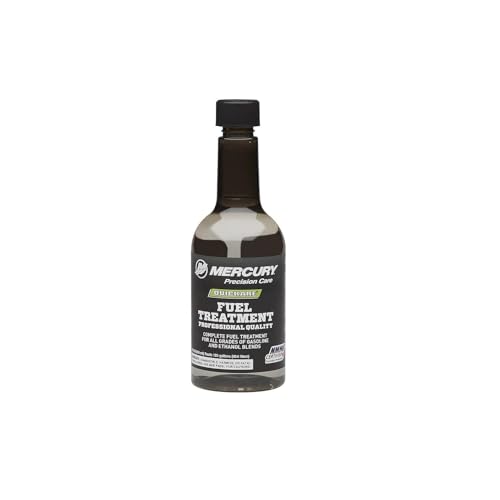
Mercury Quickare stands apart as a recurring fuel treatment: its maker says it can be used at every tank fill-up and gives a dose of 1 ounce per 10 gallons of gasoline. The 12-ounce container therefore corresponds to 120 gallons at that stated rate. Its focus includes fuel freshness for up to three months and controlling gum, varnish, corrosion, and ethanol-related phase separation. This is a gasoline fuel treatment rather than a Toyota-specific EFI cleaner, so it is a weaker match if you want the named Toyota product.
Bottom line: Choose this if an every-fill-up gasoline treatment suits your maintenance plan.
STP Gas Treatment, 5.25 oz

This STP option is a general gasoline treatment rather than a product explicitly named as an EFI cleaner. Each bottle holds 5.25 ounces, and the package is a 12-pack; its maker recommends regular use when filling the tank. Claims include maintaining fuel efficiency, helping prevent carbon, gum, and varnish buildup, and helping prevent fuel-line freezes. Choose it only if routine gasoline treatment, rather than Toyota-specific EFI cleaning, is your goal.
Bottom line: Choose this for recurring general gasoline treatment rather than Toyota-specific cleaning.
How to choose a Toyota EFI tank additive
Start with the label’s engine fuel type and intended use, not broad claims about cleaning. An EFI cleaner targets an electronic fuel-injection system; a general fuel treatment may instead focus on moisture, fuel freshness, or deposits throughout the fuel system. The Toyota can is explicitly an EFI tank cleaner, while the other options describe broader fuel treatments or different system targets. For repeated treatments, use the amount and interval specified for the selected product; Mercury Quickare gives a specific rate of 1 ounce per 10 gallons, while the fields for the others do not give a dose ratio. Never pour in more than the product’s directions allow, and do not combine additives unless both labels expressly permit it.
Gasoline and diesel compatibility
Fuel compatibility is the first fit check: the ClearLover product is named for gasoline and diesel, while STP 1 Tank Tune Up, Mercury Quickare, and STP Gas Treatment are described for gasoline use. Gasoline and diesel additives are not interchangeable by default; formulation and fuel-system materials differ. For a diesel Toyota, do not infer suitability from the word “EFI” alone. For gasoline, match the additive’s purpose to the concern—injector cleaning, deposit control, fuel freshness, or moisture handling—rather than assuming every tank additive does the same job.
Fuel additive purpose and fit
Tank additives differ by the problem they are formulated to address, so choose by target rather than bottle size alone. A multi-purpose treatment can make claims about several components, but that does not make it a substitute for diagnosing a persistent fault such as a misfire or warning light. The specifications here distinguish the options by target:
| Stated purpose | Closest fit | Decision point |
|---|---|---|
| Toyota EFI tank cleaning | Genuine Toyota cleaner | Specific Toyota-branded EFI cleaner |
| Gasoline and diesel treatment | ClearLover | Dual fuel compatibility is named |
| Every-fill-up gasoline care | Mercury Quickare | 1 oz per 10 gallons |
| Gasoline deposit treatment | STP options | Choose by system targets |
Use an additive as maintenance only where the vehicle and product directions are compatible; a severe drivability issue calls for diagnosis, not repeated dosing.
How to dose tank additives safely
Measure additives against tank volume: Mercury Quickare gives a rate of 1 ounce per 10 gallons, so a 15-gallon fill corresponds to 1.5 ounces at that stated ratio. Do not apply that rate to the other products; their fields do not establish the same concentration. Keep additives in their original containers, avoid skin or eye contact, and do not mix products in the fuel tank. If a product does not clearly match the Toyota’s engine fuel, verify compatibility before pouring. Stop using an additive if the vehicle develops an unusual running problem, and consult a qualified technician rather than increasing the dose to chase a symptom.
Frequently Asked Questions
Can I use an EFI cleaner in every tank?
Only use a product that specifically gives an every-fill-up interval. Mercury Quickare is described for every tank at 1 ounce per 10 gallons; that rate does not apply to the other products here.
How much Mercury Quickare treats 15 gallons?
At the 1-ounce-per-10-gallon ratio, 15 gallons calls for 1.5 ounces. Use that calculation only for Mercury Quickare and follow its container directions.
Are gasoline and diesel additives interchangeable?
No; use only an additive identified as compatible with the engine’s fuel. Of these options, ClearLover’s name specifies gasoline and diesel, while the STP and Mercury products are described for gasoline.
Will a tank additive fix a misfire?
A tank additive is not a repair for a persistent misfire. If the engine continues to misfire or a warning light appears after one correctly dosed treatment, stop adding cleaner and have the vehicle diagnosed.
Should I combine two fuel additives together?
Do not combine fuel additives unless both product labels explicitly allow it. Different treatment formulas and doses are not necessarily compatible, and adding more does not ensure better cleaning.