
Portable Car Dryer Blower: 4 Models Compared by Airflow

Thrustmax Portable Car Blower suits most car-drying needs because its maker gives both a 750 CFM airflow figure and variable thrust control. Choose KOLENDA 21V Cordless Car Dryer instead if battery capacity and runtime modes matter more, or EasyWox X503 Car Blower if you also want a blower for electronics and garage cleaning.
We earn a commission if you buy through links on this page. As an Amazon Associate I earn from qualifying purchases. Products are compared on manufacturer specifications, not hands-on testing.
- Best overall: Thrustmax Portable Car Blower – Its maker gives a 750 CFM airflow figure and a variable thrust range.
- Best for runtime choices: KOLENDA 21V Cordless Car Dryer – It has a 21V, 10.0Ah battery, four speed modes and a 21–230-minute runtime range.
- Best for electronics: EasyWox X503 Car Blower – It offers three speeds and is described for electronics, keyboards and garage maintenance.
- Best for variable speeds: 750 CFM Four-Speed Cordless Blower – Its maker gives a 750 CFM airflow figure and four variable speeds.
| Product | Best for | Airflow | Speed control | Battery | Shop |
|---|---|---|---|---|---|
| Thrustmax Portable Car Blower | Variable airflow | Up to 750 CFM | Rotary variable; turbo | — | Check Price on Amazon |
| KOLENDA 21V Cordless Car Dryer | Longer sessions | 350 CFM | 4 speed modes | 21V, 10.0Ah | Check Price on Amazon |
| EasyWox X503 Car Blower | Detailing and electronics | — | 3 speeds | 22.2V | Check Price on Amazon |
| 750 CFM Four-Speed Cordless Blower | Four speed options | Up to 750 CFM | 4 variable speeds | — | Check Price on Amazon |
Portable car dryer blowers compared
Compare the airflow figures and controls each model provides, then match them to your car-washing routine.
Thrustmax Portable Car Blower

Variable thrust is the key distinction here: the maker gives a dial-adjustable range of 0.22 to 3.1 pounds, plus turbo boost. The maker also gives up to 750 CFM airflow and wind speed up to 85 m/s from a 750W brushless motor. That range can suit someone who wants to adjust output between drying a car and clearing workshop dust. The limitation is that the battery data does not identify capacity or runtime, so this is harder to assess for extended jobs than a model with a battery rating.
Bottom line: Pick this if dial-adjustable thrust matters more than a published battery capacity.
KOLENDA 21V Cordless Car Dryer

Battery figures set this model apart: it comes with a 21V, 10.0Ah battery and has a maker-stated runtime range of 21 to 230 minutes across four speed modes. The maker also claims 350 CFM, 335 mph and 150 m/s wind speed, along with a power display and detachable dual-nozzle design. This is a fit for buyers who want several power settings and a battery capacity to compare. The wide runtime range means actual operating time depends on the selected mode, so it may not suit anyone who expects the maximum runtime at the highest setting.
Bottom line: Choose this when battery capacity and multiple operating modes are priorities.
EasyWox X503 Car Blower

Its 22.2V system and three speed settings distinguish this blower from models with published CFM figures or a four-mode battery range. The maker positions it for car detailing as well as electronics, keyboards and garage maintenance, and the title specifies three nozzles and an LED light. Those features make it a possible fit for someone switching between broad car-drying work and smaller dust-cleaning tasks.
Bottom line: Pick this for a multi-use blower with three speeds and included nozzle options.
750 CFM Four-Speed Cordless Blower
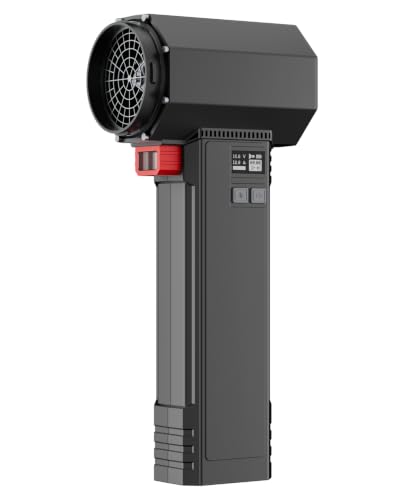
This model combines a 750 CFM airflow claim with four variable speeds and a maximum thrust of 4 pounds. Its maker says it is designed to move water from paint, mirrors, wheels, grilles, trim and tight gaps without towel contact, and it has an external metal safety grille. It suits buyers who want an airflow-focused blower with several speed choices for different surfaces.
Bottom line: Choose this if four variable speeds and the maximum thrust fit your priorities.
How to choose a portable car dryer blower
Start with airflow control and the work you expect the blower to do. CFM describes the volume of air moved, while wind speed describes how fast that air travels; neither figure alone captures how easily a stream reaches water in seams or around mirrors. A variable-speed dial or multiple modes let you start gently around trim and use more airflow on broad panels. If a model gives only a voltage rating, that number alone does not establish airflow or runtime. Compare like units, and treat maker performance figures as claims rather than a guarantee of the same result on every vehicle.
For mixed car and electronics cleanup, prioritize adjustable low output and nozzle options. A blower intended for general leaf cleanup may move water too forcefully for delicate or loose parts.
How to dry a car without pushing water into gaps
Work from the roof downward and use controlled airflow to move water off broad panels before targeting seams. Car bodies have water-trapping areas around mirrors, grilles, badges and trim; blow these areas from a safe angle rather than aiming directly into openings. Air drying can reduce towel contact, but it cannot guarantee a spot-free finish because minerals left in evaporating water may remain on paint. A final rinse with low-mineral or deionized water can reduce that residue.
Keep the blower nozzle moving and avoid directing airflow toward people, pets or loose objects. Stop if grit or debris is being blown across paint, since moving particles can scratch the finish. For narrow gaps, use lower output first and increase only if water remains.
Airflow and controls to compare
CFM and speed control answer different buying questions: CFM is airflow volume, while a speed setting changes how much output the user selects. A 750 CFM claim is not directly interchangeable with a wind-speed claim in mph or m/s. Battery voltage and amp-hours also describe different things: voltage is electrical potential, and amp-hours express charge capacity. A larger amp-hour figure can indicate more stored charge at the same voltage, but runtime still depends on power draw and operating mode.
Use this guide to decide which specification matters most before comparing individual models.
| Need | Prioritize |
|---|---|
| Dial in airflow for different surfaces | Variable speed or thrust control |
| Compare stated air volume | CFM figure |
| Estimate session length | Battery capacity and maker runtime range |
| Alternate between car and small-item cleaning | Multiple speeds and nozzle options |
Safe use around paint and electronics
Use a blower only when its power source and surroundings are dry, and keep the air stream away from eyes and skin. A high-speed stream can propel grit or small debris, so clear loose particles before drying paint and wear eye protection when blowing dust in a garage. Around electronics, disconnect power where practical and use a low setting; airflow can move dust but may also push debris deeper into openings.
Do not assume that a car blower is waterproof because it is cordless. Keep the motor and battery away from standing water, and avoid aiming the nozzle into electrical connectors or other openings. If a component is wet, let it dry naturally rather than forcing air inside.
Frequently Asked Questions
Does a car blower prevent water spots?
No, air can move water off the surface but cannot prevent mineral residue from evaporating on paint. A low-mineral or deionized-water final rinse can reduce spotting, especially in hard-water areas.
How should I use a blower around car paint?
Keep the nozzle moving and begin at a controlled speed rather than holding a forceful stream close to one spot. Remove loose grit first, since airflow can propel particles across paint and cause scratches.
Can I use a car dryer blower on electronics?
Some handheld blowers are marketed for electronics, but use a low setting and keep the stream away from openings where debris could be driven inside. Disconnect power first where practical, and avoid blowing on wet or energized equipment.
What does CFM mean on a car blower?
CFM means cubic feet per minute and expresses airflow volume. It differs from wind speed, which may be given in mph or m/s, so compare CFM figures with other CFM figures rather than treating unlike units as equivalent.
Does battery voltage tell me the blower runtime?
Battery amp-hours and the selected speed are also relevant; for example, higher output generally draws power faster than a lower setting.