
Best Cushions for Pressure Sores on Buttocks Compared

T-Shaped Memory Foam Bed Sore Cushion is the closest match for most people seeking a cushion for buttock pressure relief because its T-shaped opening is designed to offload the sitting bones and coccyx. Choose Lunderg Alternating Air Recliner Pad instead for a recliner, where an alternating air-cell pad is made to fit that seating setup; Large 1.6-Inch Gel Seat Cushion and Cushion Lab Pressure Relief Seat Cushion are general seat cushions rather than products specifically described for pressure sores.
A cushion can support pressure redistribution, but it cannot replace clinician-directed care for an existing sore or a repositioning plan.
We earn a commission if you buy through links on this page. As an Amazon Associate I earn from qualifying purchases. Products are compared on manufacturer specifications, not hands-on testing.
- Best overall: T-Shaped Memory Foam Bed Sore Cushion – Its T-shaped opening targets the coccyx and sitting bones, and it measures 18 by 16 inches.
- Best for recliners: Lunderg Alternating Air Recliner Pad – The alternating pad has 136 air cells and is designed for recliner chairs.
- Best for airflow: Large 1.6-Inch Gel Seat Cushion – The 18.9-by-17.7-inch gel cushion uses a vented honeycomb design.
| Product | Best for | Design | Dimensions | Cover or material | Shop |
|---|---|---|---|---|---|
| T-Shaped Memory Foam Bed Sore Cushion | Coccyx offloading | T-shaped opening | 18 × 16 × 4.5 in | Memory foam; detachable | Check Price on Amazon |
| Lunderg Alternating Air Recliner Pad | Recliner seating | Alternating air cells | — | Medical-grade pad; stretch cover | Check Price on Amazon |
| Large 1.6-Inch Gel Seat Cushion | Breathable seat | Gel honeycomb | 18.9 × 17.7 × 1.6 in | Gel; cover included | Check Price on Amazon |
| Cushion Lab Pressure Relief Seat Cushion | Contoured support | Contoured seat cushion | 18 × 15.5 × 4 in | Extra-dense memory foam | Check Price on Amazon |
Cushions for Pressure Sores on Buttocks
Match the cushion to the seating surface and the kind of pressure relief you need.
T-Shaped Memory Foam Bed Sore Cushion

T-Shaped Memory Foam Bed Sore Cushion is the most targeted option here: its T-shaped opening is intended to leave space around the coccyx and sitting bones. The cushion measures 18 by 16 by 4.5 inches and has two detachable sections joined with Velcro. Its uses include sitting and resting, so it may suit someone who needs one cushion for more than a wheelchair. The limitation is that the opening and dimensions may not match every body or chair; measure the seating surface and consider whether the cutout aligns with the area that needs offloading.
Bottom line: Choose it if a coccyx-focused opening and detachable two-part design fit your seating setup.
Lunderg Alternating Air Recliner Pad

Lunderg Alternating Air Recliner Pad differs from the seat cushions because it is an alternating air-pressure pad made for a recliner. The maker says its 136 cells inflate and deflate slowly, and the pump offers static mode and soft-to-firm control; its cover has anchors intended to reduce slipping. This setup is the relevant choice when the seating surface is a recliner rather than a standard chair. Its limitation is that the product is tied to that chair type, so confirm the pad’s fit with the recliner before relying on it; the dimensions do not establish compatibility with a particular model.
Bottom line: Pick it for recliner seating when an alternating air-cell surface is the priority.
Large 1.6-Inch Gel Seat Cushion

Large 1.6-Inch Gel Seat Cushion stands out for its thick gel construction and airflow-oriented honeycomb design, rather than a pressure relief cutout. It measures 18.9 by 17.7 inches and is 1.6 inches thick, with a black cover. The maker describes the vents as promoting airflow and heat dissipation, which may matter for someone who finds a solid foam surface warm. This is a general-purpose seat cushion, not one specifically described for pressure sores; choose it only if its broad, flat surface suits the seating need and a clinician agrees it is appropriate.
Bottom line: Consider it when a broad gel surface and vented design matter more than a cutout.
Cushion Lab Pressure Relief Seat Cushion
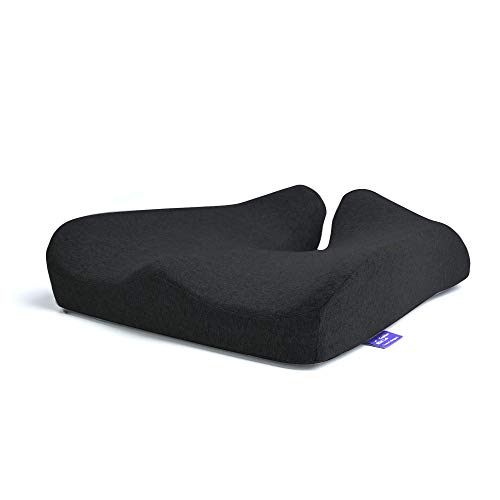
Cushion Lab Pressure Relief Seat Cushion is the contoured foam option, with a shape intended to cradle the thighs and hips rather than a T-shaped opening or air cells. It measures 18 by 15.5 by 4 inches and uses extra-dense charcoal memory foam. The maker says its contours encourage upright sitting and redistribute lower-body weight. That general seat-support design may suit someone wanting a shaped cushion for a home or office chair, but the product is not specifically described for pressure sores; buyers seeking a targeted offloading cutout should compare its shape carefully with the affected area.
Bottom line: Choose it for a contoured foam seat when that shape suits the chair and care plan.
How to choose a buttock pressure relief cushion
Choose by where pressure needs to be redistributed and what seat the cushion must fit. A cutout can leave space around a bony area, while a contoured foam cushion supports a broader area and an air-cell pad changes pressure through inflation cycles. Measure the usable seat width and depth, then compare those measurements with the cushion; a cushion that overhangs or shifts can undermine stable sitting. For a chair seat under 18 inches wide, check its usable dimensions before choosing the 18.9-inch-wide gel option. For an existing pressure sore, ask a clinician to select the support surface and positioning plan rather than treating a product feature as a substitute for care.
Fit and placement for chair cushions
Fit starts with the chair, not just the cushion’s dimensions. A cushion needs to sit flat on the seat, leave room for the user to sit securely, and avoid blocking armrests or foot support. The 18-by-16-inch option and 18-by-15.5-inch option have different footprints, while the recliner pad is designed for a different seat type. Check that the cover or fastening setup holds the cushion in place without folds; wrinkles and sliding can create localized pressure. If the cushion changes seat height, reassess whether feet are supported and the user can transfer safely. For wheelchair use, a therapist or seating specialist can assess posture and pressure distribution.
Foam, gel, and alternating air compared
Foam and gel cushions provide a relatively stable sitting surface; alternating air systems use a pump to vary inflation in cells. These approaches are not interchangeable: the right choice depends on chair fit, user positioning, ability to maintain the equipment, and clinical needs. Use this comparison to narrow the type before considering shape and dimensions.
| Type | Typical distinction | Fit consideration |
|---|---|---|
| Cutout foam | Opening leaves space around a targeted area | Align the opening with the intended offload area |
| Gel honeycomb | Ventilated, broad seat surface | Check footprint and seat stability |
| Alternating air | Pump cycles air among cells | Match to the chair and maintain pump setup |
| Contoured foam | Shaped support for thighs and hips | Check contour against posture and seat |
Safe use and care for pressure relief cushions
A pressure relief cushion does not eliminate the need to change position or check skin. People at risk of pressure injuries generally need an individualized repositioning schedule; the interval depends on mobility, skin condition, and the support surface, so a care professional should set it. Inspect skin regularly and seek medical advice promptly for persistent redness, broken skin, pain, warmth, or drainage. Keep covers smooth and dry, and follow the product’s cleaning directions to avoid damaging foam or air components. For powered air pads, keep the pump and connector accessible and confirm the system is operating as intended; do not assume a quiet pump alone proves proper inflation.
Frequently Asked Questions
Can a cushion heal an existing pressure sore?
No cushion should be treated as a cure for an existing sore. A clinician needs to assess the wound and recommend positioning, skin care, and an appropriate support surface.
How often should someone change position while seated?
There is no single interval that suits every person; mobility, skin condition, and the support surface affect the schedule. A clinician or seating specialist should set a specific repositioning plan, with skin checks for persistent redness or breakdown.
How do I know whether a cushion fits my chair?
Measure the seat’s usable width and depth and compare those numbers with the cushion footprint. The cushion should sit flat without overhanging or obstructing safe transfers and foot support.
Are gel cushions better than foam for pressure relief?
Neither material is automatically better for every user. Gel honeycomb cushions offer a vented surface, while foam designs can use contours or cutouts; fit and the individual’s care plan decide which is appropriate.
What should I check on an alternating air cushion?
Confirm that the pad fits the specific chair and that its pump, connectors, and cells function as intended. A care professional can help determine whether alternating air is appropriate for the user’s pressure-injury risk.