
Noise Cancelling Headphones for Dogs: 4 Options Compared

For noise cancelling headphones for dogs, the blue medium earmuffs are the closest match, with a maker-claimed 30 dB NRR; confirm the fit before choosing them. The pink small earmuffs are another structured option, while the fabric covers are wraps rather than headphones.
Choose a soft wrap instead if you want fabric around the ears for grooming or keeping long ears out of bowls, rather than a structured earmuff.
We earn a commission if you buy through links on this page. As an Amazon Associate I earn from qualifying purchases. Products are compared on manufacturer specifications, not hands-on testing.
- Best overall: Dog Earmuffs with Bell Accent, Medium – Structured earmuffs with a maker-claimed 30 dB NRR.
- Best for small dogs: derYEP Dog Earmuffs, Small – Small earmuffs with a maker-claimed typical 29 dB NRR.
- Best for grooming: Happy Hoodie Original, Medium/Large – Compression fabric band made as a grooming tool, with medium/large fit for 13–18-inch head girth.
| Product | Best for | Design | Fit | Claimed NRR | Shop |
|---|---|---|---|---|---|
| Dog Earmuffs with Bell Accent, Medium | Structured ear coverage | Structured earmuffs | Medium | 30 dB | Check Price on Amazon |
| derYEP Dog Earmuffs, Small | Small dogs | Structured earmuffs | Small | 29 dB | Check Price on Amazon |
| Happy Hoodie Original, Medium/Large | Grooming sessions | Compression fabric band | 13–18 in head girth | — | Check Price on Amazon |
| Dog Ear Cover, Grey, Small | Soft ear wrap | Fabric ear wrap | 10–15 in head circle | — | Check Price on Amazon |
Noise Cancelling Headphones for Dogs Compared
These options range from structured earmuffs to soft fabric wraps, so choose by coverage style and fit.
Dog Earmuffs with Bell Accent, Medium

These structured earmuffs are the closest match for shoppers looking for dog headphones, and the maker claims a 30 dB NRR. The medium blue design is intended for fireworks, thunder, and vacuum noise. The NRR figure is a maker claim, not a guarantee of how much sound a particular dog will experience as reduced; fit and an even seal around the ears matter. This choice suits a dog comfortable wearing a structured head covering. Its medium size may not suit dogs outside that fit, so confirm the size before choosing it.
Bottom line: Choose this if your dog tolerates structured earmuffs and the medium fit is appropriate.
derYEP Dog Earmuffs, Small
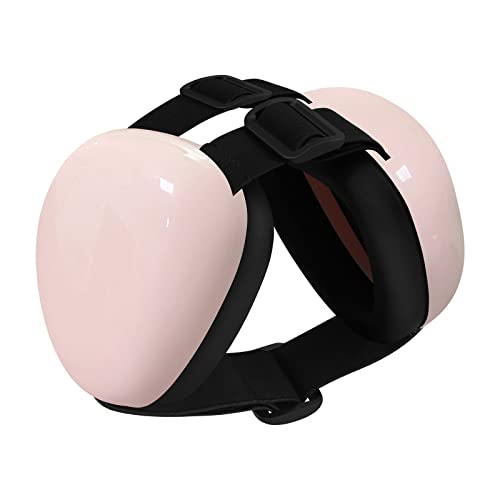
The small pink derYEP earmuffs distinguish themselves with a maker-claimed typical 29 dB NRR across 250–2,000 Hz. They have a sponge component and are designed to stay on a dog’s head. The NRR is a maker claim, and real-world sound reduction depends on how well the muffs fit and cover the ears; the frequency range is not a promise of equal reduction at every pitch. This option is for dogs that fit the small size.
Bottom line: Pick these for a dog that fits the small size and accepts structured ear muffs.
Happy Hoodie Original, Medium/Large
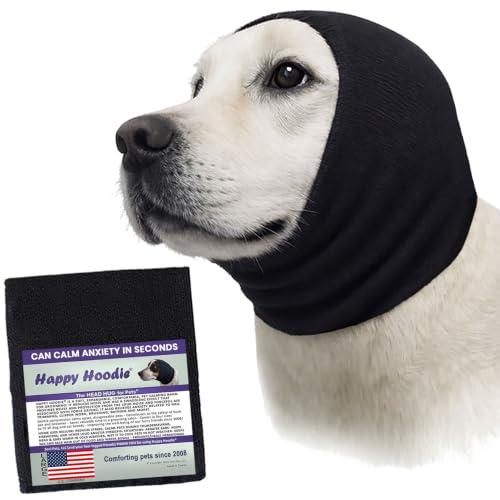
Unlike structured earmuffs, the Happy Hoodie is a compression fabric band created as a grooming tool. The maker says it reduces noise and is intended to help during force drying and other grooming tasks. Its medium/large size fits a head girth of 13–18 inches, making it the clearest choice here for a dog in that measured range during grooming. It is a soft band rather than headphone-style ear cups, so it may not suit buyers seeking a rigid earmuff design. Place the ears over the ear canals as directed for the intended coverage.
Bottom line: Choose this for grooming if your dog’s head girth measures 13–18 inches and a soft band is preferred.
Dog Ear Cover, Grey, Small

This grey small ear cover is a fabric wrap rather than a structured headphone, and its head-circle range is 10–15 inches. The maker says the breathable, stretchy cover is designed to mute noise from storms, fireworks, and grooming tools; it also keeps long ears out of food and water bowls. That bowl-covering use gives it a practical role beyond sound coverage. The wrap may be a better match for dogs needing fabric around the ears, but it is not the choice for someone specifically seeking rigid earmuffs. Measure carefully against the range.
Bottom line: Pick this soft wrap for a dog within its 10–15-inch head-circle range, especially if long ears need covering.
How to choose dog noise cancelling headphones
Choose by structure, fit, and the noise situation rather than by the largest NRR number alone. Structured earmuffs cover the ears with cups, while fabric bands and wraps compress or cover the ears without rigid cups. An NRR is a rating used for hearing protectors; it does not tell you the exact sound level reaching a dog’s ears in a particular fit. Dogs’ ear shape, coat, and tolerance for headwear affect coverage. For grooming, a soft band made for grooming may be more practical; for a structured cover, choose earmuffs only if the dog accepts them. Introduce any head covering gradually in a quiet room, and remove it if your dog shows distress or overheats.
Dog ear-cover fit and sizing
Measure the head where the covering will sit and compare that measurement with the maker’s range; a snug fit that does not slip is more useful than choosing by breed. The medium/large band here gives a 13–18-inch head-girth range, while the small fabric wrap gives a 10–15-inch head-circle range, which are different measurement descriptions and should not be treated as interchangeable. Structured earmuffs are identified only by small or medium size, so verify which size fits your dog before choosing them. Check that the ear covering stays in place without pressing painfully, blocking the eyes, or interfering with normal breathing and movement. Never leave a dog unattended in headwear.
Use this quick guide to match the design to the intended use.
| Need | Design to consider |
|---|---|
| Structured coverage | Dog earmuffs |
| Soft coverage during grooming | Compression band |
| Covering long ears near bowls | Fabric ear wrap |
What NRR means for dog earmuffs
NRR is a laboratory rating for hearing-protection devices, not a guarantee of the amount of noise reduction for an individual dog. A rating such as 29 or 30 dB should not be read as a precise reduction in every setting or at every frequency. Real-world protection can be lower when ear cups do not seal well, shift, or fail to cover the ears. Dog head shapes and ear positions differ, and the rating alone cannot resolve those fit differences. Treat an NRR figure as one comparison point, not a reason to expose a dog to loud sound. For unavoidable loud events, provide distance from the source and a quiet retreat in addition to any comfortable, well-fitting covering.
Safe use during storms and grooming
Introduce ear coverings for short periods before a storm or grooming session, pairing calm wear with a quiet setting so the dog can adjust. Dogs should be able to move away, pant freely, and drink; headwear is not a substitute for supervision or a quiet retreat. During grooming, check the covering frequently because force dryers and clippers can create both sound and airflow that may bother a dog. Never secure a wrap so tightly that it restricts breathing, and remove it promptly if the dog paws at it, freezes, or tries to escape. If a dog remains distressed around loud sounds despite practical noise reduction, ask a veterinarian for advice rather than relying on ear coverings alone.
Frequently Asked Questions
Do dog earmuffs block all fireworks noise?
No, earmuffs cannot be assumed to block all fireworks sound. A fit gap can reduce real-world attenuation, so also keep the dog indoors and away from windows and the sound source.
How should I measure a dog for an ear wrap?
Use a soft tape to measure the head circumference at the position where the wrap will sit, then compare it with the maker’s range. A 10–15-inch head-circle range is not interchangeable with a 13–18-inch head-girth range unless the measurement location matches.
Can dogs wear noise covers all day?
Do not leave a dog unattended in a noise cover or assume it is suitable for all-day wear. Use supervised, short introductions and remove the covering if it interferes with panting, movement, or comfort.
Are NRR ratings exact for a dog’s ears?
No, an NRR is not an exact prediction of sound reduction for an individual dog. Seal, ear position, and head shape affect how much sound reaches the ears.
Should I use dog earmuffs with a dryer?
Only if the dog accepts the earmuffs and they remain comfortably fitted under supervision. Force dryers combine noise and airflow, so a grooming-focused fabric band may fit that use better for some dogs.