
Car Paint for Plastic Parts: 3 Aerosols Compared

For black plastic bumpers and trim, Dupli-Color Trim & Bumper Paint, Black is a direct-fit option because it is made for trim and bumpers and specifies adhesion to plastic. Choose SEM 39143 Trim Black Aerosol instead if you want a two-can pack and a paint that says no primer is required; Rust-Oleum Automotive Trim & Bumper Spray also targets automotive trim and bumpers.
These are aerosol paints, not liquid trim restorers: they add a matte or OEM-style black finish rather than simply conditioning the surface. Confirm that the paint is compatible with the specific plastic part before applying it.
We earn a commission if you buy through links on this page. As an Amazon Associate I earn from qualifying purchases. Products are compared on manufacturer specifications, not hands-on testing.
- Best overall: Dupli-Color Trim & Bumper Paint, Black – Made for trim and bumpers, with superior adhesion to plastic and a tough finish.
- Best for two-can coverage: SEM 39143 Trim Black Aerosol – The pack contains two 15-ounce aerosols and says no primer is required.
- Best for matte finish: Rust-Oleum Automotive Trim & Bumper Spray – Specifies a matte finish and coverage of 10–15 square feet per can.
| Product | Best for | Can size | Pack count | Finish or key trait | Shop |
|---|---|---|---|---|---|
| Dupli-Color Trim & Bumper Paint, Black | Plastic trim painting | 11 oz | 1 | Tough, durable finish | Check Price on Amazon |
| SEM 39143 Trim Black Aerosol | Multi-part projects | 15 oz | 2 | No primer required; flexible | Check Price on Amazon |
| Rust-Oleum Automotive Trim & Bumper Spray | Matte black finish | 11 oz | 1 | Matte; 10–15 sq ft coverage | Check Price on Amazon |
Car paint for plastic parts
These black aerosols are intended for automotive trim and bumper refinishing, with differences in finish, pack size and stated application features.
Dupli-Color Trim & Bumper Paint, Black

Plastic adhesion is the distinguishing feature of this trim-and-bumper aerosol. The black paint is intended to renew and protect discolored bumpers and trim, and its finish is tough and durable. It suits someone repainting exterior automotive trim who wants a product specifically described as adhering to plastic. The 11-ounce can is a single-can choice, so it may be less convenient than a multi-can pack for several large parts. Clean and prepare the surface carefully, and confirm compatibility with the part before painting.
Bottom line: Choose this for a single black trim or bumper repaint where plastic adhesion is the priority.
SEM 39143 Trim Black Aerosol

The two-can pack and stated no-primer application distinguish this trim black from the single-can options. Each aerosol is 15 ounces, and the product features say it retains flexibility, has excellent adhesion and durability, and matches an OEM appearance. That combination suits a project involving multiple trim pieces or a desire for a factory-style black look. Its appearance is not a matte finish, so buyers seeking an explicitly matte result should compare another option. Follow the can directions for surface preparation and application.
Bottom line: Pick this for multiple trim pieces when a two-can pack and OEM-style appearance fit the job.
Rust-Oleum Automotive Trim & Bumper Spray
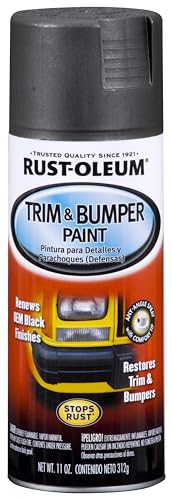
A matte finish and a coverage range set this automotive trim-and-bumper spray apart. The 11-ounce black can is intended for metal trim, moldings, mirror covers, bumpers and rub strips; the maker says it dries to the touch in 20 minutes and covers 10–15 square feet. It also has an any-angle spray nozzle. The corrosion-related feature is aimed at metal, so it should not be treated as a plastic-specific benefit. This is a sensible choice when the matte look and listed coverage suit the parts being painted.
Bottom line: Choose this for a matte black finish on automotive trim or bumper parts.
How to choose car paint for plastic parts
Choose an aerosol that specifically identifies automotive trim, bumper or plastic use, then compare finish and pack size. The products here range from a single 11-ounce can to a two-can pack of 15-ounce aerosols, and only one explicitly gives a matte finish and a coverage estimate. Plastic parts can be textured, flexible or coated, so surface condition and product compatibility matter as much as color. Wash away dirt and road film, remove grease with a cleaner compatible with the part, and let the surface dry fully. Avoid painting over silicone dressing or wax, which can interfere with adhesion. Test the paint on an inconspicuous area first, especially when the bumper has an existing coating or unusual texture.
Preparing plastic trim before painting
Thorough cleaning and a compatible surface are the starting points for a durable-looking finish. Remove loose dirt, wax and dressing before scuffing; use a fine abrasive only if the part and paint directions allow it, since sanding can flatten textured grain. Mask nearby glass, lights and bodywork, and keep the spray can moving to reduce buildup at edges. Automotive plastics vary, and some coatings need an adhesion promoter while others specify no primer, so use the product’s directions rather than assuming one prep routine fits every plastic. If the part is cracked, peeling or contaminated with silicone, address that condition before applying paint. A small test area helps reveal poor adhesion or an unwanted change to the texture.
Applying aerosol paint safely
Use automotive aerosol paint outdoors or in a well-ventilated work area, away from flames, sparks and hot surfaces. Aerosol paint mist is not safe to breathe; wear the respiratory protection specified on the label and protect eyes and skin. Keep other people and pets away from the spray area, and avoid painting in wind that can carry overspray onto nearby vehicles or surfaces. Apply thin, even passes rather than trying to cover the part in one heavy coat; heavy application can run and obscure textured detail. Temperature and humidity affect drying, so use the can’s conditions and recoat window. Do not reinstall or handle a painted piece until it has reached the cure time specified by the manufacturer.
Paint versus trim restorer
Aerosol trim paint adds a coating, while a trim restorer is intended to refresh the appearance of existing plastic, rubber or vinyl without being the same kind of paint. That distinction matters: the two restorer products in the input are not paint matches, so a paint comparison should focus on the trim-and-bumper aerosols. Use a restorer when the surface is intact and the goal is appearance renewal; choose paint when you want to apply a new black finish and the product is compatible with the part. Neither approach repairs broken plastic or replaces proper surface cleaning. For a part exposed to flexing, check that the chosen coating is intended for that kind of surface.
Frequently Asked Questions
Can regular car paint be used on plastic trim?
Use paint specifically intended for automotive plastic, trim or bumpers rather than assuming standard body paint will adhere. Plastic type, surface texture and existing coatings affect preparation and adhesion.
Do I need primer before painting plastic bumpers?
Primer needs depend on the specific paint and plastic; one of the compared products says no primer is required. Check the can directions and confirm compatibility with the bumper material before skipping any preparation step.
How many coats of paint should plastic trim get?
Apply light, even passes and follow the aerosol’s recoat window instead of relying on a universal coat count. A heavy coat can run or hide molded texture, and coverage depends on part size and surface shape.
How long should plastic bumper paint dry?
Drying and curing times vary by paint and conditions, so use the can’s timing for handling and recoating. One compared product says it dries to the touch in 20 minutes, which does not establish when it is fully cured.
Can I paint over a plastic trim restorer?
Remove residue from trim restorer before painting because an oily or slick layer can interfere with adhesion. Clean and dry the surface, then test a small area before coating the full part.