
Blue Devil Rear Main Seal: 4 Options Compared

BlueDevil 00234 Rear Main Sealer is the closest match for most shoppers seeking a BlueDevil rear main seal product because it is an 8-ounce pour-in formula specifically identified for rear main seal leaks. Choose BlueDevil PRO Universal Leak Repair instead if you also need a product for power steering or differential leaks; a rear main seal is the seal around the crankshaft where it exits the engine.
We earn a commission if you buy through links on this page. As an Amazon Associate I earn from qualifying purchases. Products are compared on manufacturer specifications, not hands-on testing.
- Best overall: BlueDevil 00234 Rear Main Sealer – Its purpose is rear main seal repair, and the 8-ounce formula is designed for engine oil.
- Best for broader oil leaks: Bar’s Leaks Rear Main Seal Repair – It targets rear main seals along with timing cover, cam seal and other oil leaks.
- Best for multiple systems: BlueDevil PRO Universal Leak Repair – Its uses include engine oil, power steering, differentials and rear main seals.
| Product | Best for | Bottle size | Stated systems | Formula feature | Shop |
|---|---|---|---|---|---|
| BlueDevil 00234 Rear Main Sealer | Engine oil leaks | 8 oz; pack of 12 | Engine oil; rear main seal; timing cover | Petroleum-distillate-free | Check Price on Amazon |
| Bar’s Leaks Rear Main Seal Repair | Multiple oil leak points | 16.9 oz | Engine oil; rear main; timing and cam seals | Add to crankcase | Check Price on Amazon |
| BlueDevil PRO Universal Leak Repair | Multi-system leaks | 12 oz | Engine oil; power steering; differential | No solids or fibers | Check Price on Amazon |
| BlueSeal Oil Stop Leak | Petroleum-free formula | 8 oz | Engine oil; transmission; power steering | Petroleum-free; non-clogging | Check Price on Amazon |
Blue Devil Rear Main Seal Products
These options differ in their leak targets, system coverage and formula features.
BlueDevil 00234 Rear Main Sealer

BlueDevil 00234 Rear Main Sealer is the most directly focused choice here: the maker says its pour-in formula targets rear main seal and timing cover leaks. Each bottle is 8 ounces, and the pack contains 12. The formula is intended to recondition dried, cracked or shrunken rubber seals and is described as compatible with gasoline or diesel engines and synthetic or conventional oil. It suits someone addressing a leak at an engine seal without disassembly. Its scope is narrower than an all-system product, so it is not the pick for leaks in power steering or differentials.
Bottom line: Choose this for a rear main seal or timing cover leak in an engine-oil system.
Bar’s Leaks Rear Main Seal Repair
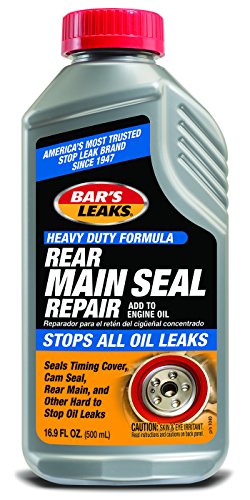
Bar’s Leaks Rear Main Seal Repair stands out for naming several engine oil leak locations, including the rear main, timing cover and cam seal. The 16.9-ounce bottle is added to the crankcase where engine oil is added; the maker says to add it at or between oil changes and not to overfill. It is a fit for an owner who wants a single engine-oil additive aimed at more than one seal location. Unlike BlueDevil 00234 Rear Main Sealer, its usage estimate is most leaks stopping within 100 miles or two days of driving; that is the maker’s claim, not a guarantee.
Bottom line: Pick this when more than one engine-oil seal location may be leaking.
BlueDevil PRO Universal Leak Repair

BlueDevil PRO Universal Leak Repair differs from the engine-oil-focused sealers by covering several systems: the maker says it is for engine oil, power steering, differentials and rear main seals. Its 12-ounce formula is described as containing no solids or fibers and as reconditioning worn rubber seals. That broader scope suits someone unsure whether a leak is confined to the engine-oil system, provided the vehicle and system are compatible with the product. It is less narrowly dedicated to rear main seal repair than BlueDevil 00234 Rear Main Sealer or Bar’s Leaks Rear Main Seal Repair, so choose a more focused formula if that is the only target.
Bottom line: Choose this if you need coverage across engine oil and other systems.
BlueSeal Oil Stop Leak

BlueSeal Oil Stop Leak combines a rear main seal repair purpose with several additional stated applications, including transmissions, power steering, differentials and hydraulic systems. The 8-ounce formula is described as petroleum-free and non-clogging, and the maker says it is intended for gasoline and diesel engines. It also positions the product for higher-mileage vehicles whose seals are beginning to dry out, as well as existing leaks. This broader application range is useful when systems beyond engine oil matter, but the broad claims do not establish that the additive can repair a torn or otherwise physically damaged seal.
Bottom line: Pick this for a petroleum-free option with several stated system uses.
How to choose a rear main seal additive
A rear main seal additive is best suited to a leak associated with a rubber seal that has dried or shrunk, not a seal that is torn or mechanically damaged. First identify whether the leaking fluid is engine oil: the rear main seal sits at the back of the engine around the crankshaft, near the transmission bellhousing. Additives are poured into the fluid system they are made for, so an engine-oil product should not be treated as a transmission product. Choose a narrowly targeted formula when only engine oil is involved; choose a multi-system formula only when its applications match the system in question. Before pouring, confirm the compatible fluid and dosage for your vehicle and product, and do not overfill the crankcase.
What a rear main seal leak can mean
Oil around the engine-to-transmission junction can be consistent with a rear main seal leak, but oil can run down from higher points and collect in the same area. Clean the area and recheck where fresh oil appears before selecting an additive; a mistaken source can lead to treating the wrong system. A seal conditioner may be relevant when the seal is rubber and has lost flexibility, but it cannot close a physical tear or correct a damaged crankshaft surface. If the leak is heavy, oil level drops quickly, or oil reaches hot exhaust parts, stop driving and arrange inspection. Persistent leakage after a product’s use window is a reason to seek mechanical diagnosis rather than repeatedly adding more.
Engine oil additives versus multi-system sealers
Engine-oil sealers are aimed at crankshaft and other engine seals; multi-system products add applications such as power steering, differential or hydraulic systems. The table distinguishes their scope, not a guarantee that any additive will work on a particular vehicle. Match the system and fluid first: a rear main seal sits within the engine-oil system, even though access to it may involve transmission removal for physical replacement. Additive compatibility is also important because seal materials differ; some engines use PTFE seals that are not rubber. When the seal material or application is uncertain, check the vehicle service information before adding a conditioner.
| Leak or need | Product scope to consider | Key distinction |
|---|---|---|
| Engine rear main or timing cover | Engine-oil seal additive | Focused on engine seals |
| More than one engine seal location | Multi-location oil additive | Names other engine leak points |
| Leaks across listed fluid systems | Multi-system product | Match each use to its system |
When a pour-in repair is not enough
A pour-in treatment is not a substitute for replacing a failed seal or correcting another mechanical cause of leakage. Use leak rate as a practical decision point: a slow seep with a stable oil level is a different situation from a leak that leaves drops after every drive or lowers the dipstick reading between checks. Check the oil level on level ground and monitor it regularly while diagnosing any leak; low engine oil can cause severe engine damage. A rear main seal replacement can require separating the transmission from the engine, so confirm the leak source before committing to that repair. If oil contacts the exhaust or the leak worsens, prioritize inspection instead of waiting for an additive to act.
Frequently Asked Questions
Where is the rear main seal located?
The rear main seal surrounds the rear end of the crankshaft where it exits the engine block, near the transmission bellhousing. Oil in that area can also run down from a leak higher on the engine, so verify the source before treating it.
Can a rear main seal additive fix a torn seal?
No pour-in seal conditioner should be relied on to repair a torn or physically damaged seal. These products target seal conditioning; continuing leakage or a fast oil-level drop calls for mechanical diagnosis.
How can I tell whether engine oil is leaking?
Engine oil is commonly amber to dark brown or black, while other vehicle fluids can have different colors and locations. Clean the area and look for fresh fluid, then confirm the source before adding a product intended for engine oil.
Can I use a rear main sealer in synthetic oil?
Compatibility is product-specific. BlueDevil 00234 Rear Main Sealer is stated to work with synthetic or conventional engine oil, but check the vehicle and product instructions before using any other formula with synthetic oil.
What if the leak continues after using a sealer?
A continued leak can mean the source was misidentified or the seal is damaged beyond what an additive can address. Recheck the oil level and have the leak diagnosed, especially if oil drops quickly or reaches hot exhaust parts.