
Non-Toxic Garden Wood Sealer: 4 Options Compared

Seal It Green Garden Box Armor is the strongest fit for most garden projects because it has clear, plant-based ingredients described as FDA food-contact safe and comes in a 1-gallon size. Choose Garden Box Sealer 0.25 Gallon for a smaller 0.25-gallon project, or consider a Shabebe option if cream-white color is acceptable.
Garden wood sealers are finishes intended to help limit moisture exposure; they may penetrate wood or form a surface film. For wood touching edible crops, distinguish a maker’s ingredient claim from approval of the cured finish for food contact.
We earn a commission if you buy through links on this page. As an Amazon Associate I earn from qualifying purchases. Products are compared on manufacturer specifications, not hands-on testing.
- Best overall: Seal It Green Garden Box Armor – Its ingredients are described as FDA food-contact safe, and the 1-gallon container suits larger projects.
- Best for small projects: Garden Box Sealer 0.25 Gallon – The 0.25-gallon size is the smallest option here.
- Best for cream-white color: Shabebe Garden Box Sealer 128 oz – Its color is cream white, with a 128-fluid-ounce size.
| Product | Best for | Size | Color | Wood compatibility | Shop |
|---|---|---|---|---|---|
| Seal It Green Garden Box Armor | Raised beds | 1 gallon | Clear | All wood types | Check Price on Amazon |
| Garden Box Sealer 0.25 Gallon | Small projects | 0.25 gallon | Clear | Cedar and all wood types | Check Price on Amazon |
| Shabebe Garden Box Sealer 128 oz | Cream-white finish | 128 fl oz | Cream white | Cedar, pine, hardwood, bamboo | Check Price on Amazon |
| Shabebe Garden Box Sealer Pro Grade | Outdoor wood | 1 gallon | Cream white | Cedar, pine, hardwood, bamboo | Check Price on Amazon |
Non-Toxic Garden Wood Sealers Compared
Compare container size, color and stated wood compatibility before choosing a sealer for your garden project.
Seal It Green Garden Box Armor

Unlike the cream-white Shabebe options, this sealer is clear, so it suits projects where a visible color change is not wanted. Seal It Green says the product uses plant-derived oils, carriers and surfactants, and its ingredients are FDA food-contact safe. It is marketed for raised beds, planters, coops, pet areas, furniture and fences, and the container holds 1 gallon. The maker says the sealer penetrates wood fibers and dries clear. Buyers who need assurance about the finished coating’s food-contact status should verify that separately; an ingredient claim is not the same as approval of the cured finish.
Bottom line: Choose this for a clear, plant-based sealer when the maker’s ingredient claim and 1-gallon size fit your project.
Garden Box Sealer 0.25 Gallon

The 0.25-gallon container makes this the smallest option here, a practical match for a planter or limited repair rather than a larger bed. The maker describes it as a deep-penetrating, natural-oil sealer for cedar and other wood used in raised garden beds, and says it protects against water and weather damage. Its clear color keeps the finish from adding a cream-white tint. The smaller quantity is the main tradeoff: estimate the wood surface area before choosing it, since the specifications give no coverage rate. The name also claims FDA food-contact safety, but buyers should verify what that claim covers for their intended use.
Bottom line: Pick this for a smaller clear-sealer project where a quarter gallon is sufficient.
Shabebe Garden Box Sealer 128 oz
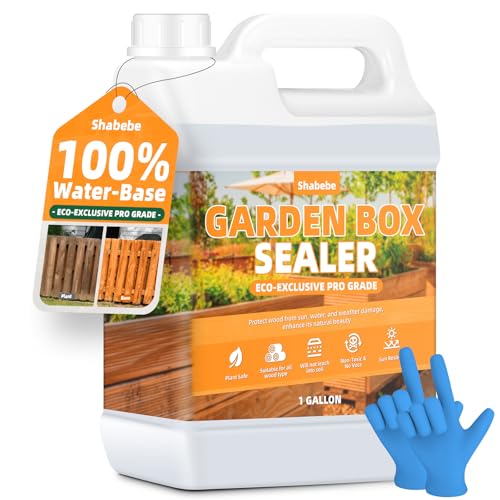
This Shabebe option pairs a cream-white color with a 128-fluid-ounce container, unlike the clear Seal It Green and Garden Box Sealer options. The maker describes a water-based formula without synthetic solvents, waxes or strong odors, and says it is suitable for cedar, pine, hardwood, bamboo and pressure-treated wood. It is intended for garden beds, planters, fences and other outdoor wood structures. The exclusion matters: do not choose it for laminated or coated wood. The maker also describes it as plant-safe, but that does not establish that every application method or cured surface is suitable for direct food contact.
Bottom line: Choose this when cream-white color and its wood compatibility fit the project.
Shabebe Garden Box Sealer Pro Grade

This pro grade Shabebe sealer is the 1-gallon cream-white choice, combining the larger stated size with compatibility across several common outdoor woods. The maker says it penetrates wood fibers and is designed to help reduce moisture absorption and surface wear from sun and changing weather. It is intended for raised beds, planters, fences and pet areas, and the maker describes the formula as plant-based and low odor during application. The cream-white color is an important distinction from clear alternatives. The maker limits use to non-coated outdoor wood surfaces, so it is not the right choice for laminated or already-coated material.
Bottom line: Choose this for a larger outdoor project on compatible, uncoated wood where cream-white color works.
How to Choose a Garden Wood Sealer
Start with the finish type, intended contact and amount of wood you need to cover. Penetrating sealers soak into wood fibers, while film-forming finishes leave a layer on the surface; the products here describe penetration rather than a surface film. For vegetable beds, do not treat an ingredient-level food-contact claim as proof that the cured coating has been approved for direct food contact. Compare the label’s exact intended uses with your project, especially if soil or edible plants will touch the treated boards.
Container size is another clear decision point: the options range from 0.25 gallon to 1 gallon. Coverage per gallon depends on wood porosity, surface condition and application method, so use the maker’s coverage guidance rather than assuming the larger container will cover a particular bed. Also match color to the desired appearance; a cream-white product will not look like a clear finish.
Check Garden Bed Wood and Surface Compatibility
Choose by both wood species and existing surface condition. The formulas cover woods such as cedar, pine, hardwood, bamboo and pressure-treated lumber, but the Shabebe 128-ounce option excludes laminated or coated wood, and the pro grade option is for non-coated surfaces. A label naming a wood species does not mean every finish or treatment on that wood is compatible.
Wood exposed outdoors expands and contracts as moisture changes, so inspect boards for peeling coatings, dirt and loose fibers before applying a new finish. A penetrating product is generally a poor match for a surface that already blocks absorption. For beds holding edible crops, keep the product’s use and any food-contact claim distinct: ingredient claims alone do not establish that the completed, cured coating is approved for contact with food.
Compare Clear and Cream-White Sealer Types
Clear and cream-white finishes are the main appearance difference among these choices. A clear product is the logical direction when preserving the visible wood color matters; a cream-white formula is appropriate only if that tint suits the garden’s appearance. The specifications identify both colors, but provide no coverage rate or application schedule, so compare those on the product label before calculating how much you need.
The table maps the color to a useful project decision. It does not establish how many coats a particular bed needs: rough, weathered or very absorbent boards can take up more sealer than smooth wood, and application directions vary by formula.
| Need | Choose a color | Product fit |
|---|---|---|
| Keep wood appearance | Clear | Clear options |
| Accept a pale tint | Cream white | Shabebe options |
Apply and Maintain Outdoor Wood Sealer Carefully
Prepare the surface before sealing: dirt, loose finish and standing moisture interfere with even absorption. Apply only under conditions allowed by the product label, and keep people, pets and plants away from wet sealer until its directions say the area can be used. Low odor or plant-based wording does not mean a wet coating should be handled casually.
Inspect garden boards at least once each growing season for peeling, soft spots, splintering and water damage. Recoat timing depends on exposure, wood condition and the specific formula; do not assume a claimed long service life applies to every climate or surface. Before committing to a visible surface, test the color on a small, inconspicuous area and let it cure as directed, since a cream-white finish can change the wood’s appearance.
Frequently Asked Questions
Does FDA food-contact-safe mean a sealer is safe for vegetable beds?
An ingredient claim alone does not establish that the cured coating is approved for direct food contact. Verify the product’s exact intended use and any restrictions before sealing boards that touch edible crops.
Can garden wood sealer go over an old finish?
Only use a product on a surface its directions allow; the Shabebe options here exclude laminated or coated wood. A penetrating sealer needs access to the wood, so an intact coating can prevent proper absorption.
How much garden wood sealer does a raised bed need?
The options range from 0.25 gallon to 1 gallon, but container size alone cannot establish coverage. Calculate exposed board area and use the product’s coverage rate, accounting for rough or absorbent wood.
When should outdoor garden wood be resealed?
Inspect the wood once each growing season for peeling, water damage or exposed fibers. Recoat when the product’s directions and the wood’s condition call for it, since weather exposure changes how long a finish lasts.
Should garden wood be wet before applying sealer?
No: standing moisture can interfere with a penetrating finish’s absorption. Apply only when the wood and weather meet the specific product’s label directions.