
Car Plastic Restorer for Interior: 3 Options Compared

For car plastic restoration inside the cabin, CAR GUYS Plastic Restorer, 8 oz is the broadest fit because its maker says it works on interior and exterior surfaces and includes a foam applicator. Choose POLIXEL Plastic Restorer, 3.4 oz for a matte finish, or Cristal Products GX-3, 8 fl oz if you also want a product marketed for exterior trim.
We earn a commission if you buy through links on this page. As an Amazon Associate I earn from qualifying purchases. Products are compared on manufacturer specifications, not hands-on testing.
- Best overall: CAR GUYS Plastic Restorer, 8 oz – The maker says it works on interior and exterior surfaces, and the kit includes a foam applicator.
- Best for matte finish: POLIXEL Plastic Restorer, 3.4 oz – Its maker describes the dried finish as factory matte and non-greasy.
- Best for aloe vera formula: Cristal Products GX-3, 8 fl oz – The maker says the formula is infused with aloe vera and works on interior and exterior surfaces.
| Product | Best for | Size | Finish | Shop |
|---|---|---|---|---|
| CAR GUYS Plastic Restorer, 8 oz | Broad surface use | 8 oz | — | Check Price on Amazon |
| POLIXEL Plastic Restorer, 3.4 oz | Matte finish | 3.4 oz | Matte, per maker | Check Price on Amazon |
| Cristal Products GX-3, 8 fl oz | Aloe vera formula | 8 fl oz | Dark finish, per maker | Check Price on Amazon |
Car Plastic Restorers for Interior Surfaces
Compare the uses and finishes to match a restorer to your cabin’s plastic and trim.
CAR GUYS Plastic Restorer, 8 oz

CAR GUYS Plastic Restorer, 8 oz stands out for its included foam applicator and broad surface claim. The 8-ounce kit is marketed for plastic, rubber and vinyl, and the maker says it renews, seals and protects interior and exterior surfaces for several months. That makes it a practical match when the cabin has more than one trim material to address. The maker also says the finish repels water. The main limitation is that no specific interior sheen is identified, so choose another option if a matte or low-gloss result is essential.
Bottom line: Choose it for multiple interior materials and an included applicator when finish is not your deciding factor.
POLIXEL Plastic Restorer, 3.4 oz
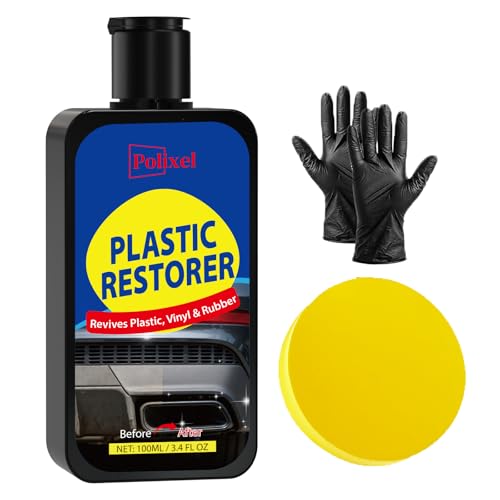
POLIXEL Plastic Restorer, 3.4 oz is the clearest match for buyers who want a dry, matte look rather than a glossy coating. Its maker says the formula is non-greasy, dust-free and UV resistant, and claims one application keeps plastic black for months. It is intended for interior and exterior plastic, vinyl, rubber, trim and bumpers. Its 3.4-ounce size is smaller than the other interior-capable options here, a consideration if you are treating many large panels. The deep-black claim may also be less relevant on light-colored or intentionally textured trim.
Bottom line: Choose it when a matte, non-greasy finish matters more than bottle size.
Cristal Products GX-3, 8 fl oz

Cristal Products GX-3, 8 fl oz is distinct for its aloe vera formulation and stated 8-fluid-ounce size. The maker describes it as a black restorer for faded plastic, vinyl and rubber, with UV protection, and says it can be used on dashboards and consoles as well as exterior cladding. That makes it a fit for someone seeking one product for cabin trim and exterior pieces. Its black-restoration focus may be less suitable when preserving a light interior color is the priority; the product is specifically marketed around a dark finish.
Bottom line: Choose it for black interior trim when aloe vera formulation and exterior use are also priorities.
How to Choose an Interior Plastic Restorer
Choose by finish, surface material and intended coverage before considering a restoration claim. Interior dashboards often combine textured plastic, vinyl and coated surfaces, so check the vehicle manual or a hidden spot before treating an unfamiliar material. A matte or low-sheen finish generally reduces reflections on the dashboard compared with a glossy dressing. For a large cabin, bottle size matters; for small touch-ups, controlled application can matter more. Use a clean microfiber cloth and apply product sparingly, since excess dressing can leave uneven patches or migrate onto glass. Keep products off steering-wheel grips, pedals and other controls where a slick surface could interfere with handling.
Interior Finish and Application
Matte finishes are usually the safer visual choice on a dashboard because windshield reflections can distract a driver. Work on a cool, shaded interior and apply a small amount to the applicator rather than spraying broadly across the cabin; that limits overspray onto glass, screens and controls. Clean dust and grime first, since rubbing debris into textured grain can leave visible marks. Test a discreet area and allow it to dry before treating a whole panel, especially when the surface has a factory coating. A restorer changes appearance; it does not replace repairing cracked trim or restoring a damaged surface.
Interior Plastic Restorer Types Compared
Interior restorers differ in finish and delivery: liquid formulas spread across broad panels, while gels can give more control on localized trim. Match the format to the panel instead of assuming a darker or shinier result means better restoration. The table summarizes which product fits each preference.
| Need | Option | Why it fits |
|---|---|---|
| Broad interior and exterior use | CAR GUYS Plastic Restorer, 8 oz | Maker says it covers plastic, rubber and vinyl |
| Matte appearance | POLIXEL Plastic Restorer, 3.4 oz | Maker describes a matte, non-greasy finish |
| Black trim with aloe vera formula | Cristal Products GX-3, 8 fl oz | Maker identifies aloe vera and interior/exterior use |
Use the preference that matters most rather than treating these formats as interchangeable. Test first wherever the surface has a special coating or light color.
Common Interior Restorer Mistakes
The most common mistake is applying dressing to a dirty or hot surface, which can leave uneven coverage. Clean and dry the panel first, then work in a shaded cabin; heat can make products flash or spread unpredictably. A second mistake is using a glossy treatment on the top of the dashboard, where reflections in the windshield can impair visibility. Avoid steering wheels, pedals, gear selectors and touch surfaces that need grip. Never assume that a product suitable for vinyl is suitable for every screen, coated panel or soft-touch surface; spot-test an inconspicuous area and follow the vehicle maker’s material guidance.
Frequently Asked Questions
How do I keep dashboard restorer off the windshield?
Apply a small amount to a cloth or foam pad instead of spraying the dashboard directly. Use a separate clean microfiber cloth to wipe any residue from glass before driving.
Should I clean car interior plastic before restoring it?
Yes, clean and dry the surface first so dust and grit are not rubbed into the texture. Use a mild interior cleaner compatible with the material, and test it on a hidden area.
Is a glossy dashboard finish safe to drive with?
A glossy dashboard can reflect in the windshield and distract the driver. Prefer a low-sheen finish on the dashboard top and keep dressing away from the glass.
Can I use plastic restorer on a steering wheel?
Avoid applying restorer to a steering-wheel grip because residue can make it slippery. Keep the product on non-grip trim and follow the vehicle maker’s care guidance for the wheel material.
How much interior restorer should I apply?
Start with a thin amount on an applicator and add more only if coverage requires it. Excess product is more likely to leave streaks or transfer onto adjacent glass and controls.