
Ankle Support for Ice Skates: 4 Options Compared

For ankle support for ice skates, 1Lifeonearth Ice Skate Ankle Pads is the named product and suits skaters who want nearly 360-degree padding shaped around the ankle bones. Choose CRS Cross Ankle Malleolar Gel Sleeves instead for gel pads placed directly over the inner and outer ankle bones; neither sleeve replaces a properly fitted skate boot.
We earn a commission if you buy through links on this page. As an Amazon Associate I earn from qualifying purchases. Products are compared on manufacturer specifications, not hands-on testing.
- Best overall: 1Lifeonearth Ice Skate Ankle Pads – Its padding is shaped around the ankle bones, with nearly 360-degree coverage and an ankle fit range of 8 to 12 inches.
- Best for ankle-bone pads: CRS Cross Ankle Malleolar Gel Sleeves – Two contoured gel pads per sleeve sit over the inner and outer ankle bones.
- Best for broader boot contact: CRS Cross Ankle Gel Sleeves – Gel-lined fabric extends protection to the front of the foot, shin, leg, and Achilles areas.
| Product | Best for | Padding coverage | Ankle sizing | Included | Shop |
|---|---|---|---|---|---|
| 1Lifeonearth Ice Skate Ankle Pads | Bone pressure | Nearly 360-degree ankle padding | 8–12 in circumference | 1 pair | Check Price on Amazon |
| CRS Cross Ankle Gel Sleeves | Multi-area cushioning | Ankle, foot, shin, leg, Achilles | — | 1 pair | Check Price on Amazon |
| CRS Cross Ankle Malleolar Gel Sleeves | Ankle-bone pads | Two pads over inner and outer bones | One size; 6–9 in or XL 9–12 in | 1 pair | Check Price on Amazon |
| Nuanchu Ice Skating Socks | Lace-bite areas | Two gel pads; foot, shin, heel | — | 2 pairs | Check Price on Amazon |
Ankle Support for Ice Skates
Compare these skate sleeves by where their padding sits and which parts of the boot-contact area they cover.
1Lifeonearth Ice Skate Ankle Pads

Unlike sleeves that place gel pads directly over the ankle bones, this skate-specific sleeve shapes its padding around them to avoid pressure on the bone itself. The stretchy design fits ankle circumferences from 8 to 12 inches and is listed for men’s shoe sizes 8–12 and women’s sizes 9.5–13.5. The pair is 10 inches tall, with top and bottom openings measuring 10 and 8 inches around. The broad coverage suits skaters who want padding around much of the ankle. Its one-size range may not suit ankles outside those measurements.
Bottom line: Choose this if your ankle measures 8 to 12 inches around and you want padding shaped around the bones.
CRS Cross Ankle Gel Sleeves

These gel-lined fabric sleeves cover more than the ankle alone, extending to the front of the foot, shin, leg, and Achilles areas. The maker says they cushion pressure and rubbing from stiff boots, and the sleeves can be worn lower around the heel or higher on the leg. The pair is washable and reusable, latex- and silicone-free, and comes with a mesh storage bag. This broader coverage may suit skaters bothered by contact in several boot zones. The specifications do not give a usable ankle measurement range, so check sleeve fit before choosing if sizing is a concern.
Bottom line: Choose these if you want cushioning that extends beyond the ankle bones.
CRS Cross Ankle Malleolar Gel Sleeves
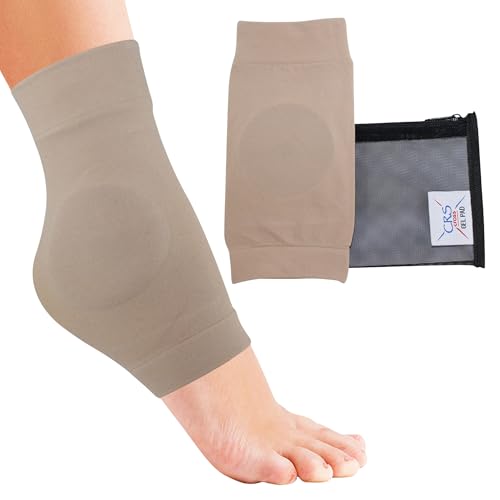
Two contoured gel pads per sleeve distinguish this pair, with one pad positioned over each inner and outer ankle bone. Each pad measures 2.5 inches in diameter, and the low-bulk construction is intended to fit inside most boots. The maker offers One Size Fits Most for ankle circumferences of 6 to 9 inches and X-Large for 9 to 12 inches; the size is One Size Fits Most. A mesh zipper bag is included. This is a focused choice for bone contact, but its localized pads cover less of the surrounding foot and lower leg than a full-area sleeve.
Bottom line: Choose these if your ankle circumference fits the size and you want pads over both ankle bones.
Nuanchu Ice Skating Socks
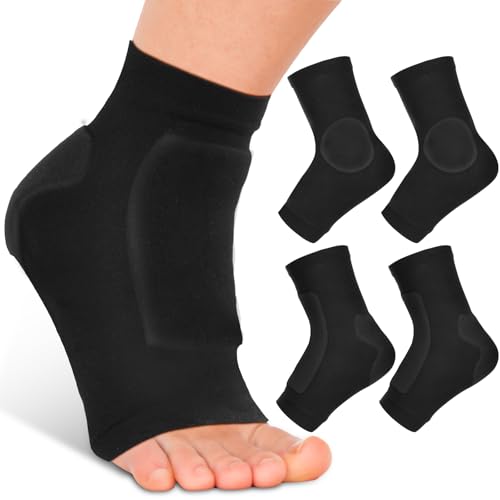
These padded skate socks include two gel pads intended to guard the sides of the front of the feet, shin area, and heel, making their coverage different from the focused ankle-bone pads in CRS Cross Ankle Malleolar Gel Sleeves. The maker describes the nylon fabric as breathable and elastic, with a compressive fit, and the pack contains two pairs. The uses include ice skates as well as roller skates, ski boots, work boots, splints, and braces. The fields give no ankle measurement range, so this option may be harder to size for a precise fit; it suits buyers prioritizing multi-area padding and extra pairs.
Bottom line: Choose these if you want two pairs of socks with gel pads for several boot-contact areas.
How to Choose Ankle Support for Ice Skates
Choose a sleeve by matching pad placement to the spot where the boot presses, then check whether the sleeve fits without bunching. Gel pads over the inner and outer ankle bones target those contact points, while wider sleeves can extend over the foot, shin, or Achilles area. A skate boot should hold the heel securely and feel snug around the ankle; padding is not a substitute for boot fit. Thin skate socks reduce bulk, so avoid stacking a thick sock with a padded sleeve if that makes the boot tight. If an ankle measures under 4 inches around or over 12 inches, verify that a sleeve’s fit range covers it before ordering.
Getting the Sleeve Fit Right
Measure ankle circumference at the point where the sleeve’s pads will sit, using a flexible tape held snugly rather than pulled tight. Compare that number with the sleeve’s range; a sleeve that slips can bunch, while excess compression can make a skate uncomfortable. Put the support on before lacing, then check that seams and pads stay flat as the foot moves. Skate laces should secure the heel without cutting off circulation: loosen and relace if toes tingle, become numb, or change color. A sleeve cannot correct a boot that is too large, narrow, or poorly shaped for the foot, so address persistent fit problems at the boot level.
Gel Pads Versus Full Ankle Sleeves
Gel pads concentrate cushioning at selected pressure points, while fabric sleeves can spread padding across a larger area. Use the table to match the kind of contact you want to cushion with the coverage each design provides.
| Design | Coverage | Consider when |
|---|---|---|
| Contoured gel pads | Inner and outer ankle bones | Pressure is localized at the ankle bones |
| Multi-area gel sleeve | Ankle, foot, shin, leg, or Achilles | Several boot-contact areas need padding |
| Stretch ankle sleeve | Broad ankle coverage | You want padding around most of the ankle |
More padding is not automatically better inside a skate. A crowded boot can increase pressure rather than relieve it, so prioritize a smooth fit and the smallest coverage area that addresses the contact point.
Preventing Rubbing and Lace Bite
Lace bite is pressure or irritation over the front of the ankle where skate laces cross the boot tongue. A gel sleeve worn lower over the heel or higher over the shin may shift cushioning to a different contact area, but padding should not hide pain from an overly tight lacing pattern or a boot that does not fit. Keep sleeves smooth and dry, and wash reusable fabric or gel-lined sleeves according to their care directions. Stop skating if a foot becomes numb, unusually cold, or discolored, then loosen the boot and reassess the fit. Persistent pain or swelling warrants advice from a qualified clinician rather than simply adding more padding.
Frequently Asked Questions
How do I measure my ankle for skate sleeves?
Wrap a flexible tape around the ankle where the sleeve pads will sit and record the circumference in inches. Measure both ankles if they differ, then compare the larger measurement with the sleeve’s fit range.
Can ankle sleeves fix loose ice skate boots?
No, sleeves cushion contact but do not correct a boot that is too large or fails to hold the heel. A properly fitted boot should keep the heel secure without numbness or tingling.
Should I wear thick socks with padded skate sleeves?
Usually, thin socks make it easier to preserve room inside a snug skate boot. If adding a sleeve makes the boot feel tight or causes tingling, reduce bulk and reassess fit.
What is lace bite in ice skates?
Lace bite is pressure or irritation across the front of the ankle where laces press over the tongue. Loosening the affected section and checking boot fit can help identify the pressure source.
When should I stop skating because of ankle pressure?
Stop if your foot becomes numb, unusually cold, or discolored, and loosen the boot before skating again. Persistent pain or swelling should be assessed by a qualified clinician.