
Aqua Mix Sealer’s Choice Gold: Sizes Compared

Choose Aqua Mix Sealers Choice Gold Quart for a smaller project, Aqua Mix Sealers Choice Gold Gallon when you need more sealer, or Aqua Mix Sealers Choice Gold Pint for the smallest container; the deciding factor is how much surface you plan to cover. Aqua Mix Sealer’s Choice Gold is a water-based sealer for stone, tile and grout.
Choose a different sealer if you need a quantified coverage estimate or a documented cure time; those specifics are not established across these container options.
We earn a commission if you buy through links on this page. As an Amazon Associate I earn from qualifying purchases. Products are compared on manufacturer specifications, not hands-on testing.
- For quart-size projects: Aqua Mix Sealers Choice Gold Quart – Its 32-fluid-ounce container is a middle option between the pint and gallon.
- For larger projects: Aqua Mix Sealers Choice Gold Gallon – The gallon container holds 128 fluid ounces, four times the quart volume.
- For small projects: Aqua Mix Sealers Choice Gold Pint – The 16-fluid-ounce pint is the smallest Aqua Mix container in this comparison.
| Product | Best for | Container volume | Formula | Use | Shop |
|---|---|---|---|---|---|
| Aqua Mix Sealers Choice Gold Quart | Mid-size projects | 32 fl oz | Water-based | Interior and exterior | Check Price on Amazon |
| Aqua Mix Sealers Choice Gold Gallon | Larger projects | 128 fl oz | Water-based penetrating | Interior and exterior; no-sheen | Check Price on Amazon |
| Aqua Mix Sealers Choice Gold Pint | Small projects | 16 fl oz | — | — | Check Price on Amazon |
Aqua Mix Sealer’s Choice Gold sizes
Compare the three container volumes and choose according to the amount of surface you need to seal.
Aqua Mix Sealers Choice Gold Quart
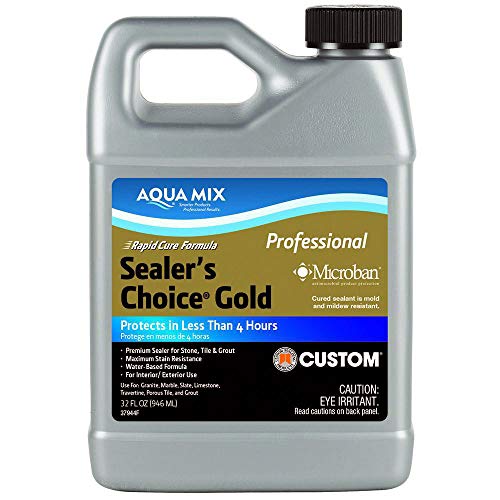
Aqua Mix Sealers Choice Gold Quart is the middle-volume option, holding 32 fluid ounces between the pint and gallon containers. The water-based sealer is described for stone, tile and grout, with interior and exterior use and maximum stain resistance. Pick this size when the pint seems too small but you do not need a gallon container. Its package volume alone cannot tell you how much surface it will cover, since porous materials and application conditions affect sealer use; estimate from the actual surface and product directions before choosing.
Bottom line: Choose this container when a pint is too little and a gallon is more than you want to handle.
Aqua Mix Sealers Choice Gold Gallon

Aqua Mix Sealers Choice Gold Gallon holds 1 gallon, or 128 fluid ounces, making it the largest of the three Aqua Mix sizes here. Its features include a rapid-cure formula, a no-sheen natural look, and use on natural stone and tile indoors or outdoors; the maker gives expected wear up to 15 years. Consider it for a larger area or when multiple surfaces need treatment. The wear estimate is not a coverage figure, so do not use it to calculate how much surface one gallon will handle.
Bottom line: Pick this size when the project calls for the largest container and you want a no-sheen finish.
Aqua Mix Sealers Choice Gold Pint

Aqua Mix Sealers Choice Gold Pint is the smallest Aqua Mix container in this group at 16 fluid ounces, half the quart volume. It suits a limited area when buying a larger quantity would leave more material than the project needs. The size is the only basis for comparing this option here, so verify that its label matches the surface and use you have in mind before applying it. A pint does not guarantee coverage of any particular number of square feet; grout width, porosity and surface condition all affect consumption.
Bottom line: Choose the pint for a limited area, after confirming the package is suitable for your surface.
How to choose a Sealer’s Choice Gold size
Choose by the area to be sealed and the surface’s porosity, not by container size alone. A gallon contains 128 fluid ounces, a quart 32, and a pint 16; actual coverage changes with stone density, grout width, and whether a surface needs more than one coat. Penetrating sealers soak into pores rather than forming a glossy film, so a highly absorbent stone can use more material than a dense, polished tile. If your area is under a few square feet, the pint may reduce leftover material; for multiple rooms or a broad floor, compare the required quantity against the gallon. Treat the maker’s wear estimate as service-life guidance, not as a coverage rate.
Surface preparation and application
Apply a sealer to a clean, dry surface because dust, grout haze, or moisture can interfere with absorption. Cement-based grout commonly needs about 72 hours to cure before sealing; grout product instructions and room conditions can change that interval. Test a small, inconspicuous area first to check for color change or uneven absorption, especially on natural stone. Work in manageable sections and remove excess sealer from the surface before it dries, since residue can leave a film. Use ventilation and gloves, and keep treated areas away from food preparation until they are fully dry according to the package directions.
Choosing a sealer for stone, tile and grout
Penetrating sealers are intended to enter porous material, while topical sealers leave a surface layer that can alter sheen and wear differently. Dense glazed ceramic tile generally absorbs little sealer, so grout joints may be the main area that benefits; porous stone such as travertine can absorb substantially more. A water-based formula and an oil-based formula also differ in cleanup and application behavior, so match the product label to the material and the desired finish. Aqua Mix Sealers Choice Gold Gallon specifies a no-sheen natural look and a water-based penetrating formula; Aqua Mix Sealers Choice Gold Quart specifies water-based use and interior or exterior applications. For any surface, confirm compatibility before treating the whole area.
How to maintain sealed surfaces
Sealing does not make stone, tile, or grout maintenance-free. Clean spills promptly, use a pH-neutral cleaner made for stone where appropriate, and avoid acidic cleaners such as vinegar on calcium-based stone like marble or limestone. Acid can etch the stone itself rather than merely remove a protective layer. A practical check is to place a few drops of water on a clean, dry area; if the surface darkens quickly, it may be time to reassess protection and consult the sealer’s directions. High-traffic floors and frequently washed counters typically need attention sooner than low-use walls, so inspect wear-prone areas periodically.
Frequently Asked Questions
How many square feet does a pint of sealer cover?
Coverage depends on porosity, grout width and application, so the 16-fluid-ounce pint size alone cannot establish a square-foot figure. Use a small test area and the package’s coverage guidance to estimate the amount for your surface.
How long should grout cure before sealing?
Cement-based grout commonly needs about 72 hours to cure before sealing. Cooler temperatures, high humidity and the grout maker’s instructions can affect the wait.
Can I seal glazed ceramic tile?
Glazed ceramic faces are usually too dense to absorb much penetrating sealer, while grout joints may be porous. Test a small area and confirm the product label allows use on the tile and grout combination.
How can I tell when a stone surface needs resealing?
On a clean, dry surface, a few drops of water that darken the stone quickly can indicate reduced water repellency. Repeat the check in a discreet spot and use the sealer maker’s maintenance guidance before recoating.