
Bait Blocks for Mice: 4 Options Compared

J.T. Eaton 704-PN Peanut Butter Blocks is the clearest fit for buyers who want 1 oz blocks intended for tamper-resistant bait stations. Choose another option if you need apple flavor, a package with a block count, or bait specifically labeled for agricultural and rural use.
Rodenticide bait blocks are solid baits placed where rodents feed; use them only as directed on their label and in a suitable bait station.
We earn a commission if you buy through links on this page. As an Amazon Associate I earn from qualifying purchases. Products are compared on manufacturer specifications, not hands-on testing.
- Best overall: J.T. Eaton 704-PN Peanut Butter Blocks – Its 1 oz blocks are intended for use in tamper-resistant bait stations.
- Best for rural use: Tomcat All Weather Bait Chunx – The maker specifies agricultural and rural use and mold- and moisture-resistant bait.
- Best for stated count: Victor Fast-Kill Bait Blocks II, 86 Count – The 4 lb package contains 86 ready-to-use blocks.
- Best for apple flavor: JT Eaton Apple Bait Blocks, 9 lb – The 9 lb pail contains 144 apple-flavored, 1 oz blocks.
| Product | Best for | Package size | Block count | Flavor | Shop |
|---|---|---|---|---|---|
| J.T. Eaton 704-PN Peanut Butter Blocks | Station-ready blocks | 4 lb | — | Peanut butter | Check Price on Amazon |
| Tomcat All Weather Bait Chunx | Rural locations | 4 lb | — | — | Check Price on Amazon |
| Victor Fast-Kill Bait Blocks II, 86 Count | Counted blocks | 4 lb | 86 | — | Check Price on Amazon |
| JT Eaton Apple Bait Blocks, 9 lb | Apple-flavored bait | 9 lb | 144 | Apple | Check Price on Amazon |
Bait Blocks for Mice Compared
Compare package size, count and flavor, then check each product label for permitted use and placement.
J.T. Eaton 704-PN Peanut Butter Blocks

These 1 oz peanut butter blocks are designed for use in tamper-resistant bait stations, making station compatibility the main reason to choose them. The 4 lb pail holds solid blocks with a rectangular shape, and the maker says the bait is intended for home or commercial rodent management. Choose this option when you want individual blocks rather than a preloaded station. The specifications do not give a block count, so buyers who need a precise count should compare package labeling before choosing.
Bottom line: Choose this if you need 1 oz blocks intended for tamper-resistant bait stations.
Tomcat All Weather Bait Chunx
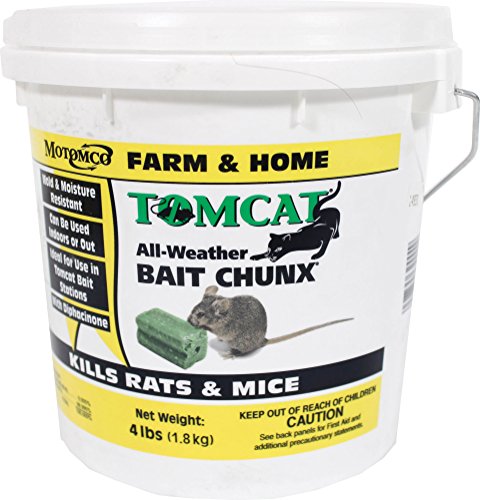
The defining difference here is the use limit: these bait chunx are for agricultural and rural use only. The 4 lb package is described as mold- and moisture-resistant, which is relevant where damp conditions may affect bait. The maker says the bait kills in 4 to 6 days. Choose it only if the label permits your site and use; the rural-use restriction makes it a poor match for buyers seeking a general indoor residential option.
Bottom line: Choose this for a permitted agricultural or rural setting where moisture resistance matters.
Victor Fast-Kill Bait Blocks II, 86 Count

This option distinguishes itself with a count: its 4 lb package contains 86 ready-to-use blocks. The maker says the bait targets roof rats, Norway rats and house mice, and is intended for indoor and outdoor use. That makes it a fit when the package count matters and the label allows the intended placement.
Bottom line: Choose this when a 86-block count and indoor/outdoor use fit your needs.
JT Eaton Apple Bait Blocks, 9 lb

The larger package and apple flavor set these blocks apart: the 9 lb pail contains 144 individual 1 oz blocks. The maker identifies diphacinone at 0.005% as a first-generation anticoagulant and says multiple feedings are needed. A center hole allows mounting on rods in compatible bait stations, including specified JT Eaton models and most standard tamper-resistant stations. This makes the pail suited to larger programs, but its 9 lb quantity may be more than a buyer needs for a small placement.
Bottom line: Choose this for a larger supply of apple-flavored blocks with a center-hole station design.
How to choose bait blocks for mice
Start with the permitted use on the bait label, then match the block and station to the placement. Baits differ in formulation and authorized settings, so a product described for rural or agricultural use should not be assumed suitable for ordinary home use. Many rodent bait blocks have a center hole or are shaped for station mounting, but compatibility is not universal. Select a station designed for rodenticide bait and follow its mounting instructions. A practical rule: if children, pets or non-target wildlife can reach the placement, do not leave bait exposed; use a suitable tamper-resistant station and keep it secured. Match the package size to the area you need to manage rather than opening more bait than necessary.
Bait stations and safe placement
Use rodenticide only according to its label, including the permitted site, target rodents and placement method. Tamper-resistant stations help restrict access, but they are not a reason to place bait where children or pets can reach it; position and secure stations as their instructions require. Keep bait in its original container, away from food and feed, and prevent spills during handling. Check stations regularly for bait condition and activity, and dispose of unused bait and dead rodents as the label directs. If a person or pet may have eaten bait, contact Poison Control or a veterinarian immediately and keep the product container available. Never transfer rodenticide into food containers.
Block size, count and package needs
Package weight and block count answer different questions: weight shows how much bait is included, while count shows how many individual pieces are available. These four options include 4 lb pails or bags and a 9 lb pail; only two provide a block count. A 1 oz block makes it easier to estimate individual placements, but the right number and spacing depend on the product label and site. Larger packages may suit a broader control program, while a smaller package may reduce leftover bait. Before buying for a specific station, check its rod or bait-holding design against the block’s center hole or shape rather than assuming every block fits.
How rodenticide bait works
Rodenticides use different active ingredients and feeding patterns, so a block’s flavor or size alone does not tell you how quickly it works. The apple-flavored option here identifies diphacinone at 0.005% and says multiple feedings are needed; another maker specifies a 4 to 6 day kill period. Treat such timing as product-specific, not a general promise for every bait or situation. Do not add bait more often or in greater amounts than the label allows. Remove accessible food sources and seal likely entry gaps as part of control; bait placement alone does not close routes rodents use to enter a building.
Frequently Asked Questions
Can mouse bait blocks be used without a bait station?
Use bait only in the way its label permits; several rodenticide products require or are designed for a bait station. When children, pets or wildlife could reach the placement, use a suitable secured, tamper-resistant station and follow its directions.
How long do rodent bait blocks take to work?
Timing depends on the active ingredient and feeding pattern. One option here gives a maker-stated 4 to 6 day period, while the diphacinone option says multiple feedings are needed; do not treat either as a general timeline for all bait.
Are all mouse bait blocks safe around pets?
No rodenticide bait should be treated as safe for pets to eat. Keep bait inaccessible, secure stations as directed, and contact a veterinarian immediately if a pet may have ingested bait.
What should I do if a child touches mouse bait?
Prevent further contact and follow the product label’s first-aid directions. If bait may have been swallowed, or the child feels unwell, contact Poison Control immediately at 1-800-222-1222 and have the package available.
Should I remove dead mice after using bait blocks?
Yes, remove dead rodents promptly while avoiding direct contact, and dispose of them as local rules and the bait label direct. Wear disposable gloves and wash hands afterward; removal also helps limit access by pets and scavengers.