
Best Snips for Vinyl Siding: 4 Models Compared

Malco MV12 Andy Combination Snip suits most vinyl siding cuts because its 3-inch blades handle straight cuts and circles up to 6 inches in diameter. Choose a different style if you mainly need straight shearing or mild curves rather than circular cuts.
Combination snips use pivoting blades to shear flexible materials; the cut pattern and blade length help determine which siding shapes they can handle.
We earn a commission if you buy through links on this page. As an Amazon Associate I earn from qualifying purchases. Products are compared on manufacturer specifications, not hands-on testing.
- Best overall: Malco MV12 Andy Combination Snip – Its 3-inch blades make straight cuts and circles up to 6 inches in diameter.
- Best for mild curves: Malco MC12NG Combination Snip – The design is specified for straight shearing and mild curve cuts.
- Best for gloved hands: Hurricane 12-Inch Straight-Cut Tin Snips – Extra-large handle loops are designed to fit gloved hands.
- Best for replaceable blades: Malco MC12N Combination Snip – The blades can be replaced in the field.
| Product | Best for | Cut pattern | Blade length | Shop |
|---|---|---|---|---|
| Malco MV12 Andy Combination Snip | Everyday siding cuts | Straight, circles to 6 in. | 3 in. | Check Price on Amazon |
| Malco MC12NG Combination Snip | Mild curve cuts | Straight, mild curves | 3 in. | Check Price on Amazon |
| Hurricane 12-Inch Straight-Cut Tin Snips | Gloved-hand grip | Straight cuts | — | Check Price on Amazon |
| Malco MC12N Combination Snip | Field blade replacement | Straight, circles to 6 in. | 3 in. | Check Price on Amazon |
Snips for Vinyl Siding Compared
Match the cut pattern and blade length to the shapes you need to make in siding and trim.
Malco MV12 Andy Combination Snip

For a mix of straight cuts and curved openings, this snip combines a 3-inch knife-like blade with an aluminum frame and vinyl grips. Malco says it cuts thick or layered vinyl and makes left- or right-hand circular cuts up to 6 inches in diameter. That range suits installers who need to shape siding, flooring, or other flexible materials with one tool. The limitation is its circular-cut range: openings larger than 6 inches call for a different cutting approach, so it is not the best choice if large curves are the main task.
Bottom line: Choose it for a mix of straight cuts and small circular cuts.
Malco MC12NG Combination Snip
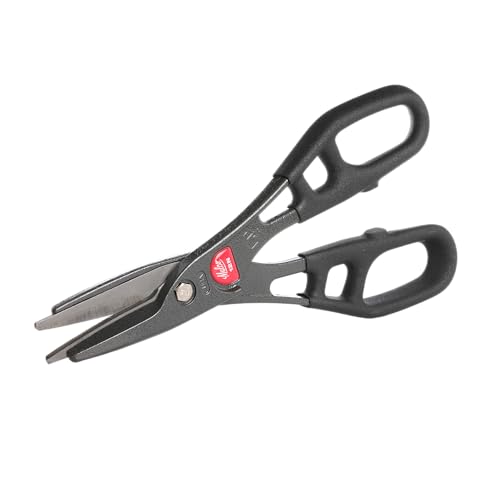
The MC12NG is the option here specifically described for straight shearing and mild curves, with a 3-inch cutting length and larger handle loops. Malco also describes its head as designed to improve maneuverability, a useful distinction when working around siding edges or trim. It can cut multiple layers of material, according to Malco. This is a better fit for straight and gentle shaping than for making a defined circular opening; the product’s cut description does not give a circular-cut diameter. Choose another pattern if that measurement is central to the job.
Bottom line: Pick it for straight shearing and mild curves.
Hurricane 12-Inch Straight-Cut Tin Snips
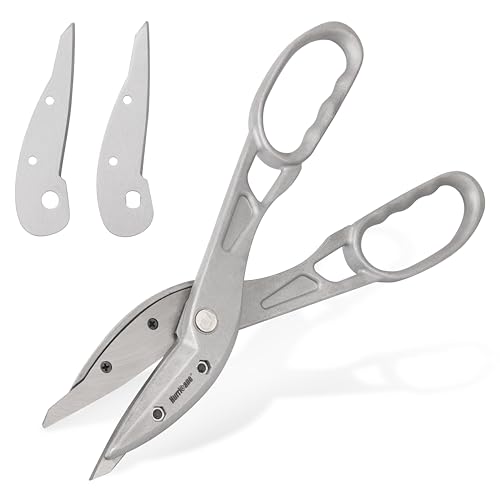
Large, glove-friendly handle loops distinguish these 12-inch straight-cut snips from the combination models. The maker says the aluminum construction keeps the tool lightweight and that its high-carbon steel blades cut vinyl siding, along with several metals and cardboard; it also gives cutting limits of 24-gauge cold-rolled steel and 28-gauge stainless steel. This model may suit users who want roomy handles and primarily straight cuts. Its specified pattern is straight rather than circular or mild-curve cutting, so choose a combination snip if shaping curves is a regular part of the work.
Bottom line: Choose it for straight cuts and larger handle loops.
Malco MC12N Combination Snip

Field-replaceable blades set this combination snip apart for jobs where blade changes matter. Its 3-inch cutting length is paired with straight cuts and left- or right-hand circles up to 6 inches in diameter. Malco also specifies straight shearing, mild curves, and cutting multiple layers of material. That makes it a versatile match for siding cuts that include both straight edges and smaller curved shapes. The tool is 12 inches overall, but the 3-inch cutting length—not the overall length—is the relevant blade measurement when comparing cutting reach.
Bottom line: Pick it when field-replaceable blades are a priority.
How to Choose Snips for Vinyl Siding
Choose snips by the cut shape first: straight-cut models suit straight shearing, while combination snips cover straight cuts and some curves. Among these options, the circular-cut limit is 6 inches in diameter, and blade lengths are 3 inches where specified. A 3-inch blade is the cutting length, not the tool’s overall length. For a circular opening larger than 6 inches, plan a different cutting method rather than forcing snips beyond their range. Also consider the handle: large loops can matter if you work in gloves, while a more maneuverable head can help around trim and tight edges.
| Need | Choose |
|---|---|
| Straight edges only | Straight-cut snips |
| Straight cuts and mild curves | Combination snips |
| Circles up to 6 inches | A model with that stated circular-cut range |
| Large handle loops for gloves | A model with glove-friendly loops |
Cutting Vinyl Siding Without Fit Problems
Vinyl siding expands and contracts with temperature, so a cut piece needs room to move rather than being trapped tightly between fixed edges. The required clearance depends on the siding system and installation conditions; check the manufacturer’s installation instructions for the specified end clearance before cutting pieces to fit. Mark the cut line and support the panel close to the cut so it does not flex or crack. For a straight edge, keep the blades aligned to the mark and make controlled cuts instead of twisting the snips. For curves, use a model with a cut pattern that matches the curve, and avoid assuming every straight-cut snip can make a clean circle.
Safe Snip Use Around Siding and Trim
Wear eye protection and work gloves when cutting siding; sharp vinyl edges and metal trim can cut skin, and small offcuts can flick away from the blades. Keep fingers clear of the pivot and cutting edges, and place the work on a stable surface before closing the handles. Do not use a hand snip on material thicker or harder than its maker’s cutting capability. For layered material, make sure the work is held securely so the layers cannot shift as the blades close. If the tool starts to bind, stop and reposition the material rather than increasing force or twisting the handles.
Frequently Asked Questions
Can tin snips cut vinyl siding cleanly?
Yes, snips specified for vinyl siding can cut it, and a straight-cut pattern is suited to straight edges. For curved cuts, use a model whose cut pattern supports curves or circles.
What size circle can combination snips cut?
Some combination snips specify circular cuts up to 6 inches in diameter. Confirm that limit for the particular model before planning a larger opening.
Are 3-inch blades the same as 12-inch snips?
No. A 3-inch measurement can refer to cutting length, while 12 inches can refer to overall tool length. Compare cutting length when you need to know how much blade engages the material.
Should vinyl siding be cut tightly between trim?
No; vinyl siding needs room to expand and contract with temperature. Check the siding manufacturer’s installation instructions for the required clearance at the specific trim or channel.
What safety gear should I use with siding snips?
Wear eye protection and gloves because cut edges can be sharp and small scraps may move during cutting. Keep hands away from the blades and pivot while making each cut.