
Baja Gold Sea Salt: Compare Grinds and Bag Sizes

For most kitchens, Baja Gold Fine Sea Salt, 1 lb is the practical starting point: its fine grind works for cooking and baking, and the 16-ounce bag is smaller than the 80-ounce option. Choose Baja Gold Fine Sea Salt, 5 lb if you use fine salt often and want a larger supply; choose Baja Gold Natural Grain Sea Salt, 1 lb for medium crystals, or Baja Gold Sea Salt Shaker, 9 oz for a countertop shaker.
Sea salt is salt harvested from seawater; grain size affects how it measures and dissolves, not the need to moderate sodium.
We earn a commission if you buy through links on this page. As an Amazon Associate I earn from qualifying purchases. Products are compared on manufacturer specifications, not hands-on testing.
- Best overall: Baja Gold Fine Sea Salt, 1 lb – Fine grind and a 16-ounce bag suit everyday cooking and baking without the 80-ounce quantity.
- Best for bulk use: Baja Gold Fine Sea Salt, 5 lb – The 80-ounce bag offers the largest package in this group, in the fine grind.
- Best for finishing: Baja Gold Natural Grain Sea Salt, 1 lb – Medium natural grain crystals suit finishing, pickling, and salt crusts.
- Best for table use: Baja Gold Sea Salt Shaker, 9 oz – The 9-ounce fine-grain shaker is designed for countertop seasoning.
| Product | Best for | Grind | Package size | Shop |
|---|---|---|---|---|
| Baja Gold Fine Sea Salt, 1 lb | Everyday cooking | Fine | 16 oz | Check Price on Amazon |
| Baja Gold Fine Sea Salt, 5 lb | Frequent cooking | Fine | 80 oz | Check Price on Amazon |
| Baja Gold Natural Grain Sea Salt, 1 lb | Finishing crystals | Medium | 16 oz | Check Price on Amazon |
| Baja Gold Sea Salt Shaker, 9 oz | Countertop seasoning | Fine | 9 oz | Check Price on Amazon |
Baja Gold Sea Salt Options
Compare the grind and package format to match the salt to how you cook and season.
Baja Gold Fine Sea Salt, 1 lb

Among these options, the 16-ounce fine-grind bag balances everyday versatility with a smaller quantity than the 5-pound bag. The maker says this unrefined Sea of Cortez salt retains naturally occurring trace minerals, including magnesium and potassium, and is suited to cooking and baking. Fine grains are useful when salt needs to distribute evenly through batters or sauces. This bag suits cooks who want one salt for several kitchen tasks. Its limitation is the open-bag format: cooks who want salt ready at the counter may prefer the shaker.
Bottom line: Choose this if you want fine salt for cooking and baking in a 16-ounce bag.
Baja Gold Fine Sea Salt, 5 lb
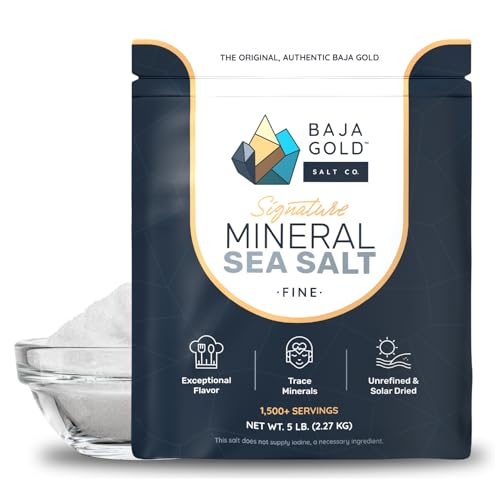
The 5-pound bag is the largest package here, while keeping the fine grind used for cooking and baking. The maker describes it as unrefined Sea of Cortez salt with naturally occurring trace minerals, including magnesium and potassium. Its flour-like texture is useful when a recipe calls for fine salt that disperses through ingredients. This size suits households that regularly use fine salt and can store a large bag in a dry, sealed container. The tradeoff is quantity: occasional cooks may prefer the 16-ounce bag to avoid keeping a large supply open.
Bottom line: Choose this if you use fine salt often and can store an 80-ounce bag properly.
Baja Gold Natural Grain Sea Salt, 1 lb

Unlike the fine-grind bags, this 16-ounce option has medium crystals intended for finishing, pickling, and salt crusts. The maker says the unrefined salt retains naturally occurring ocean minerals and is free from additives. Larger crystals can add a distinct texture when sprinkled over food, but they do not dissolve as quickly as fine grains; grind or dissolve them when a recipe needs salt distributed evenly. This bag suits cooks who specifically want crystal texture or a salt-crust ingredient. It is less convenient than fine salt for delicate baking measurements.
Bottom line: Choose this if medium crystals matter more than quick, even dissolving.
Baja Gold Sea Salt Shaker, 9 oz

This is the only option in a ready-to-use shaker, rather than a bag. The 9-ounce container holds fine unrefined sea salt for table use and everyday seasoning; the maker says it is lightly air-dried to support smooth flow and resist caking. A shaker can make repeated pinches convenient, while fine grains spread across food more readily than medium crystals. This format suits cooks who want salt at the counter. Its 9-ounce capacity is smaller than either bag, so frequent users may prefer a larger package for their main supply.
Bottom line: Choose this if countertop dispensing is more useful than a larger bag.
How to Choose a Baja Gold Sea Salt Grind
Choose fine salt for even distribution in batters, sauces, and other recipes where crystals should dissolve quickly; choose medium crystals when you want a more noticeable finishing texture. Crystal size changes how much salt fits in a spoon, so a teaspoon of coarse crystals can weigh less than a teaspoon of fine salt. For consistent seasoning in baking, measure by weight when the recipe provides grams. For table use, a shaker gives ready access, while a bag makes sense when you measure salt into recipes. Salt remains a source of sodium regardless of whether it is sea salt or refined table salt, so account for it in your overall intake.
| Kitchen need | Useful format |
|---|---|
| Batters and sauces | Fine grind |
| Finishing texture or salt crusts | Medium crystals |
| Frequent table seasoning | Shaker |
Why Grain Size Changes Salt Measurements
Fine salt packs more densely by volume than larger crystals, so spoon-for-spoon substitutions can change a recipe’s saltiness. When replacing one grain size with another, weigh the salt if the recipe gives a weight; otherwise, start with less and adjust after tasting where safe and appropriate. Larger crystals also take longer to dissolve, which matters in a quick sauce or dough. For pickling, use a recipe that specifies the salt type and measure rather than improvising: salt concentration affects the result. A crystal’s appearance does not tell you its mass, so do not assume equal spoonfuls are equal quantities.
How to Store Sea Salt and Use It Safely
Keep salt dry and in a sealed container, because moisture can cause clumping and make dispensing uneven. A shaker is convenient at the counter, but store bagged salt away from steam and wet utensils; transfer only a small working amount if the cooking area is humid. Sea salt is still sodium chloride and should not be treated as a low-sodium substitute based on its mineral content. The FDA recommends adults limit sodium to less than 2,300 milligrams per day; that includes sodium from all foods, not just salt added at the table. People managing sodium intake should measure portions and consider the full meal.
Frequently Asked Questions
Does sea salt contain less sodium than table salt?
Sea salt and table salt are both primarily sodium chloride, so changing salt type does not remove the need to limit sodium. Crystal size can change sodium per teaspoon because fine grains pack more tightly; measuring by weight gives a more consistent comparison.
Can I use medium-grain sea salt for baking?
Yes, but medium crystals dissolve more slowly and measure differently by volume than fine salt. Weigh the salt when the recipe gives a weight, or dissolve it fully in the liquid before mixing.
How should I store an opened bag of sea salt?
Keep the salt in a tightly sealed, dry container and use a dry spoon. Moisture can make crystals clump, especially when the container is near steam or a sink.
How much sodium should adults have each day?
The FDA recommends adults limit sodium to less than 2,300 milligrams per day. That total includes sodium in packaged foods and meals as well as salt added during cooking.
Why do recipes specify a salt grain size?
Grain size affects both how quickly salt dissolves and how much fits in a measuring spoon. When a recipe calls for a specific grind, use it when possible or measure by weight to reduce variation.