
Ballista BAT Reverse Crossbow Models Compared

The BALLISTA BAT Reverse Mini Compound Crossbow is the most direct fit for a compact reverse-draw crossbow, with a 16-inch frame, 150-pound draw weight and about 50 pounds of cocking force. Choose a different configuration if a five-bolt magazine, a red dot sight or a longer L-stock frame is your priority.
We earn a commission if you buy through links on this page. As an Amazon Associate I earn from qualifying purchases. Products are compared on manufacturer specifications, not hands-on testing.
- Best overall: BALLISTA BAT Reverse Mini – The 16-inch frame keeps the reverse-draw crossbow compact while retaining the 150-pound draw system.
- Best for follow-up shots: BALLISTA BAT Reverse Magazine – The included magazine holds five 10.5-inch bolts.
- Best for an optic: BALLISTA BAT Reverse with Red Dot – The package includes a red dot sight with red and green illumination and four reticles.
- Best for shoulder support: BALLISTA BAT Reverse L-Stock – The 24-inch L-stock adds a longer frame and weighs 3.9 pounds.
| Product | Best for | Frame length | Weight | Distinct feature | Shop |
|---|---|---|---|---|---|
| BALLISTA BAT Reverse Mini | Compact carry | 16 in | 3 lb | 50 lb cocking assist | Check Price on Amazon |
| BALLISTA BAT Reverse Magazine | Magazine loading | 16 in | 3.44 lb | 5-bolt magazine | Check Price on Amazon |
| BALLISTA BAT Reverse with Red Dot | Optic aiming | 16 in | 3 lb | Red/green, 4-reticle optic | Check Price on Amazon |
| BALLISTA BAT Reverse L-Stock | Shoulder support | 24 in | 3.9 lb | L-stock frame | Check Price on Amazon |
Ballista BAT Reverse Crossbows
Compare the frame and included setup to choose the configuration that matches your carry and shooting priorities.
BALLISTA BAT Reverse Mini

The BALLISTA BAT Reverse Mini is the most compact option here, with a 16-by-5-inch frame and a weight of about 3 pounds. Its reverse-draw system has a 150-pound draw weight and launches compatible bolts at speeds up to 340 feet per second, according to the maker. An integrated cocking assist requires about 50 pounds of force. It is suited to target practice, bowfishing setups and lawful hunting where permitted. The small frame is useful for carry, but buyers who want a magazine, optic or shoulder stock should compare the other configurations.
Bottom line: Choose this configuration if a compact frame matters more than a magazine, optic or shoulder stock.
BALLISTA BAT Reverse Magazine

The magazine version differs by holding five 10.5-inch bolts, reducing the need to place a bolt manually between shots. It keeps the 16-inch frame and 150-pound draw system, with compatible bolts reaching up to 340 feet per second according to the maker. The aluminum frame weighs 3.44 pounds, and the pull-to-cock design uses about 50 pounds of force. This setup suits target practice and lawful small- to medium-game hunting. A magazine adds a specific loading system, so choose another configuration if a red dot sight or longer shoulder stock matters more.
Bottom line: Pick this version if having five bolts ready in its magazine is your main priority.
BALLISTA BAT Reverse with Red Dot
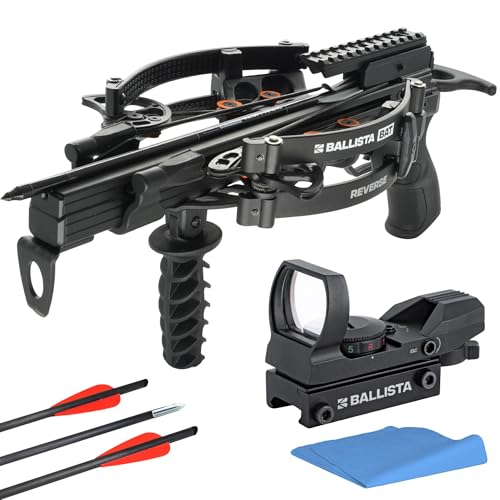
The red dot configuration distinguishes itself with an included optic offering red or green illumination and four reticles. The crossbow retains a 16-by-5-inch frame, weighs about 3 pounds and uses a 150-pound reverse-draw system with about 50 pounds of cocking force. The maker gives compatible-bolt speed as up to 340 feet per second. It is intended for adult target practice, bowfishing setups and lawful hunting where permitted. An optic is useful only if it suits the shooter’s sighting preference; choose the magazine model if ready bolt capacity matters more.
Bottom line: Choose this setup if you specifically want the included red-and-green, four-reticle optic.
BALLISTA BAT Reverse L-Stock

The L-Stock version is the longer, heavier configuration, measuring 24 inches and weighing 3.9 pounds. It shares the 150-pound draw weight and maker-rated speed of up to 340 feet per second, with a cocking pull of about 50 pounds. Its shoulder stock gives it a different handling format from the 16-inch versions, while keeping the reverse-draw design. The maker identifies target practice, bowfishing and lawful small- to medium-game hunting as uses. Buyers prioritizing the shortest carry profile should choose a 16-inch model instead.
Bottom line: Pick this model if you prefer the longer L-stock format over the shortest frame.
How to choose a Ballista BAT Reverse configuration
Choose by the feature you need to add to the shared 150-pound reverse-draw platform: magazine capacity, an optic, or a longer stock. A crossbow’s draw weight is the force associated with drawing the limbs; it is not the same as the cocking effort, which these models reduce to about 50 pounds. The maker gives a maximum compatible-bolt speed of 340 feet per second, but actual speed can vary with bolt mass and setup. A practical rule: select a 16-inch frame if compact carry is the priority, and the 24-inch L-Stock if a longer shoulder-stock format matters more.
| Priority | Configuration |
|---|---|
| Compact frame | 16-inch model |
| Five ready bolts | Magazine model |
| Included optic | Red dot model |
| Longer stock format | 24-inch L-Stock |
Crossbow bolts and fit
Use only bolts the crossbow maker identifies as compatible; bolt length, nock style and mass affect safe seating and performance. The magazine model is designed around 10.5-inch bolts, so do not assume a longer hunting bolt will fit its feed system. Crossbow bolts are typically much shorter than standard arrows, and broadheads must match the bolt and intended target. Before choosing hunting equipment, confirm local rules for permitted game, seasons and required bolt or broadhead dimensions; regulations can differ by state and species.
Cocking and safe handling
A 50-pound cocking pull is still a substantial load, and a crossbow must be treated as a loaded firearm whenever it is cocked and pointed. Keep fingers below the rail and clear of the string path; a string strike can cause serious injury. Load only when ready to shoot, keep the safety engaged until the target is identified, and never dry-fire unless the maker expressly permits it. Use a crossbow-rated target with a safe backstop, since a bolt rated up to 340 feet per second can pass through targets not built for crossbow energy.
Care that protects the string and limbs
Inspect the string, cables, limbs and serving before each shooting session; fraying, cuts, cracks or loose components warrant stopping rather than shooting. Crossbow strings are commonly waxed every 5 to 10 shots, but keep wax off the serving where the string contacts the rail. Store the crossbow uncocked in a dry place, and avoid leaving it in a hot vehicle because heat can stress limbs and adhesives. Have a qualified archery shop replace a damaged string or cable, since the stored limb energy makes improvised repairs hazardous.
Frequently Asked Questions
How much force does cocking the BAT Reverse take?
The cocking assist uses about 50 pounds of force, while the bow’s draw weight is 150 pounds. Those figures describe different parts of the loading process.
What bolt length fits the magazine model?
The magazine is designed for 10.5-inch bolts. Use compatible bolts and verify nock fit before loading, since incorrect bolts can feed or seat improperly.
Is a 340 feet-per-second speed guaranteed?
No; 340 feet per second is the maker’s maximum speed claim for compatible bolts. Bolt mass and setup affect the speed achieved.
How often should a crossbow string be waxed?
A common interval is every 5 to 10 shots, with extra attention after wet or dusty use. Avoid applying wax to the serving that contacts the rail.
Can these crossbows be used for hunting?
Hunting is limited by local law, species rules and equipment requirements. Confirm that crossbows, seasons and the chosen bolt and broadhead are allowed before hunting.