
Bandages for Bed Sores: Sacral and Foam Pads Compared

For a pressure sore over the sacrum, choose the 7-by-7-inch sacral dressing in Sacrum Silicone Foam Dressing, 7 x 7 for its body-specific shape; the right bandage still depends on wound location and drainage. For smaller areas away from the sacrum, consider a square or narrow bordered foam pad instead.
Bed sore bandages are dressings that cover pressure-related wounds; they do not replace repositioning or clinical wound assessment.
We earn a commission if you buy through links on this page. As an Amazon Associate I earn from qualifying purchases. Products are compared on manufacturer specifications, not hands-on testing.
- Best overall: Sacrum Silicone Foam Dressing, 7 x 7 – The 7-by-7-inch sacral shape is sized for coverage over the sacrum.
- Best for wider sacral coverage: Dimora Sacrum Silicone Dressing, 7 x 7 – Its 7-by-7-inch sacral pad has a wider absorbent tail core.
- Best for frequent changes: Silicone Foam Dressing, 4 x 4, 40 Pack – The 4-by-4-inch bordered pads come in a 40-count pack.
| Product | Best for | Dressing size | Pack count | Shape / pad size | Shop |
|---|---|---|---|---|---|
| Sacrum Silicone Foam Dressing, 7 x 7 | Sacral coverage | 7 x 7 in | 10 | Sacral; not stated | Check Price on Amazon |
| Dimora Sacrum Silicone Dressing, 7 x 7 | Sacral drainage | 7 x 7 in | 10 | Sacral; not stated | Check Price on Amazon |
| Silicone Foam Dressing, 4 x 4, 40 Pack | More frequent changes | 4 x 4 in | 40 | Bordered; 2.4 x 2.4 in pad | Check Price on Amazon |
| Niceful Silicone Foam Dressing, 4 x 4 | Cushioned square pad | 4 x 4 in | 5 | Bordered; 2.5 x 2.5 in pad | Check Price on Amazon |
| EVERLIT Silicone Foam Dressing, 2 x 5 | Narrow wound areas | 2 x 5 in | 10 | Bordered; not stated | Check Price on Amazon |
Bandages for Bed Sores Compared
Match dressing shape and absorbent area to the wound location and drainage.
Sacrum Silicone Foam Dressing, 7 x 7
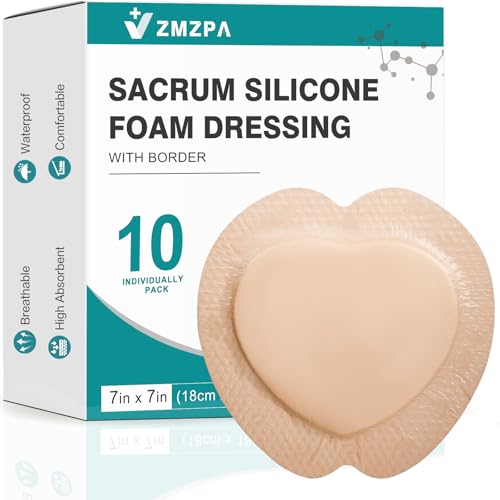
For a sore centered over the sacrum, this 7-by-7-inch bordered foam dressing is shaped for broad coverage in that area. The product features describe a four-layer construction and silicone adhesion intended to attach to dry surrounding skin rather than the wound bed. That setup may suit someone needing a larger sacral dressing and gentle removal. Its larger shape is less suited to a small sore on a limb, where excess dressing can wrinkle or catch; measure the wound and surrounding intact skin before choosing it.
Bottom line: Choose this for a larger pressure sore over the sacrum.
Dimora Sacrum Silicone Dressing, 7 x 7
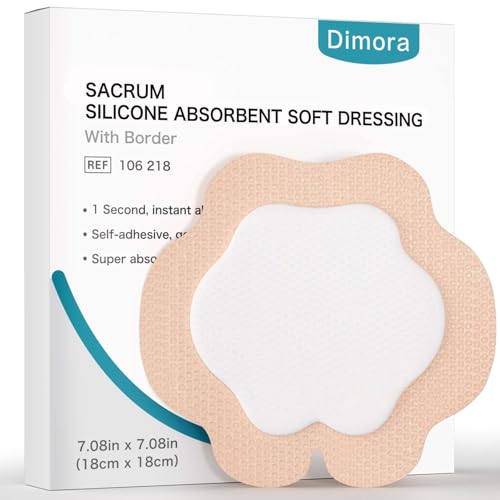
This sacral dressing stands apart for its specifically described absorbent tail core, intended to extend coverage over the lower sacrum and coccyx. Its 7-by-7-inch size and gentle silicone adhesive make it a candidate for a sacral wound with moderate to heavy drainage. The maker says its SAP-composite core can hold up to 20 times its weight in fluid. The claim is not a substitute for matching the dressing to actual drainage: a clinician should guide care for worsening wounds or drainage that overwhelms the pad.
Bottom line: Pick this when a sacral wound needs broader tail coverage.
Silicone Foam Dressing, 4 x 4, 40 Pack

The 40-count pack distinguishes this 4-by-4-inch bordered dressing from the smaller packs, while its absorbent pad measures 2.4 by 2.4 inches. Silicone contact and a latex-free construction are specified, making it relevant for delicate skin around a pressure sore. This square format suits a smaller wound where the absorbent center can cover the wound and the border can adhere to intact skin. The pad is much smaller than the overall dressing, so check the absorbent area rather than assuming the full four inches cover the wound.
Bottom line: Choose this for smaller wounds when a larger pack is useful.
Niceful Silicone Foam Dressing, 4 x 4

This 4-by-4-inch square dressing has a 2.5-by-2.5-inch pad and a five-layer structure that includes a silicone wound-contact layer. Its specified pad area is slightly larger than the 2.4-inch square center on another 4-by-4 option, which may matter when the wound needs more absorbent coverage but the outer dressing size must remain compact. The product features also describe cushioning. The five-count pack is smaller; for a wound extending beyond the center pad, a larger dressing format may be more suitable.
Bottom line: Pick this when a square dressing with a 2.5-inch pad fits.
EVERLIT Silicone Foam Dressing, 2 x 5

The narrow 2-by-5-inch format differs from the square and sacral pads, making this the option to consider for an elongated wound area that fits its shape. The product features describe a five-layer foam dressing for wounds with mild to heavy drainage and flexible construction. Its size limits coverage, so it is not the choice for a broad sacral sore or wound wider than the pad can cover. Measure both the wound and the intact skin needed for adhesion before selecting a narrow dressing.
Bottom line: Choose this for an elongated wound that fits its narrow shape.
How to choose a bed sore dressing
Choose by wound location, wound size, drainage and the condition of surrounding skin, not by the largest advertised absorption claim. A foam dressing is an absorbent cover; a bordered version has an adhesive edge that attaches to intact skin. Keep the wound contact area fully covered and allow the border to sit on clean, dry skin. If the wound is larger than the absorbent center or fluid reaches the edge, the format may be too small. Pressure injuries also need pressure relief: repositioning schedules and support surfaces are part of care, not something a dressing can replace. A clinician should assess deep, worsening or infected-looking wounds.
Matching dressing shape and size
Measure the open area and the surrounding skin before choosing a dressing, because the advertised outer size is larger than the absorbent pad on some products. For example, one 4-by-4-inch option has a 2.4-by-2.4-inch center, while another has a 2.5-by-2.5-inch pad. Sacral shapes are intended for the curved lower-back and buttock area; square pads work better when the wound is compact, and a 2-by-5-inch shape fits an elongated area. This guide compares the shapes by intended use.
| Wound area | Shape to consider | Size cue |
|---|---|---|
| Sacrum or coccyx | Sacral dressing | 7 x 7 in |
| Compact area | Square bordered pad | 4 x 4 in outer size |
| Elongated area | Narrow bordered pad | 2 x 5 in |
Do not select a dressing based on outer dimensions alone; the wound must fit within the absorbent area.
When foam dressings need changing
Change a dressing when it is saturated, leaking, loose, soiled or no longer protecting the wound, and follow the care plan for routine timing. Drainage amount and skin condition determine how often checks are needed; heavy drainage can overwhelm even a highly absorbent core. Lift adhesive gently, supporting nearby skin rather than pulling sharply, especially on fragile skin. If surrounding skin becomes soggy, irritated or increasingly damaged, ask a clinician whether the dressing size or change interval should change. Do not reuse a dressing or place adhesive across a wound bed.
Pressure sore care and safety
A dressing covers a wound but does not remove the pressure that caused it; repositioning and pressure-redistributing cushions or mattresses matter alongside wound care. Keep weight off the affected area as directed by a clinician, and avoid rubbing or massaging reddened skin over a bony area. Seek prompt medical assessment for spreading redness, warmth, pus, fever, worsening pain or a wound that deepens, since these can signal complications. People with diabetes, poor circulation or limited mobility benefit from professional wound assessment because pressure injuries can worsen before they are obvious. Use products only for external wound coverage and seek guidance for deeper wounds.
Frequently Asked Questions
How often should a bed sore bandage be changed?
Change a bed sore dressing when it becomes saturated, leaks, loosens or is soiled; the routine interval depends on drainage and the care plan. Check the surrounding skin at each change for sogginess or irritation.
Can foam dressings prevent pressure sores?
A foam dressing may protect skin from friction or moisture, but it cannot replace pressure relief. Repositioning and pressure-redistributing surfaces are central, especially over bony areas.
Should a bandage stick to the bed sore itself?
A wound-contact layer should protect the wound without being pulled firmly onto it; bordered adhesive belongs on clean, dry surrounding skin. Remove adhesive slowly to reduce trauma to fragile skin.
What size dressing fits a small pressure sore?
The absorbent pad, not just the outer border, must cover the wound. A 4-by-4-inch dressing here has a center pad between 2.4 and 2.5 inches square, so measure the sore first.
When should a pressure sore be checked by a clinician?
Get medical assessment for a wound that deepens or worsens, or for spreading redness, warmth, pus, fever or increasing pain. Diabetes, poor circulation and limited mobility also warrant early professional guidance.