
Bard Protective Barrier Film: 5 Skin Barrier Options

The Safe n’ Simple skin barrier wipes are the closest match for ostomy-focused barrier prep, with 2-by-2-inch alcohol-free wipes; the products here are alternatives rather than a Bard-branded film. Choose another option if you need sterile swabs or a different wipe format.
We earn a commission if you buy through links on this page. As an Amazon Associate I earn from qualifying purchases. Products are compared on manufacturer specifications, not hands-on testing.
- Best overall: Safe n’ Simple Skin Barrier Wipes, 2 x 2 in – Targets ostomy skin with individually wrapped 2-by-2-inch, alcohol-free wipes.
- Best for sterile swabs: 3M Cavilon No-Sting Barrier Film Swabs – Provides individually packaged swabs in a 25-count box.
- Best for single-use packets: McKesson Sterile Skin Barrier Film Wipes – Offers 25 individually wrapped sterile wipes.
| Product | Best for | Format | Count | Sterility | Shop |
|---|---|---|---|---|---|
| Safe n’ Simple Skin Barrier Wipes, 2 x 2 in | Ostomy skin prep | 2 x 2 in wipes | 75 wipes | — | Check Price on Amazon |
| 3M Cavilon No-Sting Barrier Film Swabs | Dressing changes | Swabs | 25 swabs | — | Check Price on Amazon |
| McKesson Sterile Skin Barrier Film Wipes | Sterile packets | Individual wipes | 25 packets | Sterile | Check Price on Amazon |
| 3M Cavilon Barrier Film Wipes, 1 mL | Small-volume wipes | 1 mL wipes | 25 wipes | Sterile | Check Price on Amazon |
| Medline SurePrep No-Sting Barrier Wipes | Fast-drying film | Individually wrapped wipes | 50 wipes | — | Check Price on Amazon |
Bard Protective Barrier Film Alternatives
Compare these skin barrier wipes and swabs by format, count and stated use.
Safe n’ Simple Skin Barrier Wipes, 2 x 2 in
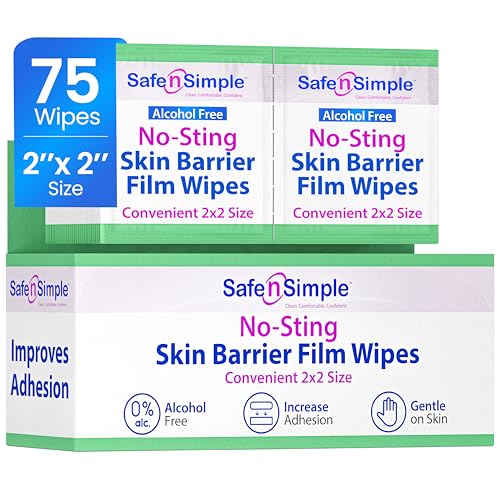
For ostomy-focused prep, these individually wrapped 2-by-2-inch wipes are the only option here whose purpose centers on stoma-adjacent skin. The alcohol-free formula leaves a breathable barrier film intended to protect skin exposed to moisture, friction and repeated adhesive contact. The targeted wipe size suits application around a stoma during pouch or wafer changes. The limitation is that the package count is 75, while buyers who specifically need a sterile product should choose an option explicitly identified as sterile instead.
Bottom line: Choose these for targeted ostomy skin prep in 2-by-2-inch wipes.
3M Cavilon No-Sting Barrier Film Swabs

For dressing and device securement, these individually packaged swabs form a breathable, transparent coating between skin and adhesive. The maker says the alcohol-free formula is hypoallergenic, latex free, fast drying, non-sticky, waterproof and compatible with CHG; it is intended for intact or damaged skin and allows visualization. The product is positioned for skin around vascular access sites when tape is removed, rather than specifically for ostomy use. A buyer who needs a sterile swab should confirm sterility before ordering, since this product’s attributes do not establish it.
Bottom line: Pick these for adhesive protection around dressings or devices.
McKesson Sterile Skin Barrier Film Wipes

Among these choices, McKesson is explicitly identified as sterile, with 25 single-use packets for individually portioned application. Its transparent, breathable, alcohol-free film is described as a way to protect skin from adhesives, friction and body fluids; the maker also says the wipes can increase tape and wafer adhesion. That wafer use makes the product relevant to ostomy care, although the product is presented as a general skin barrier wipe rather than an ostomy-specific size.
Bottom line: Choose this when sterile, single-use packets are the priority.
3M Cavilon Barrier Film Wipes, 1 mL

These Cavilon wipes differ by their 1 mL volume and sterile, alcohol-free format. That mismatch makes this a less clear choice than options whose features directly describe a skin barrier coating. It may suit someone comparing the named 1 mL wipe format, but buyers who require confirmed barrier-film function should verify the product identity and intended use first.
Bottom line: Consider these only after confirming the barrier-film product identity.
Medline SurePrep No-Sting Barrier Wipes
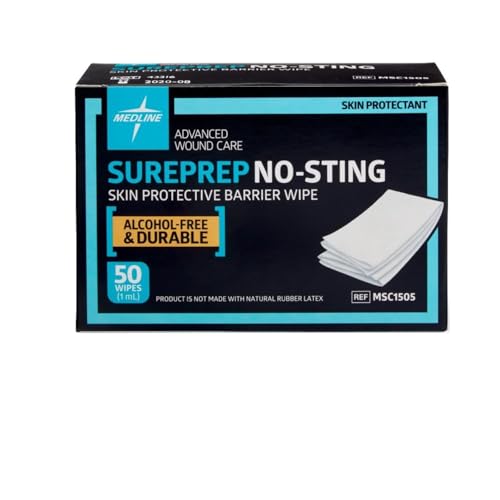
Medline SurePrep stands out for its fast-drying, smooth, non-greasy film and 50 individually wrapped wipes. The maker says the barrier protects skin from irritants such as medical adhesives and helps reduce discomfort during application. This makes it a general adhesive-protection option, not an ostomy-specific product in the product name and features. The package does not establish sterility, so choose an explicitly sterile alternative when that qualification matters; its use is most relevant to skin exposed to medical adhesives.
Bottom line: Pick these for a fast-drying wipe intended for adhesive exposure.
How to choose a skin barrier film
Start with the exposure: adhesive removal, moisture, friction or a combination determines which stated use matters most. Barrier films leave a thin coating on skin; breathable, transparent films can shield skin while allowing visual checks, while fast-drying formulas may be practical when a dressing or appliance needs to be applied soon after prep. For ostomy care, prioritize an ostomy-directed product and a wipe format that allows careful application around the stoma. For dressings and devices, check whether the product is intended for the relevant adhesive contact. If sterile use is required, choose a product explicitly described as sterile rather than assuming an individually wrapped packet is sterile.
Wipe size and coverage for ostomy care
A 2-by-2-inch wipe offers a defined size for targeted application around a stoma, while products without a wipe dimension do not let you compare coverage area from the specifications. Use a clean wipe for each application area and avoid dragging a used wipe back over skin that has already been cleaned. Barrier films should dry before an adhesive appliance or dressing is applied; a wet coating can interfere with adhesion. Stoma skin is delicate, so apply gently and follow the product’s intended use. If you need a particular sterile status or coverage area, verify that qualification before ordering rather than inferring it from the packaging format.
Barrier wipes and swabs compared
Wipes provide a flexible pad for spreading film over a broader patch, while swabs offer a compact applicator for more localized protection. Choose by the area and packaging qualification you need, not by count alone.
| Need | Choose a format | Reason |
|---|---|---|
| Targeted stoma-area prep | 2-by-2-inch wipe | Defined wipe dimensions for focused application |
| Localized dressing-edge application | Swab | Compact applicator format |
| Required sterile single use | Explicitly sterile packet | Packaging alone does not establish sterility |
Applying barrier film safely
Apply barrier film to clean, dry skin and allow the coating to dry fully before placing adhesive; follow the product’s own directions for damaged or intact skin. Gentle, single-pass application helps avoid unnecessary friction, especially near a stoma or dressing site. A no-sting label does not mean a product is suitable for every person or every skin condition, and stop use if irritation develops. Keep products away from eyes and mucous membranes unless the manufacturer specifically directs otherwise. Do not treat a barrier film as a substitute for clinical care for worsening skin breakdown or signs of infection.
Frequently Asked Questions
How long should barrier film dry before applying an adhesive?
Let the film dry completely before applying tape, a wafer or a dressing; many barrier films dry in about 30 seconds. Cool, humid conditions or a heavier application can extend drying time.
Can skin barrier wipes be used around an ostomy?
Yes, when the product is intended for ostomy skin prep; a 2-by-2-inch wipe can help target the area around the stoma. Avoid placing film on the stoma itself unless the product directions say to do so.
Does individually wrapped mean a wipe is sterile?
No, individual wrapping alone does not establish sterility. Choose a product explicitly marked sterile when sterile packaging is required.
Should barrier film go on wet or dry skin?
Apply it to clean, dry skin so the coating can form evenly and dry before adhesive contact. Moisture beneath a dressing or wafer can weaken adhesion.
How often should barrier film be reapplied?
Reapply when the product’s directions call for it, commonly after cleansing or when the prior coating has been removed. Adhesive changes and frequent washing can remove film sooner.