
Monk Fruit Extract Without Erythritol: 5 Options Compared

For a pure powdered option, Morning Pep Pure Monk Fruit Extract combines monk fruit extract with no erythritol, while Monk Fruit Drops, 1.7 oz suits shoppers who prefer drops for drinks. These concentrated sweeteners use very small amounts, so choose a format you can measure consistently.
Choose a different format if you need sugar-like bulk for baking: concentrated monk fruit extract sweetens without replacing sugar’s volume or structure.
We earn a commission if you buy through links on this page. As an Amazon Associate I earn from qualifying purchases. Products are compared on manufacturer specifications, not hands-on testing.
- Best overall: Morning Pep Pure Monk Fruit Extract – Pure monk fruit extract powder without erythritol or other sugar alcohols.
- Best for liquid use: Monk Fruit Drops, 1.7 oz – Drop format and a maker-stated six drops per teaspoon of sugar sweetness.
- Best for baking: WHYZ Organic Monk Fruit Powder – Powdered extract with a maker-stated 458 servings in a 5-ounce package.
| Product | Best for | Form | Package size | Servings | Shop |
|---|---|---|---|---|---|
| Morning Pep Pure Monk Fruit Extract | Pure powder | Powder | 5 oz | Over 450 | Check Price on Amazon |
| DureLife Organic Monk Fruit Extract | Organic powder | Powder | 5 oz | — | Check Price on Amazon |
| WHYZ Organic Monk Fruit Powder | Recipe sweetening | Powder | 5 oz | 458 | Check Price on Amazon |
| Monk Fruit Drops, 1.7 oz | Coffee and tea | Liquid drops | 1.7 fl oz | 167 | Check Price on Amazon |
| Monk Fruit Extract, 3 oz | High potency | Powder | 3 oz | 566 | Check Price on Amazon |
Monk Fruit Extract Without Erythritol
Compare these pure extract powders and drops by form, package size, and the amount each maker says it provides.
Morning Pep Pure Monk Fruit Extract
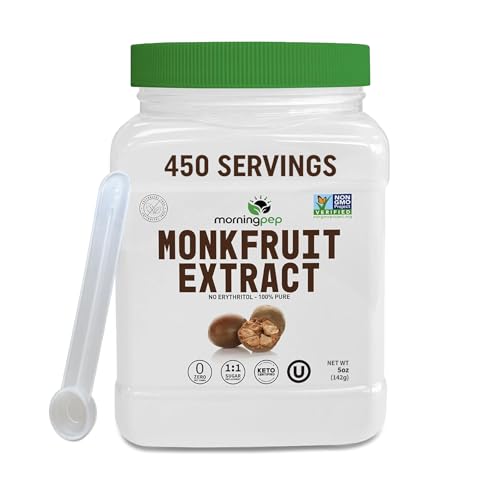
Morning Pep Pure Monk Fruit Extract is a 5-ounce powder made with monk fruit extract alone, according to the maker, with no erythritol or other sugar alcohols. The maker says it has zero calories and identifies the product as Non-GMO Project Verified, Keto Certified, and OU kosher. Its powder format suits shoppers who want a single-ingredient sweetener for drinks or recipes. Because pure extract is highly concentrated and does not add sugar’s bulk, start with a tiny amount and adjust carefully; it will not reproduce sugar’s structure in baked goods.
Bottom line: Choose this if you want pure monk fruit extract in powder form.
DureLife Organic Monk Fruit Extract

DureLife Organic Monk Fruit Extract differs by carrying USDA Organic certification alongside the maker’s Non-GMO Project verification, Keto Certification, and OU kosher status. The maker says the 5-ounce powder contains only monk fruit extract, with no erythritol, sugar alcohols, fillers, or calories. Its powdered format can be stirred into drinks or batters, as the maker notes. Pure extract is concentrated, so a spoonful-for-spoonful sugar swap can oversweeten a recipe; begin with a very small amount. Since extract does not provide sugar’s bulk or browning, recipes that rely on those properties may need a different sweetener strategy.
Bottom line: Pick this when organic certification is a priority.
WHYZ Organic Monk Fruit Powder

WHYZ Organic Monk Fruit Powder gives a maker-stated 458 servings in a 5-ounce package and claims the extract is 200 times sweeter than sugar. The maker also describes it as organic, zero-calorie, and free of erythritol, fillers, and added sugar. That stated intensity makes precise measuring especially important: start with less than a recipe’s sugar quantity and adjust to taste. The powder can add sweetness, but it cannot replace sugar’s volume, moisture, or browning in baking. For recipes where texture depends on sugar, this is better treated as a sweetening component than a direct one-for-one substitute.
Bottom line: Choose this if you want a powder with a serving count.
Monk Fruit Drops, 1.7 oz

Monk Fruit Drops, 1.7 oz is the liquid option in this group, making it convenient for adding sweetness directly to coffee or tea. The maker says six drops equal the sweetness of one teaspoon of sugar, and the bottle contains 167 servings; it also says the drops contain pure monk fruit extract without erythritol, alcohol, or added water. Liquid drops avoid scooping powder, but they do not add sugar’s bulk or structure to baked goods. Use the maker’s drop measure as a starting point, then adjust the amount in a beverage to suit its volume and your preferred sweetness.
Bottom line: Pick this for portioning sweetness into drinks.
Monk Fruit Extract, 3 oz

Monk Fruit Extract, 3 oz has a maker-stated 25-times-sugar sweetness ratio and 566 servings per 3-ounce container, distinguishing it from the other powdered options. The maker says one 0.15-gram mini scoop provides the sweetness of one teaspoon of sugar, and describes the extract as zero-calorie, zero-glycemic, non-GMO, and free of fillers. Its small serving size calls for a precise scoop; ordinary teaspoons are not a reliable substitute for such a tiny measure. Like other concentrated extracts, it sweetens without supplying sugar’s bulk, so it is not a direct volume-for-volume baking replacement.
Bottom line: Choose this if you want a powder with a mini-scoop measure.
How to Choose Monk Fruit Extract Without Erythritol
Start with the form you will actually measure: powders suit recipes and drinks, while drops are easy to add to beverages. Pure monk fruit extract is concentrated; products may claim sweetness many times greater than sugar, so their serving sizes are not interchangeable. Look for an explicit serving measure or sweetness ratio, and begin below the amount when adapting a recipe. Extract supplies sweetness but not sugar’s bulk, moisture, or browning, so a direct cup-for-cup substitution can change baked texture. For a drink, drops can be practical; for a batter, choose a powder only if you can measure a very small amount and accept that the recipe may need a separate source of bulk.
Powder Versus Drops for Drinks and Baking
Powder and liquid extract both add sweetness, but their formats change how easily you can portion them. Powders require a tiny scoop or careful measurement; drops can be counted into a cup, although drop size and beverage volume affect the result. Neither format supplies sugar’s volume or browning, so neither is a structural one-for-one replacement in baking. Use this guide to match format to task rather than assuming servings across products are equivalent.
| Need | Format to consider | Practical limit |
|---|---|---|
| Sweeten coffee or tea | Drops or powder | Adjust gradually to the cup size |
| Sweeten a recipe | Powder | Use a very small measured amount |
| Replace sugar’s bulk in baking | Neither alone | Extract adds sweetness, not structure |
For best control, avoid estimating a concentrated powder by eye; even a small excess can shift the sweetness noticeably.
How to Substitute Monk Fruit Extract in Recipes
Use the product’s own serving measure rather than treating all monk fruit extracts as equally strong. A teaspoon of sugar weighs about 4 grams, while the product-specific ratios here range from a six liquid drops to a mini scoop for the same sweetness; these measures apply only to the respective product. Reduce other sweeteners gradually and taste when the recipe allows. In baked goods, sugar also contributes bulk, moisture retention, and browning, so simply removing it can affect texture and color. With under 1 teaspoon of extract in a full recipe, adjust in tiny increments rather than adding another full serving at once.
How to Store and Measure Monk Fruit Extract
Keep powdered extracts dry and close the container after each use; moisture can make fine powders clump and complicate small measurements. Use a dedicated dry scoop, especially when the intended serving is a fraction of a gram. For liquid drops, keep the dropper clean and count drops consistently rather than pouring an unmeasured splash. A concentrated sweetener’s small serving size makes cross-contamination worth avoiding: a scoop that has touched flour, sugar, or another ingredient can introduce it to the container. Check the package’s storage directions for its specific requirements, and do not use a wet utensil in the powder.
Frequently Asked Questions
Can monk fruit extract replace sugar cup for cup?
No, pure extract adds sweetness without sugar’s volume or structure. Use the package’s serving measure for sweetness, and account separately for bulk and moisture in a baked recipe.
How much monk fruit extract equals a teaspoon of sugar?
The amount depends on the specific extract’s concentration and serving measure. For example, one product here states that six drops equal a teaspoon of sugar, while another gives a 0.15-gram mini scoop; do not transfer either measure to a different product.
Does monk fruit extract dissolve in cold drinks?
Powder may take longer to disperse in a cold drink than in a warm one. Stir thoroughly, or use drops if you prefer to avoid undissolved powder.
How should I measure concentrated monk fruit powder?
Use the product’s small scoop or a scale capable of measuring tenths of a gram when the serving is that small. A standard teaspoon can deliver too much of a concentrated extract.
Does pure monk fruit extract brown baked goods?
If browning matters to the recipe, replacing its sugar with extract alone can change the finished color and texture.