
Barricade Pre-Emergent Herbicide: 3 Options Compared

For a granular Barricade pre-emergent, The Andersons Barricade Granular, 40 lb stands out for its 40-pound bag and stated coverage of up to 12,880 square feet. Choose Barricade 4FL Concentrate, 4 fl oz instead if you need a liquid concentrate; pre-emergents create a soil barrier that targets germinating weeds rather than established growth.
These options are for different application methods, so select one only if its label covers your turf and target weeds.
We earn a commission if you buy through links on this page. As an Amazon Associate I earn from qualifying purchases. Products are compared on manufacturer specifications, not hands-on testing.
- Best overall: The Andersons Barricade Granular, 40 lb – A 40-pound granular product with 0.48% prodiamine and coverage up to 12,880 square feet.
- Best for a 10-pound bag: Barricade Pre-Emergence, 10 lb – Granular Barricade with 0.58% prodiamine and a rate of 10 pounds per 5,000 square feet.
- Best for liquid application: Barricade 4FL Concentrate, 4 fl oz – A 4-fluid-ounce Barricade 4FL concentrate for buyers seeking a liquid rather than granular product.
| Product | Best for | Form | Prodiamine | Package size | Shop |
|---|---|---|---|---|---|
| The Andersons Barricade Granular, 40 lb | Broad lawn coverage | Granular | 0.48% | 40 lb | Check Price on Amazon |
| Barricade Pre-Emergence, 10 lb | Smaller granular jobs | Granular | 0.58% | 10 lb | Check Price on Amazon |
| Barricade 4FL Concentrate, 4 fl oz | Liquid application | Liquid concentrate | — | 4 fl oz | Check Price on Amazon |
Barricade pre-emergent herbicide options
Compare these Barricade products by application form, active ingredient concentration and package size.
The Andersons Barricade Granular, 40 lb

The Andersons Barricade Granular, 40 lb is the largest granular option here, with a coverage of up to 12,880 square feet. It contains 0.48% prodiamine and uses dispersible granules that the maker says dissolve rapidly when watered, moving the active ingredient into the soil. Its target weeds include crabgrass, poa annua, goosegrass and henbit. This product suits buyers who want a dry application and need to cover a broad lawn area. It will not eliminate weeds that are already growing, so clear existing weeds separately and time treatment before germination.
Bottom line: Choose this granular option for a larger lawn when its label rate and target weeds match your needs.
Barricade Pre-Emergence, 10 lb
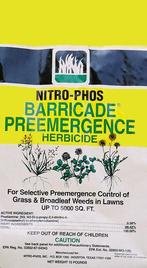
Barricade Pre-Emergence, 10 lb has the highest prodiamine concentration among these granular choices at 0.58%, in a 10-pound package. Its broadcast-spreader rate is 10 pounds per 5,000 square feet, which gives buyers a concrete starting point for calculating material needs. The product is labeled for established turfgrass as well as several ornamental and non-lawn sites. It suits a smaller treatment area or a buyer who prefers a compact bag. The rate is not universal across targets or uses, so confirm the applicable label directions before spreading.
Bottom line: Pick this for a 5,000-square-foot granular application when the label rate fits your site.
Barricade 4FL Concentrate, 4 fl oz
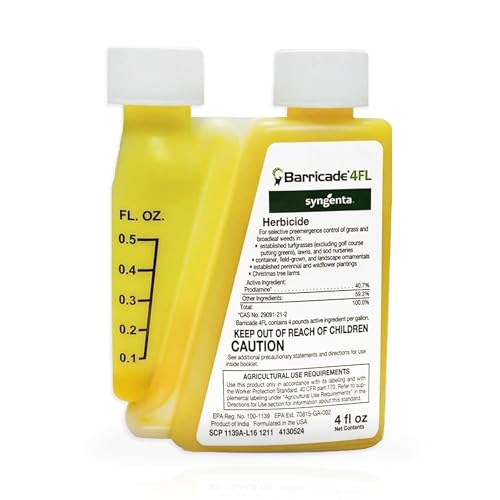
Barricade 4FL Concentrate, 4 fl oz differs from the granular products by coming as a 4-fluid-ounce concentrate rather than a spreadable granule. Its product name and supplied features identify it as a preemergent herbicide for turf, lawns and ornamentals, but give no active-ingredient percentage or mixing rate to compare with the granular choices. This format may suit buyers who already use a liquid application setup and need a concentrate. The missing concentration and application rate make label verification especially important: confirm the target site, weeds, dilution and treated area before use.
Bottom line: Choose this only when liquid application fits your setup and its label confirms the rate for your target site.
How Barricade pre-emergent works
Prodiamine pre-emergent works by forming a treated zone near the soil surface that disrupts susceptible weed seedlings as they germinate; it does not remove established weeds. That distinction explains why timing before emergence matters more than spraying visible weeds. Crabgrass germination is commonly associated with soil temperatures reaching about 55°F for several consecutive days, so local soil conditions can guide early-spring timing. Fall applications may target cool-season weeds, but the specific target and timing depend on the product label and regional conditions. Pre-emergent barriers can also interfere with desirable grass seed germination, so avoid applying where you plan to seed unless the label provides a compatible interval.
Choosing granular or liquid Barricade
Granular products are spread dry and generally need watering to move the active ingredient into the soil; liquid concentrates require label-directed mixing and calibrated spraying. Product form changes the equipment and application workflow, not the need for even coverage. Granules can leave untreated gaps if spreader passes overlap poorly, while liquid applications can streak when spray volume or walking speed varies. Use a measured lawn area and follow the product’s rate rather than estimating by bag or bottle size. This table summarizes the practical distinction.
| Format | Application approach | Common coverage risk |
|---|---|---|
| Granular | Broadcast spreader; water in as directed | Missed strips between passes |
| Liquid concentrate | Mix and apply at label rate | Uneven spray volume or dilution |
Timing and lawn fit for a pre-emergent
Apply a pre-emergent before the target weed germinates, using soil temperature and the local seasonal pattern rather than waiting for visible seedlings. Crabgrass typically begins germinating near 55°F soil temperature, while fall targets require a different seasonal window. A decision rule for overseeding is simple: if you intend to seed turf soon, do not use a prodiamine barrier unless the label explicitly permits that timing, because the same barrier can block desirable seedlings. Check that the label covers your specific turf species; some grasses have different tolerance or establishment restrictions. Coverage calculations should use the actual treated square footage, not the whole property if beds, pavement or other excluded areas are present.
Safe handling and common application mistakes
Read and follow the pesticide label before opening or applying any pre-emergent, because approved sites, rates, protective equipment and re-entry directions are product-specific. Keep people and pets away during application and observe the label’s instructions for when treated areas may be entered; do not assume all formulations share one dry-time rule. Wear the protective equipment the label requires, avoid drift onto gardens or waterways, and prevent granules or spray from reaching storm drains. Common mistakes include applying after weeds have emerged, skipping watering when the label requires it, and applying an unmeasured amount that exceeds the specified rate. Store the remaining product in its original container as directed.
Frequently Asked Questions
When should I apply Barricade for crabgrass?
Apply before crabgrass germinates; soil temperatures around 55°F for several consecutive days are a common germination cue. Local weather and the product label determine the appropriate timing and rate.
Can Barricade kill weeds already growing?
No; pre-emergent prodiamine is meant to stop susceptible seedlings as they germinate, not eliminate established weeds. Remove or control existing weeds with a suitable method before relying on a prevention barrier.
Can I overseed after applying Barricade?
Prodiamine can inhibit desirable grass seed as well as weed seed. If you plan to overseed, check the label for a specific waiting interval or compatible procedure before applying.
Do granular Barricade products need watering?
Granular products generally need water to move the active ingredient into the soil, and the Andersons product says watering dissolves its dispersible granules. Use the particular label’s irrigation directions rather than assuming the amount or timing.
How do I calculate how much Barricade to use?
Measure the treatment area and use the rate on the product label for the target site and weeds. For example, the 10-pound product gives a broadcast rate of 10 pounds per 5,000 square feet, but other formulations may use different rates.