
Belt Sanders for Making Knives: 4 Models Compared

For most knife makers, VEVOR 72 x 2-Inch Belt Grinder is the strongest fit because its 2 x 72-inch belt matches the common knife-grinding format. Choose a smaller model if shop space or lighter-duty work matters more; belt length affects the available working area, and the mini sander is built for compact tasks.
We earn a commission if you buy through links on this page. As an Amazon Associate I earn from qualifying purchases. Products are compared on manufacturer specifications, not hands-on testing.
- Best overall: VEVOR 72 x 2-Inch Belt Grinder – Its 2 x 72-inch belt suits long bevel passes, and the VFD provides stepless speed control.
- Best for bench grinding: BUCKTOOL 2 x 42-Inch Sander Combo – The 2 x 42-inch belt is paired with a 6-inch bench grinder and a large worktable.
- Best for compact variable speed: VEVOR 30 x 1-Inch Belt Grinder – The 30 x 1-inch belt and VFD fit smaller work where adjustable speed is useful.
- Best for small projects: Mini Belt Sander with 775 Motor – The compact format offers seven speeds and forward/reverse rotation.
| Product | Best for | Belt size | Motor (W) | Speed control | Shop |
|---|---|---|---|---|---|
| VEVOR 72 x 2-Inch Belt Grinder | Long bevel passes | 72 x 2 in | 1500 W | VFD, stepless | Check Price on Amazon |
| BUCKTOOL 2 x 42-Inch Sander Combo | Bench grinder combo | 42 x 2 in | 249 W | Fixed; 4480 FPM | Check Price on Amazon |
| VEVOR 30 x 1-Inch Belt Grinder | Compact VFD grinder | 30 x 1 in | 550 W | VFD, stepless | Check Price on Amazon |
| Mini Belt Sander with 775 Motor | Small detail work | — | — | 7 speeds; reversible | Check Price on Amazon |
Belt Sanders for Making Knives Compared
Match belt dimensions and speed control to the knife work and shop space you have.
VEVOR 72 x 2-Inch Belt Grinder

The 72 x 2-inch belt makes this the closest match here to the common knife-making grinder format. It has a 1500 W motor, three grinding moulds and three sanding belts; the maker gives a belt line speed of 32 m/min and says the VFD allows stepless adjustment. That speed figure is unusually low compared with many knife grinders, so verify the operating speed range before ordering if belt speed is central to your process. The larger machine suits makers with room for a dedicated grinder, but its 110.74-pound weight makes it less convenient to move.
Bottom line: Choose this if you want a full-length 2 x 72-inch belt and have space for a heavy bench machine.
BUCKTOOL 2 x 42-Inch Sander Combo
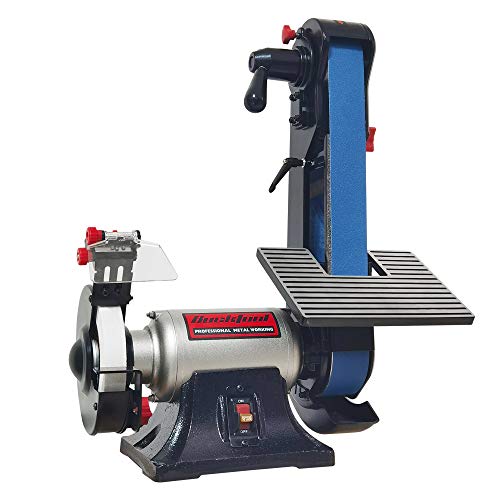
The BUCKTOOL combines a 2 x 42-inch belt with a 6-inch bench grinder, so it offers two grinding formats in one machine. Its 1/3 HP induction motor is rated at 3.5 A, and the maker gives a belt speed of 4480 FPM. The belt housing swivels between horizontal and vertical positions, with a 0-to-90-degree tilt for different work angles. This setup suits a bench that needs both belt and wheel capability; unlike variable-speed options, the maker does not give an adjustable belt-speed control. Its 42-inch belt is shorter than the common 72-inch knife-grinder format.
Bottom line: Pick this if the built-in bench grinder matters more than a 72-inch belt.
VEVOR 30 x 1-Inch Belt Grinder

The 30 x 1-inch format is narrower and shorter than the full-size knife grinders, making this VEVOR a more compact choice for small work areas. It has a 550 W copper motor, a VFD and two grinding moulds; the maker gives a belt line speed of 26 m/min and says the speed adjusts steplessly. The kit also includes three sanding belts. Its small belt may be limiting when shaping long, broad bevels or working on larger blades, so consider the workpiece size before choosing this format. The dimensions are 14.76 x 7.09 x 9.25 inches.
Bottom line: Choose this for a compact bench setup and a VFD, provided the narrow belt suits your blade work.
Mini Belt Sander with 775 Motor

The mini format is distinct from the dedicated belt grinders: this compact tool emphasizes varied small-scale tasks, including knife sharpening, woodworking, metalworking and polishing. Its 775 motor runs from 4000 to 9000 RPM, with seven speed settings and forward/reverse rotation, according to the maker. It measures 8.3 x 7.0 x 7.5 inches and weighs 3.8 pounds, so it can suit a limited work surface or detail tasks.
Bottom line: Pick this for compact sharpening and small projects, not when a known belt length is essential.
How to choose a belt sander for knife making
Start with belt size: 2 x 72 inches is the common dedicated knife-grinder format, while 2 x 42 and 1 x 30-inch machines are smaller alternatives. A longer belt gives more working area and more room for long bevel passes; a narrow belt can be useful for smaller work but may constrain broad blade faces. Variable speed helps control how quickly material is removed and gives the maker more control over heat during grinding. For frequent bevel work or larger blades, favor a full-length belt; for a small bench and short blades, a compact machine may be a more practical fit. Also check whether the machine offers the belt speed and work support your process requires, not just motor power.
A belt grinder throws sparks and abrasive dust. Wear eye protection, keep flammable material away from the spark path, and avoid loose clothing near moving belts.
Knife grinder belt sizes and shop fit
A 2 x 72-inch belt is a useful starting point for regular knife profiling because its length accommodates long grinding passes. Shorter 2 x 42-inch and 1 x 30-inch formats can suit hobby benches, but their reduced working area can make large bevels less convenient. Before selecting a machine, measure the bench footprint and leave room to handle the blade safely around the belt and work rest. A compact tool can weigh under 4 pounds, while a full-size grinder may exceed 100 pounds, so portability and stability can point to different choices. Belt dimensions also determine what replacement belts you need; match both width and length rather than assuming belts are interchangeable.
Variable speed and heat control when grinding blades
Variable speed gives more control over stock removal than a fixed-speed grinder, especially when moving between coarse shaping and finer finishing. Belt speed is commonly reported in feet per minute, while motor speed is reported in revolutions per minute; those figures describe different things and should not be compared directly. Slower grinding can reduce heat buildup, but pressure, abrasive condition and time in contact also matter. Keep the blade moving rather than dwelling on one spot, and cool it as needed in a safe manner. Avoid assuming a machine is adjustable merely because its motor has an RPM figure: check for a belt-speed control and a usable range.
Use the maker’s speed figures as a comparison point, but verify an unusually low belt-speed claim before buying if your work depends on a particular operating range.
Safe setup and common knife-grinding mistakes
Eye protection and spark management are essential when grinding steel: sparks can ignite nearby dust, cloth or solvent vapors. Secure the grinder on a stable surface, keep hands clear of the belt path, and use a work rest where the machine provides one. A common mistake is choosing by motor wattage alone; belt dimensions, actual belt speed, tracking adjustment and work support affect how the machine suits a blade task. Another is pressing hard to remove stock faster, which increases heat and can make control less predictable. Keep the blade moving evenly, use a suitable abrasive for the operation, and inspect belts for damage before switching on.
Frequently Asked Questions
What belt size is best for making knives?
A 2 x 72-inch belt is the common format for dedicated knife grinding because its length supports long bevel passes. Smaller 2 x 42-inch and 1 x 30-inch machines can fit hobby benches or shorter work, but offer less belt area.
Does a variable-speed belt grinder help with knife making?
Yes, variable speed lets a maker adjust the rate of grinding for different stages and manage heat more deliberately. Belt speed in feet per minute is the relevant figure; motor RPM alone does not tell you how fast the belt runs.
How do I keep a knife blade from overheating?
Keep the blade moving so one spot does not stay against the abrasive, and use lighter, controlled passes rather than prolonged pressure. Grinding speed, contact pressure and abrasive condition all affect heat, so cool the blade as needed.
What safety gear should I use with a knife grinder?
Wear eye protection and keep combustible materials out of the spark path because grinding steel creates hot sparks. Avoid loose clothing near moving belts, and secure the grinder before starting work.
Can a small belt sander shape a full knife bevel?
It can depend on the belt dimensions and the blade size: a 1 x 30-inch machine has less working area than a 2 x 72-inch grinder. For long, broad bevels, favor a longer belt and verify that the work support suits your technique.