
Best 2HP Pool Pump: 4 Models Compared

For most pool owners, VIVOHOME 2.0HP Pool Pump is the most adaptable 2HP pool pump because it supports 115V or 230V and includes connectors for several pipe sizes. Choose a different model if you need timed dual-speed operation or a 230V dual-speed motor.
A 2HP pump moves water through the pool’s circulation and filtration system, but horsepower alone does not determine whether it matches your pool. Verify the required voltage and your filter’s flow limit before choosing.
We earn a commission if you buy through links on this page. As an Amazon Associate I earn from qualifying purchases. Products are compared on manufacturer specifications, not hands-on testing.
- Best overall: VIVOHOME 2.0HP Pool Pump – Dual-voltage operation and connectors for 1.25-inch to 2-inch plumbing give it the broadest fit.
- Best for scheduled circulation: Aquastrong 2HP Pump with Timer – Its built-in timer can set run times for high and low speeds.
- Best for two-speed operation: XtremepowerUS 2HP Dual-Speed Pump – The 230V motor offers high- and low-speed settings.
- Best for higher stated head: 2HP Dual-Voltage Pool Pump with 8 Connectors – The maker gives a maximum head of 56 feet alongside its 6,800 GPH maximum flow claim.
| Product | Best for | Voltage | Flow rate | Speed or timer | Shop |
|---|---|---|---|---|---|
| VIVOHOME 2.0HP Pool Pump | Flexible connections | 115V/230V | Up to 6,800 GPH | — | Check Price on Amazon |
| Aquastrong 2HP Pump with Timer | Timed two-speed runs | 115V | 5,186 / 2,578 GPH | Dual speed with timer | Check Price on Amazon |
| XtremepowerUS 2HP Dual-Speed Pump | 230V dual-speed use | 230V | Up to 5,850 GPH | Dual speed | Check Price on Amazon |
| 2HP Dual-Voltage Pool Pump with 8 Connectors | High-head systems | 110V–230V | Up to 6,800 GPH | — | Check Price on Amazon |
Best 2HP Pool Pumps
Compare electrical requirements, stated flow and controls, then match the pump to your plumbing and filtration system.
VIVOHOME 2.0HP Pool Pump

Voltage flexibility and multiple connector sizes distinguish this pump: it supports 115V or 230V and includes 1.25-inch to 2-inch connection options. The maker says it delivers up to 6,800 GPH and is self-priming; it also specifies installation within 9.8 feet of the pool for best performance. A stainless steel shaft, 316 mechanical seal, reinforced-plastic housing and large strainer basket round out its construction. This is a practical match when your electrical supply or pipe size is not yet settled. Its flow figure is a maximum, so it does not establish the flow your plumbing will deliver.
Bottom line: Choose it when dual-voltage support and several connector sizes matter most.
Aquastrong 2HP Pump with Timer
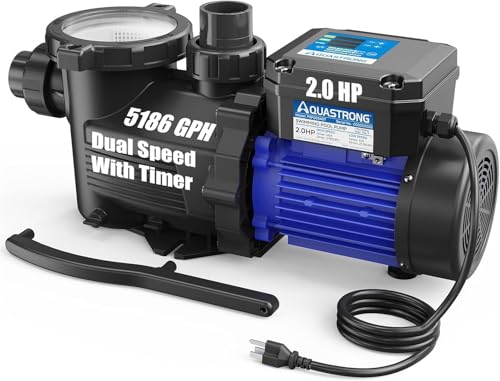
A built-in timer paired with two stated flow settings sets this pump apart: the maker gives 5,186 GPH at high speed and 2,578 GPH at low speed. It is specified for 115V and for both in-ground and above-ground pools, with adapters included for installation. The scheduled speed settings may suit owners who want distinct circulation periods without relying on a separate timer. Its flow is lower than the maximum figures claimed for some alternatives, so compare the required system flow and filter rating before selecting it. The listed “41488 Gallons” size is not a reliable pool-capacity match by itself.
Bottom line: Pick it if a built-in timer and two scheduled speeds are your priorities.
XtremepowerUS 2HP Dual-Speed Pump
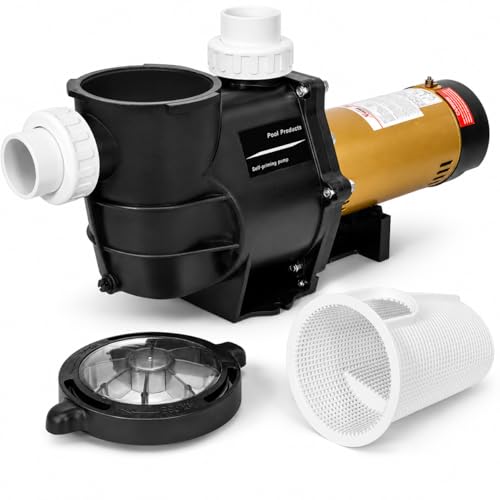
This pump combines a 230V motor with high- and low-speed settings, unlike the options that emphasize dual-voltage support or a timer. The maker specifies 3,450 RPM at high speed and 1,720 RPM at low speed, plus a maximum flow of 5,850 GPH. It is described for compatible in-ground and above-ground pools and has a strainer basket. It suits installations already set up for 230V where the owner wants two operating speeds. The fixed 230V requirement narrows its fit; check the electrical supply and plumbing compatibility before deciding.
Bottom line: Choose it for a 230V setup where a two-speed motor is the deciding feature.
2HP Dual-Voltage Pool Pump with 8 Connectors

The 56-foot maximum head is the differentiating figure for this dual-voltage pump; the maker also claims up to 6,800 GPH and a 1,500W motor. Eight connector sets are included, and the pump is described for in-ground and above-ground pools as well as spas and water features. This can suit a system where voltage flexibility and the head figure are relevant selection points. The flow and head are maximum claims, not a guaranteed operating point together; actual flow depends on the installed plumbing and resistance. Confirm the required fittings and electrical setup before installation.
Bottom line: Consider it when dual-voltage and the maximum head match your system needs.
How to choose a 2HP pool pump
Choose by required flow, system resistance and electrical supply, not horsepower alone. A pump’s flow falls as total dynamic head rises; long pipe runs, small pipe, elbows, filters and heaters all add resistance. Compare the pump curve at your system’s estimated head with the filter’s maximum flow rating, since exceeding that rating can damage equipment. Pool circulation is often planned around roughly one turnover in 8 to 10 hours, but local requirements, pool use and filtration design can call for a different schedule. A useful decision rule is to reject any pump whose rated flow at your estimated head exceeds the filter’s limit. Check whether your circuit supplies 115V or 230V before choosing a voltage-specific model.
Match pump fittings and installation distance
Match the pump’s inlet and outlet to the pipe size already in place; adapters can bridge nominal sizes, but they do not make narrow piping behave like larger pipe. Two-inch pool plumbing generally creates less friction than smaller pipe at the same flow, while long runs and multiple fittings increase resistance. The VIVOHOME option gives connector sizes from 1.25 to 2 inches and an installation distance guideline of 9.8 feet; use those product-specific limits when evaluating that model. Before ordering, confirm the existing pipe diameter and required connection style. A pump’s maximum GPH figure is not a promise of that flow through a particular pool system.
Compare pump speed and timer controls
Dual-speed pumps provide high and low motor settings, while a timer determines when a pump runs; these are separate features, and one does not guarantee the other. Lower speed can reduce energy use substantially in compatible systems because hydraulic power rises roughly with the cube of speed, though actual savings depend on the pump and setup. A timer can automate operating periods but cannot decide the right schedule for the pool. Compare whether you need two speeds, timed settings, or both: the Aquastrong combines dual-speed with a timer, while the XtremepowerUS specifies two speeds without a timer feature in its fields. Size daily run time to circulation and filtration needs.
| System need | What to compare | Decision rule |
|---|---|---|
| Existing electrical circuit | 115V or 230V support | Choose only a pump compatible with the available supply. |
| Limited plumbing options | Connector sizes and fittings | Match the pipe diameter and connection style. |
| Scheduled speed changes | Dual-speed and timer features | Verify both features if both are needed. |
| High system resistance | Flow at estimated head | Compare the pump curve with system head and filter limit. |
Pool pump electrical and maintenance safety
Pool pump wiring and bonding should be installed to applicable electrical code by a qualified professional; water, metal equipment and electricity create a serious shock hazard. Pool circuits commonly require GFCI protection, but the correct protection and bonding arrangement depend on the installation and local code. Keep the pump’s strainer basket clear, since debris restricts flow and can strain circulation equipment; switch off power before opening the pump basket or servicing the system. Inspect seals and fittings for leaks and address them promptly, because water near electrical components is unsafe. Never run a pump dry: water lubricates and cools pump components, and loss of prime can cause damage.
Frequently Asked Questions
How much pool water should a 2HP pump move?
Horsepower alone does not determine flow; plumbing resistance and total dynamic head change the delivered rate. Compare the pump curve at estimated head with the filter’s maximum flow rating, rather than selecting by maximum GPH alone.
Can I use a 2HP pump on an above-ground pool?
Some pumps in this comparison are specified for both above-ground and in-ground pools, but that does not make every 2HP pump a match. Check the pool’s plumbing size, filter flow limit and the pump’s installation requirements before choosing.
What voltage does a 2HP pool pump need?
Voltage depends on the specific motor: the options here include 115V, 230V and dual-voltage models. Confirm your circuit’s voltage and have pool wiring handled in accordance with local electrical code.
How many hours should a pool pump run each day?
A common planning target is about one complete pool turnover in 8 to 10 hours, but the right runtime depends on delivered flow, pool volume, filter and conditions. Use actual system flow rather than the pump’s maximum-flow claim to estimate turnover time.
Does a dual-speed pool pump need a timer?
No; speed selection and scheduling are different functions. A built-in timer can automate run periods, while a dual-speed motor only provides speed settings unless timing control is also included.
Can a pool pump run without water in it?
No; do not run a pool pump dry because water helps cool and lubricate its components. Turn off power before servicing, and restore prime according to the pump’s requirements before operation.