
Best 6lb Fishing Line: 5 Types Compared by Use

The Berkley Trilene XL Clear 6 lb is the best 6lb fishing line for most anglers because its 330-yard monofilament spool pairs versatile freshwater use with easy-casting handling. Choose a different line if you want braid’s low stretch or fluorocarbon’s clear, fast-sinking construction instead.
We earn a commission if you buy through links on this page. As an Amazon Associate I earn from qualifying purchases. Products are compared on manufacturer specifications, not hands-on testing.
- Best overall: Berkley Trilene XL Clear 6 lb – Clear 6-pound mono with a 330-yard spool and maker-claimed resistance to twists and kinks.
- Best for sensitivity: KastKing SuperPower Gray 6 lb – The maker highlights zero stretch and enhanced sensitivity in this low-visibility gray braid.
- Best fluorocarbon mainline: Seaguar InvizX Fluorocarbon 6 lb – The maker says this freshwater fluorocarbon is soft, low-memory and suitable for spinning or casting reels.
- Best for clear line: Berkley Vanish Clear 6 lb – Clear 6-pound fluorocarbon with maker-claimed easy casting and wet strength.
| Product | Best for | Line type | Color | Shop |
|---|---|---|---|---|
| Berkley Trilene XL Clear 6 lb | Versatile freshwater | Monofilament | Clear | Check Price on Amazon |
| KastKing SuperPower Gray 6 lb | Low-stretch sensitivity | Braided | Low-vis gray | Check Price on Amazon |
| Seaguar InvizX Fluorocarbon 6 lb | Fluoro mainline | Fluorocarbon | Clear | Check Price on Amazon |
| Berkley Vanish Clear 6 lb | Clear fluorocarbon | Fluorocarbon | Clear | Check Price on Amazon |
| Stren Original Clear/Blue Fluorescent 6 lb | Visible mono | Monofilament | Clear/blue fluorescent | Check Price on Amazon |
6lb fishing line options
Compare line material and color first, then match the choice to your reel and the way you fish.
Berkley Trilene XL Clear 6 lb

For a general-purpose freshwater setup, this is the clearest all-around fit among the options: a 330-yard spool of clear 6-pound monofilament. The maker says its formula resists twists and kinks and maintains wet strength, traits that suit anglers who want manageable casting with varied baits and techniques. Clear line is less visible underwater than fluorescent line, though it can be harder for an angler to see against some backgrounds. Mono stretches more than braid, so anglers seeking especially direct bite transmission may prefer a low-stretch alternative.
Bottom line: Pick this for an adaptable freshwater mono spool and easy handling.
KastKing SuperPower Gray 6 lb

Unlike the mono options, this 6-pound line is braid, making it the choice for anglers who prioritize low stretch and sensitivity. The maker says the line has zero stretch, enhanced sensitivity, abrasion resistance and reduced memory; it also describes a treatment intended to help it pass through rod guides. Low-visibility gray is a subdued color, rather than the bright trackable option in this group. Braid’s thin diameter can make knots and spool management more demanding, so anglers should use a knot suited to braid and avoid overfilling a reel.
Bottom line: Choose this when low stretch and sensitivity matter more than mono’s forgiving feel.
Seaguar InvizX Fluorocarbon 6 lb

This 200-yard clear fluorocarbon stands apart as a soft, castable mainline option, rather than a short leader spool. The maker says it is designed for freshwater multi-species fishing and suits spinning and casting reels, with low memory, sensitivity and fast-sinking behavior. Fluorocarbon is a useful choice when a line that sinks matters; it does not float like many nylon monofilaments. Its shorter spool than the 330-yard mono option may matter to anglers filling a larger reel, so check the reel’s capacity before spooling.
Bottom line: Choose this if you want a clear fluorocarbon mainline that sinks.
Berkley Vanish Clear 6 lb

Compared with the longer InvizX spool, this clear 6-pound fluorocarbon comes in a 110-yard length, making it a more limited spool for filling a reel. The maker describes it as easy-casting, non-absorbing and abrasion resistant, and says its construction refracts light like water. That makes it a candidate for anglers seeking clear fluorocarbon in freshwater or saltwater settings. The shorter length may suit a smaller reel or a partial refill, but anglers needing more line should account for the 110-yard total.
Bottom line: Pick this for a short spool of clear fluorocarbon for fresh or salt water.
Stren Original Clear/Blue Fluorescent 6 lb
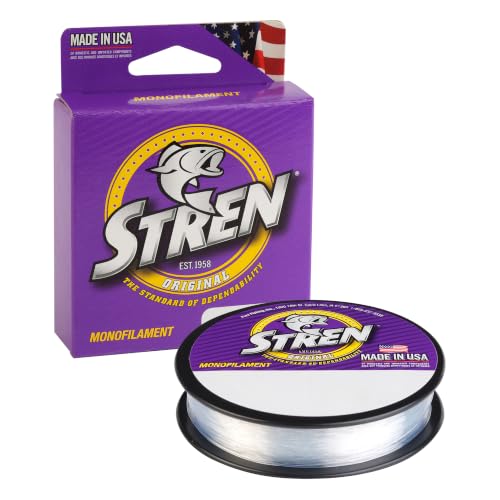
This is the visible-line alternative among the mono choices: its clear and blue fluorescent color is intended to be easier for the angler to track. The maker emphasizes knot and tensile strength and low memory for handling and casting. That visibility can help monitor line movement, but it is not the best match when a subdued line color is the priority; the gray braid and clear lines serve that preference better. The product is 6-pound monofilament for freshwater environments, a familiar, more forgiving material than low-stretch braid.
Bottom line: Choose this if tracking a fluorescent line is useful to your fishing.
How to choose 6lb fishing line
Choose by material first: monofilament is a flexible general-purpose option, braid minimizes stretch, and fluorocarbon sinks and is commonly used when a less-visible underwater line is desired. At the same 6-pound rating, diameter and handling differ by material and brand, so a pound-test label does not guarantee that every spool fills a reel equally. Check the reel’s line-capacity marking and the rod’s recommended line range before spooling. As a practical rule, if you need to see line movement in low light, favor a fluorescent color; if line visibility matters more underwater, consider clear line. Tie and wet the knot before drawing it tight, because friction can weaken line as a knot cinches.
Mono, braid and fluorocarbon compared
Monofilament stretches under load, braid has very little stretch, and fluorocarbon sinks more readily than nylon mono. Those differences change feel and presentation more than the shared 6-pound rating does. The table summarizes common tradeoffs, not a guarantee for every formulation. Line diameter, knots, reel design and technique also affect casting and handling. For a forgiving all-purpose choice, mono is a sensible starting point; choose braid when stretch is the key concern, and fluorocarbon when a sinking line is useful.
| Type | Typical trait | Good fit |
|---|---|---|
| Monofilament | Stretch and buoyancy | General-purpose setups |
| Braid | Very low stretch | Direct feel and sensitivity |
| Fluorocarbon | Sinks; low underwater visibility | Subsurface presentations |
Match line to reel and target
A 6-pound line suits light tackle and smaller freshwater targets, but the right choice depends on cover, fish size and drag setting. Reeds, rocks and submerged wood raise abrasion risk; use heavier line when the rod, reel and target call for it rather than relying on the rating alone. Spool capacity is based on a specific line diameter, so a thinner braid may hold differently from mono at the same pound test. Keep the spool below its rim to reduce loops and wind knots. Never wrap loaded fishing line around fingers: tensioned line can cut skin, and line should be cut with suitable snips.
Knots and line care
Inspect the first few feet of line after contact with rocks, docks or other rough surfaces, and cut back any rough or nicked section. Re-tie after a snag or a hard fight if the knot or nearby line looks damaged. Wet knots before tightening and pull them down steadily; sharp friction during tightening can weaken many line types. Mono can develop memory from long storage on a small reel, while braid can dig into itself if wound loosely or overloaded. Keep spare line out of direct sunlight and away from heat, and replace line when it shows fading, roughness, kinks or repeated tangles rather than relying on one universal service interval.
Frequently Asked Questions
Does 6-pound fishing line work for trout?
Yes, 6-pound line is commonly used for trout when cover and fish size are modest. In heavy current, rocks or brush, abrasion and break-offs become more likely, so match line strength and drag to those conditions.
Is 6-pound braid the same thickness as 6-pound mono?
No, braid is generally thinner than monofilament at a similar breaking-strength rating. Check the reel’s line-capacity guidance for the specific diameter rather than assuming equal pound test means equal spool capacity.
Should fishing line be wet before tying a knot?
Yes, wet mono and fluorocarbon before cinching a knot to reduce friction heat. Pull the knot down smoothly and inspect it for slippage or damage before fishing.
How much line should I put on a spinning reel?
Use the reel’s marked capacity for the line diameter you plan to spool, and stop just below the spool rim. Overfilling by even a few millimeters can encourage loose coils and tangles.
When should I replace 6-pound fishing line?
Replace or cut back line when it is rough, nicked, kinked, faded or repeatedly tangling. Check the section nearest the lure after fishing around rocks or other abrasive cover.