
Best Ab Roller With Elbow Support: 4 Models Compared

The DMoose Fitness Ab Roller Wheel suits most people because its elbow rests and included knee pads provide support without relying on a rebound mechanism. Choose a different model if you want assisted return or a wider multiwheel base, since the alternatives emphasize those features.
We earn a commission if you buy through links on this page. As an Amazon Associate I earn from qualifying purchases. Products are compared on manufacturer specifications, not hands-on testing.
- Best overall: DMoose Fitness Ab Roller – Elbow rests, ergonomic handles and two included knee pads cover the core support needs.
- Best for assisted return: Auto-Rebound Dual-Wheel Ab Roller – A steel spring rebound system and wider dual wheels are designed for controlled returns.
- Best for folding storage: EAST MOUNT Four-Wheel Ab Roller – Its frame quick-locks and folds, and the design uses four reinforced wheels.
| Product | Best for | Wheel setup | Rebound assistance | Dimensions | Shop |
|---|---|---|---|---|---|
| DMoose Fitness Ab Roller | Padded support | 360° design | — | — | Check Price on Amazon |
| Auto-Rebound Dual-Wheel Ab Roller | Assisted return | Dual wheels | Steel-spring system | 15.75 × 6.69 × 5.91 in | Check Price on Amazon |
| Uota Automatic-Rebound Ab Wheel | Wide wheel base | Wider front and back wheels | Automatic rebound | 15.99 × 15 × 9 in | Check Price on Amazon |
| EAST MOUNT Four-Wheel Ab Roller | Folding storage | Four reinforced wheels | Automatic rebound | 15.7 × 10.6 × 5.1 in | Check Price on Amazon |
Ab Rollers With Elbow Support
Compare the support features, wheel layouts and dimensions that distinguish these elbow-support ab rollers.
DMoose Fitness Ab Roller
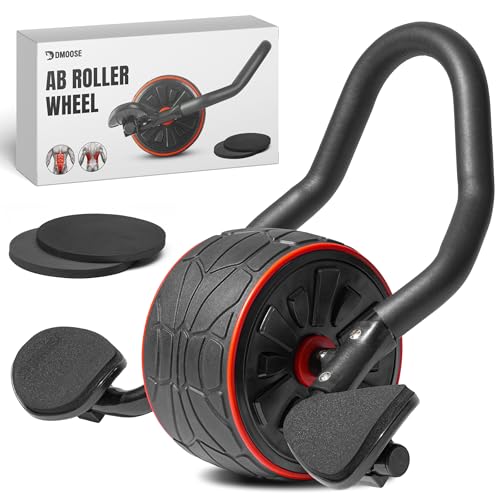
The DMoose model pairs elbow rests with two knee pads, unlike the rebound-focused alternatives. High-density foam elbow rests and ergonomic handles are part of the design, while the 360° layout is intended to engage the abs and obliques. This setup suits buyers who want padded contact points and a simpler rolling trainer for home or gym sessions. The product weighs 5.4 lb. Its feature set does not include assisted return, so people seeking spring-supported rollouts should compare the rebound models instead.
Bottom line: Pick this if padded rests and included knee pads matter more than assisted return.
Auto-Rebound Dual-Wheel Ab Roller

The auto-rebound model is the only option here that specifies a steel spring return system, making it distinct from the padded, non-rebound design. It also has wider front and rear wheels, a knee mat and a timer. ABS plastic, stainless steel and sponge grips make up its described construction; dimensions are 15.75 × 6.69 × 5.91 inches and weight is 3.3 lb. It suits beginners who want a controlled return feature, but the specifications do not identify the timer’s functions, so those seeking a specific timing mode should verify that before choosing.
Bottom line: Choose this for the specified spring-assisted return and dual-wheel layout.
Uota Automatic-Rebound Ab Wheel

The Uota stands out for its broad listed footprint and automatic rebound, with dimensions of 15.99 × 15 × 9 inches. Its feature description also calls out a brake system, five anti-slip material layers and sponge grips. This is a fit for someone who wants a rebound-style trainer with a larger overall size than the more compact dimensions supplied for some alternatives. The width is 15 inches, so it calls for more storage space than a narrow wheel; measure the intended storage spot before choosing it.
Bottom line: Pick this if a wider stated footprint and automatic rebound suit your setup.
EAST MOUNT Four-Wheel Ab Roller
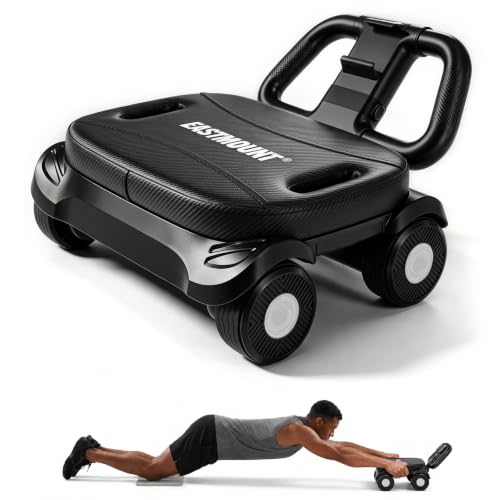
The EAST MOUNT combines four reinforced wheels with a quick-lock folding frame, a combination no other option here describes. Its dimensions are 15.7 × 10.6 × 5.1 inches, and the feature set highlights a widened base and automatic rebound. That makes it a candidate for buyers who want a multiwheel configuration and a frame that folds for storage. At 6.6 lb, it is the heaviest of the four by the weights, which may matter if the trainer will be moved often.
Bottom line: Choose this for a foldable frame and four-wheel configuration.
How to Choose an Ab Roller With Elbow Support
Choose by how you want the rollout controlled: a basic wheel relies on your own movement, while spring-assisted versions provide a return mechanism. Beginner strength training commonly starts with short, controlled rollouts from the knees; extend only as far as you can keep your ribs down and lower back from sagging. Elbow rests support the forearms, but they do not remove the need to brace your trunk. For DMoose Fitness Ab Roller, prioritize stable wheel contact and an easy-to-control range rather than maximum reach.
Flooring also affects control: use a firm, level surface and avoid loose rugs that can catch a wheel. If you cannot stop the wheel before your lower back arches, shorten the rollout or use a wall as a physical range limit.
Rebound and Wheel Designs Compared
Spring return, wheel width and wheel count change the feel of a roller more than its appearance. A spring-assisted return may help guide the inward phase, but it does not replace abdominal control during the outward rollout. Wider wheels and multiple wheels can increase contact width; they do not guarantee correct form or a particular level of stability.
The table separates the main design choices represented here. Treat dimensions as product-specific measurements rather than proof of the wheel’s actual contact width.
| Design choice | Typical use case | What to prioritize |
|---|---|---|
| Single or basic wheel layout | Self-controlled rollout practice | Grip and a manageable range |
| Spring-assisted return | Guided inward movement | Controlled extension and return |
| Wider or multiwheel base | More wheel contact across the floor | Footprint and storage space |
Safe Form and Range of Motion
Keep the movement within the range where your trunk stays braced; do not let the lower back sag as the wheel travels away. Start on your knees, squeeze the glutes, and exhale as you roll out while keeping the ribs stacked over the pelvis. A longer rollout increases the lever against your core, so distance should increase only when you can return without arching or twisting.
Use a clear floor area and keep fingers away from wheel gaps and folding joints. Stop if you lose control of the return or feel sharp pain; elbow padding and rebound assistance are comfort or movement features, not substitutes for safe technique.
Storage and Setup Fit
Measure the storage space before choosing a roller with a broad base: the products range from 5.1 to 9 inches in listed height and from 6.69 to 15 inches in listed width. Folding frames can reduce the stored footprint, but verify the folded dimensions if a cabinet or drawer has a tight opening. Weight also affects portability, with these models ranging from about 2.6 to 6.6 lb.
Set the roller on a hard, level floor with enough clear space for your full controlled reach and return. Knee pads or mats can improve comfort on firm flooring, but they do not make an uneven or slippery surface safe.
Frequently Asked Questions
How far should a beginner roll an ab wheel?
Start with a short rollout from the knees and stop before your lower back arches. Increase the distance only when you can return under control with your ribs and pelvis aligned.
Does an ab roller rebound system do the work?
No; a rebound system assists the return movement but does not control the outward rollout for you. Keep the rollout short enough to maintain a braced trunk.
Can I use an ab roller on carpet?
A firm, level surface gives the wheel a more predictable path than a loose rug. If carpet bunches or catches the wheel, move to a stable hard floor and use a mat under your knees.
How much room does an elbow-support ab roller need?
Allow space for your full controlled reach and return, not just the roller’s stored dimensions. Among these models, listed widths range from 6.69 to 15 inches, so check the footprint and your workout area.
Are elbow rests enough to protect my back?
No; elbow rests provide forearm support, but back position depends on bracing and range control. Stop the rollout before your lower back sags, even if the roller has rebound assistance.